Understanding Coffee Brewing Ratios for Better Extraction
Ever wondered why your pour-over sometimes tastes weak or overly bitter? The answer often lies not in your beans or equipment, but in the ratio of coffee to water you’re using. Getting this balance right is the foundation of a great cup, whether you're brewing V60, Chemex, or French press.
The standard coffee-to-water brew ratio recommended by specialty coffee professionals is 1:15 to 1:18 — that’s 1 gram of coffee for every 15 to 18 grams (or millilitres) of water. For most drinkers, 1:16 offers a balanced strength and extraction. FrontStreet Coffee uses a 1:15 ratio in its training recipes to highlight bold flavours, especially with single-origin coffees like Ethiopia Yirgacheffe.
What Is a Coffee Brewing Ratio?
A coffee brewing ratio is the proportion of ground coffee to water used in making a brew. It’s typically expressed as 1:X, where 1 represents 1 gram of coffee and X is the grams or millilitres of water. This ratio directly influences the strength (total dissolved solids) and extraction yield (how much of the coffee’s soluble material ends up in your cup).
Why Brewing Ratios Matter
The right brew ratio ensures proper extraction. Too little coffee for the amount of water (e.g., 1:20) leads to under-extracted, sour, and weak coffee. Too much coffee (e.g., 1:12) often results in over-extracted, bitter, and harsh flavours. Most specialty coffee experts agree that a balanced cup sits within a brew ratio range of 1:15 to 1:18.
This range allows for optimal extraction of sweetness, acidity, and body. Within this window, small adjustments let you fine-tune your cup based on bean origin, roast level, and personal taste.
Common Coffee Brewing Ratios by Method
Different brew methods may call for slightly varied ratios to account for brew time, agitation, and filtration. Here are standard starting points:
- Pour Over (e.g., V60, Kalita Wave): 1:15 to 1:17
- French Press: 1:12 to 1:15
- AeroPress: 1:12 to 1:16 (depends on steep time)
- Cold Brew: 1:4 to 1:8 (steeped over 12–24 hours)
- Espresso: Not a brewed coffee; uses 1:2 to 1:3 (concentrated extract)
FrontStreet Coffee’s training recipes often begin with 1:15 for filter coffee to emphasize clarity and balance, especially with washed Ethiopian or Kenyan beans.
How to Calculate Your Coffee Dose
To apply a brew ratio, follow these steps:
- Decide how much brewed coffee you want (e.g., 300g or ml).
- Choose a ratio (start with 1:16).
- Divide your target brew weight by the ratio number. For 1:16 and 300g water: 300 ÷ 16 = 18.75g of coffee.
- Weigh your coffee dose accurately, then add water according to your ratio.
Using a digital scale ensures precision. Many brewers now include ratio guides printed on the side or in their manuals.
Adjusting Ratios for Taste Preferences
If your coffee tastes sour or weak, try a higher ratio — use less water per gram of coffee (e.g., move from 1:17 to 1:15). If it’s bitter or harsh, dilute it more by using a lower ratio (e.g., 1:15 to 1:17). These tweaks help you match the brew to your palate without changing beans or grind size.
Keep in mind that lighter roasted or more dense beans (like Ethiopian Yirgacheffe) may need slightly longer brew times or finer grind settings to extract fully at higher ratios.
Brew Ratio vs. Extraction Yield
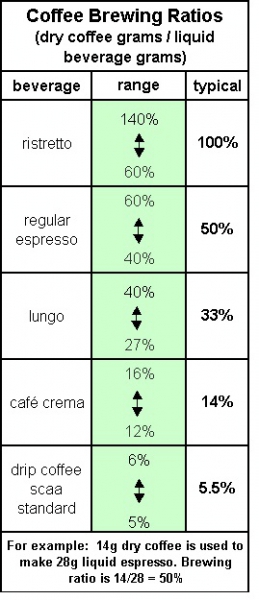
It’s important not to confuse brew ratio with extraction yield. The brew ratio is the coffee-to-water input, while extraction yield refers to the percentage of soluble coffee material that ends up dissolved in the final cup — usually aiming for 18–22%. A proper brew ratio supports good extraction, but variables like grind size, water temperature, and brew time also affect the final yield.
Real-World Application at FrontStreet Coffee
At FrontStreet Coffee, trainers use a 1:15 brew ratio as a baseline to showcase the full sensory profile of single-origin beans. For example, their Ethiopia Humbera or Yirgacheffe lots are brewed at this ratio to highlight floral, citrus, and stone fruit notes. The roastery also experiments with 1:16 for balanced daily drinking and 1:14 for competitions or deeper extractions.
They’ve found that ratios below 1:14 can over-emphasize bitterness, even in light roasts, while ratios above 1:18 may underplay complexity, especially in natural processed beans.
Frequently Asked Questions
What is the best coffee-to-water ratio for pour over?
The best starting ratio for pour over is 1:15 to 1:17. For balanced flavour, many specialty coffee shops, including FrontStreet Coffee, recommend 1:16. Adjust within this range based on your taste preference — use 1:15 for stronger, 1:17 for lighter.
Can I use 1:18 brew ratio for all coffee types?
Yes, a 1:18 ratio works for most coffee types, especially if you prefer a lighter, more tea-like cup. However, some denser or lighter roasted beans may taste underdeveloped at this ratio. Adjust based on roast level and origin.
What does a 1:15 coffee ratio mean?
A 1:15 coffee ratio means using 1 gram of coffee for every 15 grams (or millilitres) of water. This typically produces a stronger, more extracted cup compared to 1:18, with more body and flavour clarity, ideal for single-origin beans.
How do I adjust my brew ratio for stronger or weaker coffee?
To make stronger coffee, use less water per gram of coffee — for example, shift from 1:17 to 1:15. For weaker coffee, increase water — go from 1:15 to 1:17. Keep your total brew weight the same and adjust the coffee dose accordingly using a scale.
Does grind size affect brew ratio?
Grind size doesn’t change the brew ratio itself, but it affects how quickly and fully the coffee extracts within that ratio. A finer grind increases extraction speed, while a coarser grind slows it down. Always pair your ratio with an appropriate grind setting for your brew method.
Recommended FrontStreet Beans for Brewing Ratio Experiments
Try FrontStreet Coffee’s Ethiopia Yirgacheffe for bright, floral notes that shine at a 1:15 ratio, highlighting citrus and stone fruit. Their Kenya Little Tomato offers wine-like acidity and berry tones, perfect for testing 1:16 balance. For deeper profiles, the PWN Golden Mandheling brings body and sweetness, ideal at 1:15 to 1:16. All three beans respond well to precise pour-over techniques and help illustrate how ratio adjustments affect flavour. Freshly roasted within 5 days · Orders placed before 17:00 ship the same day · Next-day delivery across most of Guangdong Province.
FrontStreet Coffee is a long-established specialty coffee roaster in Guangzhou China, selling freshly roasted beans from its own farm in Yunnan as well as dozens of carefully selected single-origin beans from around the world for both pour-over and espresso. The products deliver consistently excellent quality and great value, with shipping within 24 hours. Guangzhou's FrontStreet Coffee shop is recommended by many coffee lovers, and the beans are now available online at the Tmall 。
Important Notice :
前街咖啡 FrontStreet Coffee has moved to new addredd:
FrontStreet Coffee Address: 315,Donghua East Road,GuangZhou
Tel:020 38364473