The 3 Stages of Coffee Roasting and Their Key Features
If you’ve ever wondered why the same green coffee beans can taste wildly different depending on where they’re roasted, the answer lies in the roast — specifically, how heat is applied during each stage. Roasting isn’t just about turning green beans brown. It’s a controlled transformation that defines your cup’s acidity, sweetness, bitterness, and aroma. Here’s how the pros do it, step by step.
In professional coffee roasting, the process is divided into three essential stages: drying (removing moisture), the Maillard-driven high-heat phase (including first crack), and immediate cooling. These phases control flavor development and last anywhere from 8 to 15 minutes depending on roast level.
Stage 1: Drying — Setting Up the Roast
The first phase of coffee roasting is drying. Contrary to what many assume, roasting doesn’t start with high heat. In fact, the very beginning focuses entirely on removing moisture from the green coffee bean. During this stage, beans begin absorbing heat, and internal moisture—typically around 10–12% of the bean’s weight—starts to evaporate. This phase usually lasts around half the total roast time.
As heat is applied, the beans turn from green to yellow, then light brown. You’ll notice the silver skin (or chaff) starting to loosen. The smell shifts from raw plant matter to a mild grassy aroma. The drying stage is crucial because water inside the bean acts as a heat conductor, evenly transferring warmth to the bean’s core. That’s why experienced roasters carefully control evaporation rates—allowing the water to reach boiling point around the 10-minute mark, turning to steam, and helping cook the interior thoroughly before the real heat kicks in.
Stage 2: High-Temperature Phase — From First Crack to Flavor Development
Once most moisture has evaporated, the roast enters its most dynamic phase: high-temperature breakdown. Around 160°C (320°F), the remaining water turns to gas and forces its way out, creating enough internal pressure to trigger the first crack — an audible popping sound that signals major physical and chemical change. This moment also marks the shift from endothermic (heat-absorbing) to exothermic (heat-releasing) activity inside the bean.
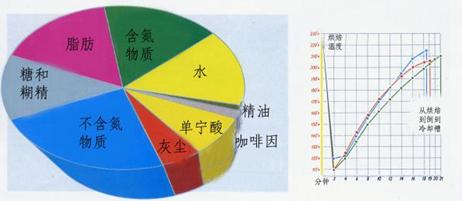
Internal pressure can reach up to 25 atmospheres. Heat and pressure break down the bean’s cellular structure and spark Maillard reactions and other complex chemical processes, forming the precursors to coffee’s flavors, aromas, and body. As the roast continues toward 190°C (374°F), the energy exchange cycles back again, and the color deepens from light brown to dark brown. The structure weakens further, paving the way for heavier roast levels if desired. This stage ultimately determines much of the coffee’s final character.
Stage 3: Cooling — Locking In the Roast
Roasting doesn’t end when the desired roast level is reached. What happens next is just as critical: rapid cooling. Without immediate cooling, residual heat would continue breaking down desirable aromatic compounds, leading to baked or burnt flavors. Professional roasters cool beans within 3 to 5 minutes to halt the Maillard and breakdown reactions.
There are two main methods. Air cooling is most common in specialty settings: a rotating drum with a built-in fan blows cool air over the beans while an agitator stirs them, bringing the temperature down quickly. Water cooling, though slower and less frequently used in specialty, involves spraying a fine mist of water over the beans to drop temperatures. However, water application must be precisely calculated—too much alters the bean’s weight and can mute certain delicate aromatics. Most specialty roasters stick with air cooling to preserve origin characteristics.
Coffee Roast Levels and Their Flavor Profiles
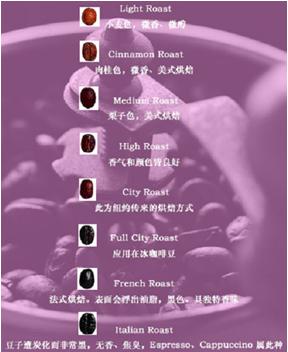
Roast level heavily influences the taste of your coffee. Lighter roasts preserve acidity and origin flavors, while darker roasts emphasize bitterness, body, and caramelized notes. The choice depends on the bean’s inherent traits — for example, beans with high acidity and low bitterness often shine at lighter roast levels.
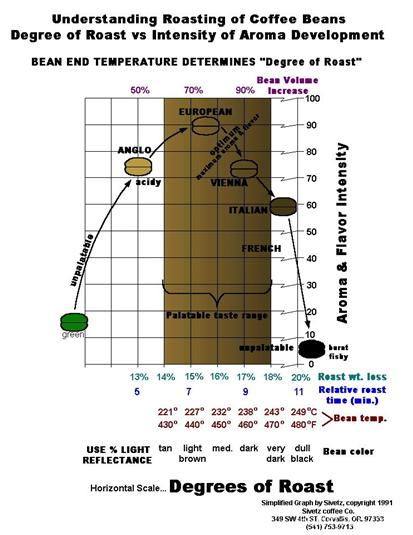
- Light: Barely roasted; greenish flavor, underdeveloped, often used for testing only.
- Cinnamon: Slightly deeper than light; pronounced acidity, tan color, popular in the U.S. West.
- Medium (Media): Light-medium roast; balanced origin flavor with pleasant acidity, commonly used in blends.
- High (Regular Medium): More developed flavor, reduced acidity, balanced bitterness — standard roast for beans like Blue Mountain and Kilimanjaro. Preferred in Japan and Scandinavia.
- City: More bitter than acidic, distinctive aroma, suited for Colombian and Brazilian beans. Popular in New York.
- Full City: Low acidity, bold bitterness with some sweetness possible. Common for iced coffee. Preferred in Central and South America.
- French: Very dark roast; shiny surface, heavy bitterness and strength, oils visible. Used for espresso.
- Italian: Deepest commercial roast; black, oily beans, nearly burnt flavor, used for traditional espresso.
Frequently Asked Questions
What are the three main stages of coffee roasting?
The three main stages are drying (moisture removal), high-temperature phase (including first crack and flavor development), and cooling. Each affects the final cup profile, with drying setting up heat conductivity, the high-temp phase defining flavor complexity, and cooling preserving those attributes.
What happens during the drying phase of coffee roasting?
During the drying phase, moisture evaporates from the green coffee bean, turning it from green to yellow or light brown. This phase typically lasts about half the roast time and is crucial for conducting heat to the bean’s core. Roasters control the rate to ensure even internal development.
When does first crack occur in coffee roasting?
First crack usually occurs around 160°C (320°F), after most internal moisture has turned to steam and created enough pressure to burst through the bean’s cell structure. It marks the shift to exothermic heat release and the beginning of visible roast color development.
How is coffee cooled after roasting?
Coffee is cooled immediately after the target roast level is achieved, either via air cooling (using fans and agitation in 3–5 minutes) or water cooling (spraying water mist, used more in commercial settings but riskier for specialty profiles).
What’s the difference between light and dark roast coffee?
Light roast coffee preserves more origin acidity and delicate flavors, while dark roast emphasizes bold bitterness, heavier body, and roasted, sometimes oily characteristics. The roast level determines which flavor attributes come forward in the cup.
Recommended FrontStreet Coffee for Roast Exploration
Try FrontStreet Coffee’s Ethiopia Humbera for bright, juicy acidity in a light-medium roast, or their PWN Golden Mandheling for a balanced medium body with sweet, herbal notes. For darker profiles, the Brazil Queen Manor offers low-acid chocolatey depth. These beans showcase how roast levels shape flavor. Freshly roasted within 5 days · Orders placed before 17:00 ship the same day · Next-day delivery across most of Guangdong Province.
FrontStreet Coffee is a long-established specialty coffee roaster in Guangzhou China, selling freshly roasted beans from its own farm in Yunnan as well as dozens of carefully selected single-origin beans from around the world for both pour-over and espresso. The products deliver consistently excellent quality and great value, with shipping within 24 hours. Guangzhou's FrontStreet Coffee shop is recommended by many coffee lovers, and the beans are now available online at the Tmall 。
Important Notice :
前街咖啡 FrontStreet Coffee has moved to new addredd:
FrontStreet Coffee Address: 315,Donghua East Road,GuangZhou
Tel:020 38364473