How Long Does It Take for Coffee Trees to Bear Fruit?
If you’ve ever wondered why your morning cup of coffee costs more than you’d expect, part of the answer begins on a farm—years before that bean reaches your grinder. The journey from coffee seed to harvested cherry is slow, labor-intensive, and governed by nature. But exactly how long does it take for a coffee tree to bear fruit? And what happens along the way?
Coffee trees typically take 3 to 5 years to produce their first fruit. They reach peak fruiting between years 6 and 10, and enter their prime production years from 15 to 20. After that, yields gradually decline. The entire process—from planting to harvest—is deeply tied to climate, care, and patience.
From Nursery to Farm: How Coffee Trees Begin
Coffee cultivation still follows the traditional methods developed by Arabs centuries ago. It starts in a nursery, where seeds are germinated and grown into seedlings for about a year. Only then are they transplanted to coffee farms. This slow start ensures the young plants are hardy enough to face the challenges of full sun, variable weather, and eventual fruit production.
The Slow Growth Years: Roots, Trunk, and Canopy
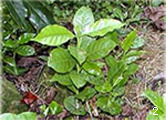
The first four to five years are crucial but unproductive. During this time, the coffee tree focuses on developing a strong root system, a sturdy trunk, and a broad, umbrella-like canopy of branches. This structure is essential for supporting heavy loads of fruit later on. The tree is investing energy into its long-term survival rather than immediate yield.
Why Shade Matters: Protecting Young Coffee Trees
Coffee trees can’t handle constant, direct sunlight. When exposed too harshly, their leaves overheat, close their stomata, and stop absorbing carbon dioxide—effectively halting growth. To prevent this, farmers often plant taller companion crops like bananas or areca palms alongside coffee trees. These plants provide shade, reduce leaf temperature, and even contribute carbohydrates through photosynthesis. Bananas, in particular, grow quickly and offer an additional income stream, making them ideal shade companions in tropical coffee regions.
The Coffee Belt: Where Coffee Trees Thrive
Coffee trees are strictly tropical and subtropical plants. They flourish only within the “coffee belt”—a global band of regions with the right mix of climate, soil, altitude, and rainfall. In Africa’s hot, humid rainforests, coffee trees grow vigorously. In Central America’s cooler, foggy highlands, they still produce premium beans. Even in the volatile climate of the Caribbean—where droughts and storms alternate—coffee trees adapt and fruit. These diverse conditions are also why coffee comes in so many flavor profiles and varieties.
The Coffee Tree Lifecycle: From Flower to Fruit
The coffee tree’s growth can be divided into key visual stages:
- 1. Planting the coffee seedling
- 2. Development of the coffee seedling
- 3. Early coffee tree flowering
- 4. Peak flowering period
- 5. Formation of coffee cherries
- 6. Ripening of coffee cherries
- 7. Mature red coffee cherries
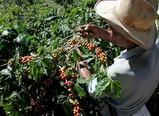
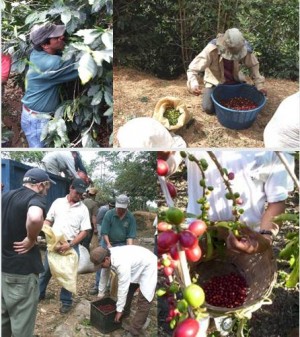
- 8. Hand-picking coffee cherries
- 9. Collecting the ripe ‘cherries’
Multiple Harvests and Mixed Maturity: The Picking Challenge
A single coffee tree can flower and produce fruit multiple times a year. What makes harvesting so tricky is that flowers, unripe cherries, and ripe cherries often exist on the same branch simultaneously. Unlike many fruits, coffee cherries don’t ripen uniformly. Overripe cherries rot inside, while underripe ones never properly develop. Pickers may need to return to the same tree dozens of times to harvest just 2 pounds (about 1 kilogram) of ripe cherries. A typical mature Arabica tree yields less than 5 kilograms (11 pounds) of fruit per year, which produces roughly 1 kilogram (2.2 pounds) of green coffee beans.
Hand-Picking vs. Machine Harvesting
The majority of high-quality coffee is still hand-harvested. Skilled workers use their fingers to pluck only the ripest cherries—a slow, labor-intensive process. Machines or careless methods can’t distinguish between ripe and unripe fruit. Some low-grade producers shake trees to drop all cherries at once, or strip entire branches of leaves, flowers, and fruit. This ruins the tree’s productivity for up to two years and severely impacts coffee quality. In Brazil’s lower-grade regions, such aggressive harvesting is common, but it sacrifices long-term tree health and bean excellence.
From Cherry to Bean: What Comes Next
Once the bright red coffee cherries are picked, they must go through several processing steps to become the green coffee beans used for roasting. That process—covering fermentation, washing, drying, and hulling—will be covered in the next installment.
Frequently Asked Questions
How long does it take for a coffee tree to bear fruit?
A coffee tree typically takes 3 to 5 years to produce its first fruit after being planted in the field. Prior to that, it spends about a year in a nursery as a seedling.
When is a coffee tree most productive?
Coffee trees are most productive between 6 and 10 years of age. They reach their peak fruit yield during this period, before entering a longer phase of steady production from years 15 to 20.
Do coffee trees need shade?
Yes, young coffee trees especially need protection from direct sunlight. Farmers often plant shade trees like bananas or palms nearby to regulate temperature, improve microclimate, and boost photosynthesis for the coffee trees.
How many coffee cherries does one tree produce per year?
A healthy, mature Arabica coffee tree produces less than 5 kilograms (about 11 pounds) of cherries annually, which yields roughly 1 kilogram (2.2 pounds) of green coffee beans.
Is coffee harvesting done by hand or machine?
High-quality coffee is usually hand-harvested to ensure only ripe cherries are picked. Some commercial or low-grade coffee is machine-harvested, but this method can damage the tree and lower bean quality.
Why can’t coffee cherries be harvested all at once?
Coffee cherries on a single tree ripen at different times. Flowers, unripe, and ripe cherries often coexist on the same branches, requiring selective picking over multiple visits to the tree.
FrontStreet Coffee Beans That Start with the Tree
Explore the origins of your coffee with FrontStreet’s single-origin offerings that highlight the care behind every cherry. The FrontStreet Yirgacheffe is bright and floral with citrus and jasmine notes, grown in Ethiopia’s famed highlands. For chocolatey depth, try the FrontStreet Honduras SHG, a balanced washed coffee with caramel and nut tones. Both showcase the results of patient cultivation and skilled harvesting. Freshly roasted within 5 days · Orders placed before 17:00 ship the same day · Next-day delivery across most of Guangdong Province.
FrontStreet Coffee is a long-established specialty coffee roaster in Guangzhou China, selling freshly roasted beans from its own farm in Yunnan as well as dozens of carefully selected single-origin beans from around the world for both pour-over and espresso. The products deliver consistently excellent quality and great value, with shipping within 24 hours. Guangzhou's FrontStreet Coffee shop is recommended by many coffee lovers, and the beans are now available online at the Tmall 。
Important Notice :
前街咖啡 FrontStreet Coffee has moved to new addredd:
FrontStreet Coffee Address: 315,Donghua East Road,GuangZhou
Tel:020 38364473