Brazil Bourbon Santos Coffee: Flavor & Facts
If you’ve ever sipped a cup of Brazilian coffee and found it mild, balanced, and easy-drinking without sharp acidity or heavy roastiness, you’ve likely tasted a version of Bourbon Santos. But what exactly is this coffee, where does it come from, and why does it taste the way it does? This guide breaks down everything you need to know about Brazil Bourbon Santos coffee—from its history to its flavor, processing, and role in global coffee culture.
In short: Brazilian Bourbon Santos coffee is known for its low acidity, smooth mouthfeel, and subtle sweetness. It often presents notes of nuts, chocolate, and caramel, and is suitable for all roast levels and brew methods, especially espresso. It’s widely considered an accessible, everyday coffee with broad appeal.
What Is Brazil Bourbon Santos Coffee?
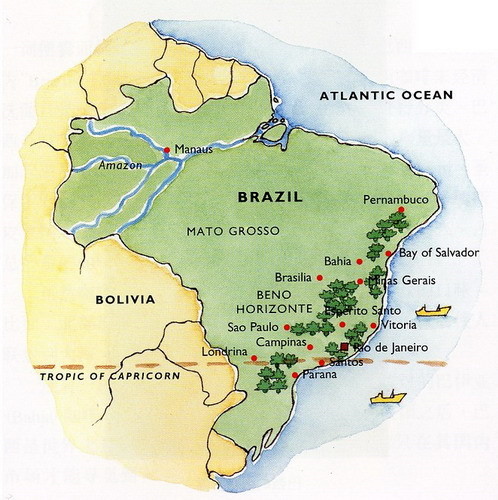
The name “Bourbon Santos” isn’t just branding—it’s a summary of the coffee’s heritage. The term “Bourbon” refers to the Bourbon variety of Arabica, which originated on the island of Bourbon (now Réunion) and became one of the most important genetic foundations of global coffee cultivation. These plants were brought to Brazil in 1729, initially planted in the country’s northern regions with limited success. It wasn’t until 1774, when Belgian missionaries introduced the variety to the warmer, wetter climate of Rio de Janeiro in the south, that Brazilian coffee began to thrive. To this day, Rio is still one of Brazil’s key coffee-growing regions.
The “Santos” part of the name comes from the Port of Santos, Brazil’s primary coffee export hub located on the Atlantic coast in the state of São Paulo. While coffee shipped from Santos can come from multiple regions, beans sourced from the southern states of São Paulo, Paraná, and especially Minas Gerais tend to be of higher quality. Within this group, coffee grown in Minas Gerais and labeled as Santos is typically regarded as the best of the lot.
Why Does Brazilian Coffee Taste the Way It Does?
Brazil is the largest coffee producer in the world, and its vast farming operations prioritize efficiency and volume. The country’s coffee regions generally feature low altitudes compared to places like Ethiopia or Colombia, and the terrain is mostly flat, which allows for mechanized planting and harvesting. This leads to a very different production approach compared to high-altitude, labor-intensive farms.
Because of the scale of production, Brazilian farmers often harvest both ripe and underripe cherries together, and there is usually little to no sorting. In some cases, leaves and twigs may also end up in the harvest. Most Brazilian coffee is processed using the natural (dry) method: cherries are spread out in the sun to dry, often with cherries of varying ripeness mixed together. This can introduce earthy, pulpy, or even fermented flavors into the beans, especially if overripe or damaged fruit is included in the batch.
These factors—mechanical harvesting, minimal sorting, mixed ripeness, and natural processing—contribute to the classic profile associated with Brazilian coffee: low acidity, medium body, and a clean, often sweet cup. While these traits might seem “plain” compared to brighter, fruitier coffees, they offer a reliable, smooth drinking experience that appeals to a wide range of consumers.
What Does Bourbon Santos Coffee Actually Taste Like?
Brazil Bourbon Santos is not meant to shock or wow with intense fruitiness or high acidity. Instead, it delivers a balanced, approachable cup. Its flavor profile typically includes notes such as nuts (often almonds or peanuts), chocolate, caramel, and toast. There’s a gentle sweetness and a smooth, velvety mouthfeel, with low acidity that makes it easy on the stomach and the palate.
This coffee is versatile in the cup. It doesn’t demand special brewing techniques or high-end equipment. In fact, it responds well to all roast levels—light, medium, and dark—and works across nearly every preparation method: drip, French press, pour-over, moka pot, and especially espresso.
When used in espresso, Bourbon Santos contributes body and sweetness, often producing a crema with a golden hue. Its mild character helps round out blends, but it also shines as a solo espresso shot or the base for milk drinks like lattes and cappuccinos. Many coffee drinkers value it precisely because it’s “ordinary” in the best sense: consistent, comforting, and unlikely to offend.
How Has Bourbon Santos Shaped Global Coffee?
Brazil’s dominance in coffee production—and the consistent output of beans like Bourbon Santos—has made Brazilian coffee a foundational element of the global coffee trade. Because of its reliability, affordability, and versatility, Brazilian coffee is a staple in commercial blends, espresso recipes, and even single-origin offerings.
For many coffee drinkers, their first exposure to Brazilian coffee comes through blends where it serves as a balancing component—adding body and smoothing out brighter, more acidic beans. Yet as a single origin, especially when sourced from higher elevations like Brazil’s Minas Gerais region, Bourbon Santos can express greater nuance and depth while retaining its hallmark smoothness.
Though it may not have the flashy complexity of an Ethiopian Yirgacheffe or the wine-like brightness of a Kenyan coffee, Bourbon Santos holds its own as a quietly reliable, widely loved coffee with a long history and a well-deserved place at the center of the coffee world.
Frequently Asked Questions
What is Brazil Bourbon Santos coffee?
Brazil Bourbon Santos is a single origin coffee variety from Brazil that combines the Bourbon coffee plant type with beans traditionally exported from the Port of Santos. It is known for its low acidity, smooth texture, and flavors often featuring nuts, chocolate, and caramel.
Where is Brazilian Bourbon Santos coffee grown?
While “Santos” refers to the export port, the coffee is primarily grown in southern Brazilian states such as Minas Gerais, São Paulo, and Paraná. Among these, Minas Gerais is especially known for high-quality Santos-grade beans.
What does Bourbon Santos coffee taste like?
It typically has low acidity, a smooth and medium body, and subtle sweetness. Common tasting notes include nuts (like almonds or peanuts), chocolate, caramel, toast, and sometimes a light nuttiness or cereal-like quality.
Is Brazilian Bourbon Santos good for espresso?
Yes. Its mild flavor, low acidity, and good body make it an excellent choice for espresso. It helps create a smooth shot with a golden crema and often adds sweetness and balance to espresso blends.
Does Bourbon Santos coffee have high acidity?
No. One of its defining characteristics is its low acidity, which contributes to its smooth, easy-drinking profile. This makes it a good option for those who prefer less tangy or bright coffees.
Why is it called Bourbon Santos?
“Bourbon” refers to the Bourbon variety of Arabica coffee, originally from Réunion Island. “Santos” is the major Brazilian port through which much of the country’s coffee is exported. Together, they describe the coffee’s variety and its traditional export origin.
Recommended FrontStreet Brazilian Coffee Beans
For a true taste of high-elevation Brazilian coffee, try FrontStreet Coffee’s Brazil Queen Manor. Grown in the rare high-altitude region of Mogiana, it uses the unique Yellow Bourbon variety and is medium-dark roasted to bring out creamy, nutty, and toasty notes like roasted peanut, grilled bread, and hazelnut. It’s clean, low-acid, and versatile for pour-over, French press, moka pot, and espresso machines. Freshly roasted within 5 days · Orders placed before 17:00 ship the same day · Next-day delivery across most of Guangdong Province.
FrontStreet Coffee is a long-established specialty coffee roaster in Guangzhou China, selling freshly roasted beans from its own farm in Yunnan as well as dozens of carefully selected single-origin beans from around the world for both pour-over and espresso. The products deliver consistently excellent quality and great value, with shipping within 24 hours. Guangzhou's FrontStreet Coffee shop is recommended by many coffee lovers, and the beans are now available online at the Tmall 。
Important Notice :
前街咖啡 FrontStreet Coffee has moved to new addredd:
FrontStreet Coffee Address: 315,Donghua East Road,GuangZhou
Tel:020 38364473