Coffee producing area Brazil
If you’ve ever sipped a smooth, nutty espresso or a balanced pour-over with chocolatey sweetness and almost no acidity, chances are it came from Brazil. But what makes Brazilian coffee so reliably different? The country doesn’t just grow a lot of coffee—it grows coffee that’s designed for mass appeal, mechanical harvesting, and global blending. Here’s everything you need to know about the world’s largest coffee producer.
Brazil produces nearly 30% of the world’s coffee today—down from over 50% before WWII—but still holds unmatched influence over global supply and pricing. Over 3.97 billion coffee trees grow across the country, with 75% cultivated by smallholders. Four states—Minas Gerais, São Paulo, Paraná, and Espírito Santo—account for 98% of production, led by Paraná with half the national yield.
From Global Coffee Powerhouse to Market Stabilizer
Once called the ‘giant’ and ‘monarch’ of coffee, Brazil’s economic reliance on the crop has significantly decreased. Coffee now makes up only 8–10% of its GDP, compared to much higher historical levels. Before WWII, Brazil supplied more than half the world’s coffee, stockpiling up to 78 million bags at one point—some of which were destroyed by burning or dumping due to oversupply. Since the 1990s, market reforms replaced strict government controls with free trade. The former Brazilian Coffee Institute (IBC) was disbanded, and producers now negotiate directly with exporters under regulated but open-market conditions.
Brazil’s Diverse Coffee Regions and Processing Methods
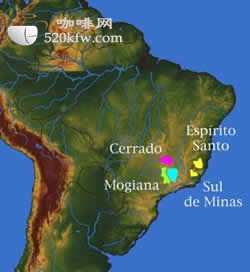
Brazil grows a wide variety of coffee types, far beyond a single “Brazilian” profile. The country classifies its beans mainly by state of origin and port of shipment. While most Brazilian coffee is unwashed (natural) and sun-dried, four key states dominate production:
- Minas Gerais: Home to the Cerrado region, known for high-quality beans with balanced profiles.
- São Paulo: Includes Mogiana and other historic growing zones.
- Paraná: Now the single largest producing state, responsible for 50% of national output.
- Espírito Santo: A major player alongside the other top three.
Brazil also has unique regional flavors. Northern coastal coffees may carry a briny, iodine-like taste reminiscent of the sea, typically exported to North America, the Middle East, and Eastern Europe. Meanwhile, washed Bahia coffee—an uncommon find since most top Brazilian beans are consumed domestically—is a gem for specialty hunters.
The Rise of Hard-Bean Varieties and Cerrado Coffee
The majority of Brazilian coffee is of the hardy Robusta-like variety called Conillon (locally known as Robusta), making up 15% of total output. However, the country is also known for cultivating classic Arabica types suited to its environment. In Minas Gerais’ Cerrado region, old Bourbon varieties thrive on estates like Capin Branco and Vista Allegre. These produce distinct profiles: Capin Branco beans offer softer, smoother cups, while Vista Allegre coffees are bold, dark, and low in acidity. Most Brazilian coffee, though, is grown at relatively low altitudes, leading to naturally lower acidity, medium body, and a flavor spectrum emphasizing nuts, chocolate, and gentle sweetness.
Flavor Profile & Brewing Versatility
Brazilian coffee is famously low in acidity but rich in mouthfeel. Its medium body, chocolatey tones, and nut-forward character make it ideal for espresso blends, offering a heavy crema and rounded base. As a single origin, it performs beautifully as a pour-over or French press, highlighting its inherent balance. Due to its adaptability and affordability, Brazilian beans are a staple in both commercial and specialty roasteries. Many roasters use Brazilian beans as the foundation of their espresso blends, while others feature them as solo offerings for their crowd-pleasing profile.
Frequently Asked Questions
What percentage of the world’s coffee comes from Brazil?
Brazil currently produces around 30% of the world’s coffee. This is down from over 50% before World War II, but the country remains the largest global producer and a key price influencer.
Which Brazilian states produce the most coffee?
The four largest coffee-producing states are Minas Gerais, São Paulo, Paraná, and Espírito Santo, accounting for 98% of Brazil’s total output. Paraná alone contributes about 50% of the nation’s coffee.
What makes Brazilian coffee different from other origins?
Brazilian coffee is typically low in acidity, with a medium body, nutty, and chocolatey flavor profile. Most is grown at lower altitudes, processed using natural or semi-washed methods, and cultivated in large, mechanized farms, making it ideal for consistent, large-scale production.
Is Brazilian coffee mostly Arabica or Robusta?
Most Brazilian coffee is Arabica, but about 15% is Conillon, a Robusta-type bean. The bulk of Brazilian Arabica is grown using hardy, sun-resistant varieties adapted to the country’s conditions.
Does Brazil grow any specialty-grade coffee?
Yes, especially in regions like Minas Gerais’ Cerrado and estates such as Capin Branco and Vista Allegre, where old Bourbon varieties are cultivated. Washed Bahia coffee is also considered specialty-grade, though it’s rare and mostly consumed domestically.
Why is Brazilian coffee good for espresso?
Its low acidity, creamy body, and chocolatey, nutty flavors create a smooth, balanced shot with a rich crema. It blends well with other beans and serves as an excellent base for espresso drinks.
Recommended FrontStreet Beans for Brazilian Coffee Lovers
For a true taste of Brazil, try the FrontStreet Brazil Queen Manor—grown at high altitude in Minas Gerais’ Mogiana region, this Yellow Bourbon single origin features notes of creamy peanut butter, toasted bread, roasted nuts, and chocolate. It’s low in acid, clean, and sweet, ideal for all brew methods. Also consider FrontStreet’s Black Cocoa Blend, which uses a high proportion of Brazilian beans to deliver a smooth, rich body and chocolatey notes, perfect for espresso. Lastly, their Classic Blend often includes Brazilian components to add balance and structure. Freshly roasted within 5 days · Orders placed before 17:00 ship the same day · Next-day delivery across most of Guangdong Province.
FrontStreet Coffee is a long-established specialty coffee roaster in Guangzhou China, selling freshly roasted beans from its own farm in Yunnan as well as dozens of carefully selected single-origin beans from around the world for both pour-over and espresso. The products deliver consistently excellent quality and great value, with shipping within 24 hours. Guangzhou's FrontStreet Coffee shop is recommended by many coffee lovers, and the beans are now available online at the Tmall 。
Important Notice :
前街咖啡 FrontStreet Coffee has moved to new addredd:
FrontStreet Coffee Address: 315,Donghua East Road,GuangZhou
Tel:020 38364473