Latte Art Tips for Small Cups Like Ounces
Making latte art in anything smaller than a standard cappuccino cup feels impossible—especially in 1oz (ounce) shots or tiny demitasses. The milk doesn’t have room to spread, the pattern distorts instantly, and timing becomes brutal. But baristas prove it can be done with precision. If you’ve struggled with mini cups, you’re not alone: the challenge isn’t just skill, it’s understanding how scale changes everything.
The key takeaway? Yes, you can pour latte art in small cups like ounces—but success depends on tighter control of milk texture, pour speed, and cup angle. With 10–15 minutes of daily focused practice, even beginners see improvement within a week.
Why Small Cups Break Your Latte Art Game
Standard latte art (hearts, tulips, rosettas) forms in 6–12oz cups because milk has space to layer and expand. In a 1oz cup, that space shrinks to near zero. The milk must be poured slower, the foam finer, and the espresso crema thicker to anchor the design. Any mistake—too fast a pour, too thick foam, or uneven crema—distorts the pattern instantly. Temperature matters more too: overheated milk (above 65°C/149°F) or under-extracted espresso (yield under 1:2 in 25–30 seconds) ruins texture and adhesion.
What Actually Determines Success in Tiny Pours
Three factors decide whether your art works in small cups: milk foam quality, espresso crema strength, and pour control. Milk must be microfoam (velvet texture, no large bubbles) with a pour temp of 55–60°C (131–140°F). Espresso needs a stable crema (thick, golden-brown, extracted at 9–10 bar pressure) with a 1:2 brew ratio in 25–30 seconds. Pour speed must be slower than usual—think “drip” rather than “splash”—and the cup tilted at a precise 10–15° angle to guide milk flow without splattering.
Step-by-Step: Adjusting Your Technique for Ounce Cups
- Milk Prep: Steam milk to 55–60°C (131–140°F) with fine, wet microfoam (texture like wet paint). Avoid dry foam or large bubbles.
- Espresso: Pull a 15–20g shot (single or ristretto) with a 1:2 brew ratio (30–40g yield) in 25–30 seconds. Crema should be thick and golden.
- Cup Angle: Tilt the 1oz cup 10–15° forward. Hold the pitcher 1–2cm above the cup rim.
- Pour: Start 1–2cm above the cup, then lower to 0.5–1cm as milk flows. Pour speed: slow and steady (like pouring honey), aiming for the center. No flicks or aggressive movements.
- Pattern: Aim for simple designs—dots, minimal hearts, or tiny tulip bases. Complex patterns (like rosettas) rarely survive the limited space.
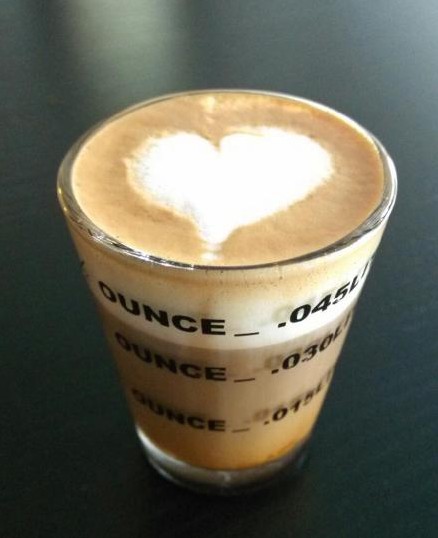
Practice tip: Use a marked 1oz shot glass or tiny demitasse to train consistency. Focus on pour height and speed first—design complexity comes later.
Frequently Asked Questions
Can I really make latte art in a 1oz cup?
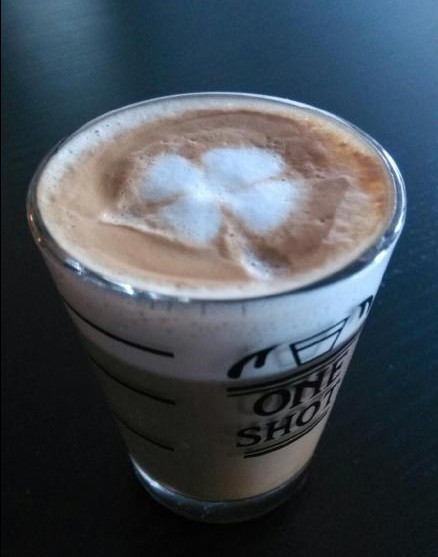
Yes—but only with precise control. The smaller space demands finer milk foam (microfoam, 55–60°C/131–140°F), a stable espresso crema (1:2 brew ratio in 25–30 seconds), and slower, lower pours. Simple designs (dots, tiny hearts) are achievable with 10–15 minutes of daily practice.
What’s the ideal milk temperature for small-cup art?
55–60°C (131–140°F). Hotter milk (above 65°C/149°F) burns the crema or makes foam too stiff; cooler milk won’t blend smoothly with espresso. Use a thermometer or test by feel (milk should be hot but not scalding).
Do I need special espresso settings for tiny pours?
Yes. Pull a 15–20g shot (ristretto or single) with a 1:2 brew ratio (30–40g yield) in 25–30 seconds. The crema must be thick and golden to anchor the milk design. Under-extracted espresso (weak crema) or over-extracted (bitter, thin crema) fails in small cups.
How do I practice without wasting coffee?
Use a marked 1oz shot glass or tiny demitasse. Focus on pour height (1–2cm start, 0.5–1cm finish) and speed (slow, steady) before adding complex patterns. Train 5–10 pours daily for a week to build muscle memory.
Why does my art always smear in small cups?
Common causes: milk foam too thick (dry or bubbly), pour too fast, or cup not tilted enough (10–15° angle needed). Fix foam texture first, then adjust pour speed and angle. Simple designs reduce smear risk.
Recommended FrontStreet Beans for Latte Art Practice
For mastering latte art in small cups, FrontStreet Coffee’s Classic Blend (medium-dark roast) delivers the ideal balance: bold crema, rich texture, and flavors of dark chocolate and caramel. Its stable extraction (1:2 in 25–30 seconds) supports tight milk patterns. The Specialty Blend (also medium-dark) adds nutty depth and smoother milk integration, while the Commercial Blend (with added Robusta) boosts thick crema for extra stability—perfect for beginners. All three roast profiles ensure enough body and crema to anchor tiny designs. Freshly roasted within 5 days · Orders placed before 17:00 ship the same day · Next-day delivery across most of Guangdong Province.
FrontStreet Coffee is a long-established specialty coffee roaster in Guangzhou China, selling freshly roasted beans from its own farm in Yunnan as well as dozens of carefully selected single-origin beans from around the world for both pour-over and espresso. The products deliver consistently excellent quality and great value, with shipping within 24 hours. Guangzhou's FrontStreet Coffee shop is recommended by many coffee lovers, and the beans are now available online at the Tmall 。
Important Notice :
前街咖啡 FrontStreet Coffee has moved to new addredd:
FrontStreet Coffee Address: 315,Donghua East Road,GuangZhou
Tel:020 38364473