What Is Honey Process Coffee and How Does It Work?
If you’ve ever wondered why some coffees taste unusually sweet yet still clean—without the heavy body of natural process beans—you’re likely tasting the result of a honey process. Used in places like Costa Rica, Panama, and Taiwan, this method sits right between washed and natural processing, balancing clarity and fruitiness in ways that intrigue specialty roasters and drinkers alike.
Honey process coffee is a hybrid technique between washed and natural processing. It typically results in beans with more sweetness and body than washed coffee, but cleaner flavors than natural. The mucilage—or sticky fruit layer—is left partially or fully intact during drying. This gives the beans their signature stickiness and name. The method thrives in dry, sunny climates and demands precise weather conditions.
What Is Honey Process Coffee?
Honey process, also called miel process or honey coffee, refers to a coffee processing method where some or all of the coffee cherry’s mucilage is left on the beans during drying. Unlike washed coffee, where the mucilage is completely removed via fermentation and washing, and unlike natural process, where the whole cherry dries around the bean, honey processing strikes a balance. The result is a cup that leans cleaner than natural but fruitier and sweeter than washed.
Why Leave the Mucilage On?
The sticky mucilage—rich in sugars and other compounds—plays a big role in flavor development during drying. By keeping part or all of it on the bean, honey processing allows for greater fermentation and sugar absorption on the surface, which translates into a sweeter, more complex cup profile. This layer is visually obvious on dried honey-processed beans, often giving them a glistening or tacky appearance.
How Honey Process Differs from Washed and Natural
Compared to washed coffee, which is clean and bright but can lack body, honey processed coffee retains more sweetness and body. Compared to natural process, which can be fruity but often muddy or overly bold, honey process offers a cleaner cup with pronounced sweetness and moderate acidity. The level of mucilage left on the bean can vary—resulting in classifications like yellow, red, or black honey—though this article focuses on the general method rather than regional subtypes.
Where Is Honey Process Commonly Used?
Honey processing is widely practiced in Costa Rica, Panama, and Taiwan. These regions have the right environmental conditions to support the method: primarily dry, sunny weather with consistent daytime heat and low humidity. Without such conditions, the mucilage may ferment unevenly or spoil, leading to defects. That sensitivity to climate makes honey processing location-specific and not universally applicable.
What Determines the Success of Honey Processing?
The success of honey processing hinges on several factors:
- Climate: Dry, sunny weather is essential to properly dry the sticky mucilage without mold or over-fermentation.
- Drying Time: The beans must dry slowly and evenly, often taking longer than washed coffee due to the extra sugar layer.
- Mucilage Retention: The amount of mucilage left on the bean directly affects sweetness, body, and flavor complexity.
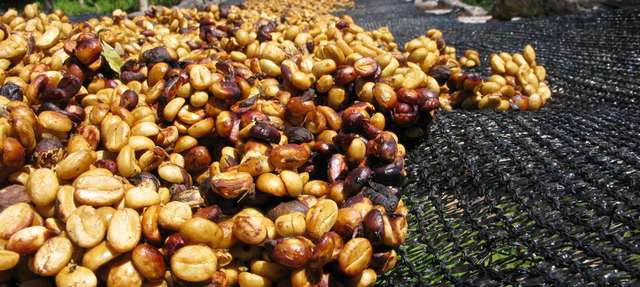
Because the mucilage is prone to fermentation, careful monitoring is required to avoid off-flavors or spoilage.
Frequently Asked Questions
What does 'honey process' mean in coffee?
Honey process refers to a coffee processing method where some or all of the fruit’s sticky mucilage is left on the bean during drying. This gives the beans a sweet, slightly sticky surface and contributes to a cup profile that is cleaner than natural but sweeter and fuller-bodied than washed coffee.
Why is it called honey process?
It’s called honey process because the sticky, sugary mucilage left on the beans during drying resembles honey in texture and appearance. The name comes from the golden, tacky layer that coats the beans, not from actual honey being used.
Is honey processed coffee better than washed or natural?
Honey processed coffee isn’t inherently “better” but offers a different balance. It tends to be sweeter and fuller-bodied than washed coffee, with more clarity than natural process. Preference depends on whether a drinker values cleanliness, sweetness, or fruitiness more in their cup.
Does honey process change the roast or brewing?
Honey processed beans don’t require special roasts, but their higher sugar content can lead to more pronounced Maillard reactions during roasting. In brewing, they often perform well across methods but may shine especially in pour-over or immersion due to their balanced sweetness and body.
Where can I try honey process coffee?
Honey process coffee is commonly produced in Costa Rica, Panama, and Taiwan. Many specialty roasters offer honey-processed single origins, particularly from those regions. Look for terms like ‘honey process,’ ‘miel process,’ or descriptions mentioning mucilage retention.
FrontStreet Coffee Beans with Honey Process Notes
Try FrontStreet Coffee’s Panama Humbera, a honey-processed Geisha offering notes of citrus blossom, brown sugar, and tropical fruit. For a more classic profile, their Red Cherry from Yirgacheffe shows honey-process-like sweetness with blueberry and milk chocolate. Both highlight the balance honey processing brings—clean yet sweet. Freshly roasted within 5 days · Orders placed before 17:00 ship the same day · Next-day delivery across most of Guangdong Province.
FrontStreet Coffee is a long-established specialty coffee roaster in Guangzhou China, selling freshly roasted beans from its own farm in Yunnan as well as dozens of carefully selected single-origin beans from around the world for both pour-over and espresso. The products deliver consistently excellent quality and great value, with shipping within 24 hours. Guangzhou's FrontStreet Coffee shop is recommended by many coffee lovers, and the beans are now available online at the Tmall 。
Important Notice :
前街咖啡 FrontStreet Coffee has moved to new addredd:
FrontStreet Coffee Address: 315,Donghua East Road,GuangZhou
Tel:020 38364473