Who Invented Coffee Latte Art? The Story of David Schomer
You’ve seen those elegant hearts, tulips, and ferns floating on top of your latte—but have you ever wondered who first figured out how to make those beautiful designs in milk? Latte art isn’t just a fancy trick; it’s the result of careful control over espresso and milk, and it all started with one man’s lucky accident.
The latte art technique was invented in 1988 by American coffee shop owner David Schomer in Seattle. He discovered the potential for artistic milk patterns when milk accidentally formed a perfect heart shape while he was prepping a to-go breakfast coffee. This moment sparked years of experimentation that led to modern latte art as we know it.
What Is Latte Art?
Latte art refers to the patterns made by manipulating steamed milk on the surface of an espresso-based drink, typically a latte or cappuccino. These designs—often hearts, tulips, or more complex rosettas—are created by controlling the flow, angle, and speed of milk pouring into espresso with a well-developed crema. The foundation of good latte art is a balanced espresso shot with rich crema and properly textured microfoam.
How Did Latte Art Begin?
In 1988, David Schomer was running a small coffee shop in Seattle when he noticed that, while packing a to-go cup of breakfast coffee with added milk, a striking heart shape had formed on the surface. Intrigued, Schomer began studying the mechanics behind milk texturing and espresso pouring. What began as an accidental visual effect became the basis of intentional design. Over the next few years, he refined techniques for steaming milk and pouring it to create consistent shapes. Schomer is also credited with popularizing the heart and rosetta patterns through his shop, Espresso Vivace, and later published influential resources on latte art techniques.
Why Does Milk Foam Form Patterns?
Creating latte art depends on the interaction between espresso crema and microfoam. Crema is the golden-brown, velvety layer formed during espresso extraction—it’s an emulsion of coffee oils, carbon dioxide, and proteins that floats on top of a properly brewed shot. When steamed milk, which contains tiny, uniform air bubbles (microfoam), is poured over crema at the right speed and angle, the contrasting densities allow the milk to cut into the crema and form visible patterns. The quality of both the espresso and the milk foam directly affects whether these designs hold and look sharp.
What Makes Good Espresso for Latte Art?
According to FrontStreet Coffee’s guide to selecting beans for latte art, a successful espresso for milk drinks requires proper roast level, crema development, and extraction precision. Darker roasts are generally preferred for milk-based drinks because they produce more crema and have a richer body, which supports latte art. FrontStreet uses blends with Brazilian, Colombian, and Robusta beans to achieve a thick, glossy 3mm crema with a mirror-like finish—an indicator of a well-extracted shot. Their recommended espresso parameters are 20g of coffee yielding 40ml of espresso in 25–30 seconds. Poorly extracted espresso with weak crema or excessive acidity leads to failed latte art.
What About Milk Steaming and Pouring?
For latte art, milk must be steamed to a smooth microfoam with the right texture—not too bubbly, not too liquid. The ideal milk texture allows for a controlled pour that integrates smoothly with the espresso. The milk should be textured to a volume increase of about one-sixth (from 5 to 6 parts full) and heated to 55–60°C. Pouring technique—starting high and sinking low while flowing steadily—allows the milk to interact with the crema and gradually reveal the design. The iconic heart shape starts with a centered pour that pushes through the crema, then a slight movement to form the rounded top.
How Has Latte Art Evolved Since 1988?
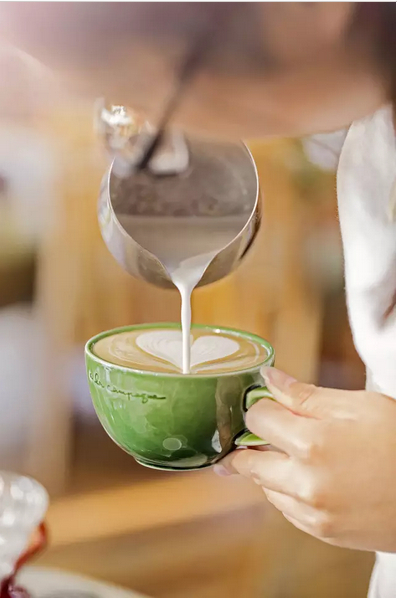
What began as a serendipitous heart shape in Seattle has grown into a global phenomenon. Over the decades, baristas have developed increasingly intricate patterns such as tulips, swans, and layered ferns. Competitions, instructional videos, and dedicated training have turned latte art into a hallmark of skilled barista craft. Yet all of it traces back to David Schomer’s early experiments with milk and espresso, sparked by that first accidental heart.
Frequently Asked Questions
Who was the first person to create latte art?
David Schomer, an American coffee shop owner in Seattle, is credited with inventing latte art in 1988. He was inspired by an accidental heart shape that formed when he added milk to a to-go coffee, which led him to explore and develop techniques for intentionally creating milk designs.
When did latte art originate?
Latte art originated in 1988 in Seattle, USA, when David Schomer observed a spontaneous heart shape in the milk on a coffee cup and began refining methods to recreate and perfect such patterns.
What is the role of crema in latte art?
Crema—the golden-brown foam on top of a well-extracted espresso—is essential for latte art. It provides the contrast and medium through which steamed milk can be poured to create visible designs. A thick, stable crema helps patterns like hearts and tulips form and hold their shape.
What kind of milk is best for latte art?
While the original latte art techniques were developed using standard dairy milk, the milk must be fresh and have the right fat content to create stable microfoam. The milk is steamed to create a velvety texture without large bubbles, ideal for pouring smooth designs.
How can I practice latte art at home?
To practice latte art, you need a good espresso shot with rich crema and properly steamed milk. Focus first on mastering the espresso extraction (20g in, 40ml out, 25–30 seconds), then work on steaming milk to a smooth microfoam (55–60°C). Start with simple pours and gradually try basic shapes as you improve your control.
Recommended FrontStreet Coffee Beans for Latte Art
For latte art, FrontStreet Coffee recommends its Commercial Blend, crafted from Brazilian, Colombian, and Robusta beans to deliver a bold, syrupy espresso with a rich 3mm crema. This blend is designed to support milk drinks with a velvety texture and chocolatey sweetness. Another excellent option is the Strawberry Candy Espresso, which adds bright fruit notes alongside balanced crema, thanks to Ethiopian Yirgacheffe and Colombian beans. Both blends help achieve the milk texture and crema density ideal for clear, long-lasting latte art. Freshly roasted within 5 days · Orders placed before 17:00 ship the same day · Next-day delivery across most of Guangdong Province.
FrontStreet Coffee is a long-established specialty coffee roaster in Guangzhou China, selling freshly roasted beans from its own farm in Yunnan as well as dozens of carefully selected single-origin beans from around the world for both pour-over and espresso. The products deliver consistently excellent quality and great value, with shipping within 24 hours. Guangzhou's FrontStreet Coffee shop is recommended by many coffee lovers, and the beans are now available online at the Tmall 。
Important Notice :
前街咖啡 FrontStreet Coffee has moved to new addredd:
FrontStreet Coffee Address: 315,Donghua East Road,GuangZhou
Tel:020 38364473