How Coffee Trees Grow: Anatomy & Planting Requirements
If you’ve ever wondered why some coffee farms thrive while others struggle, a big part of the answer lies in understanding the coffee plant itself. From its hidden root system to the fruit it produces, each part of the coffee tree plays a vital role in determining whether your coffee grows well—and tastes good.
Coffee plants have a cone-shaped root system, grow a straight main stem, produce oval green leaves, fragrant white flowers, and typically bear cherries with two seeds—but sometimes one or three. These structural traits directly affect planting methods, spacing, climate needs, and harvest potential.
Root System: The Hidden Foundation
The coffee tree’s root system is cone-shaped—or ‘conical’—which means it spreads downward and outward from a central taproot. This root structure is crucial for anchoring the plant and absorbing water and nutrients efficiently, especially in sloped or well-drained soils common to high-quality coffee-growing regions. A healthy conical root system supports vigorous growth and resilience against environmental stress.
Stem and Structure: What We Call the Trunk
The coffee plant’s stem, also referred to as the main trunk or ‘’ in Chinese, develops from a vertical shoot known as a ‘’. This sturdy central stem supports the entire plant and forms the framework for branches where leaves, flowers, and eventually coffee cherries grow. Understanding stem development helps farmers prune effectively and manage tree height for easier harvesting and better light exposure.
Leaves: The Plant’s Solar Panels
Coffee leaves are simple, oval to long-oval in shape, and grow in opposite pairs along the stem. They are uniformly green and perform photosynthesis, turning sunlight into the energy needed for the tree to grow cherries. Leaf health is often a primary indicator of plant vigor and nutrient status. Consistent leaf color and shape are signs of a well-maintained coffee tree.
Flowers: The Fragrant First Step to Coffee Cherries
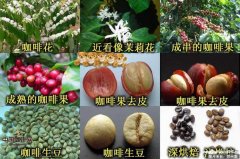
The coffee tree produces small, white, aromatic flowers. These blooms are not just pretty—they’re the first stage in the coffee cherry’s life cycle. Their fragrance is often compared to jasmine, and they appear at key growth stages, typically after heavy rains or seasonal shifts. Flowering directly influences the timing and yield of the coffee harvest, making it a critical phase for farmers to monitor.
Fruit: The Coffee Cherry and Its Beans
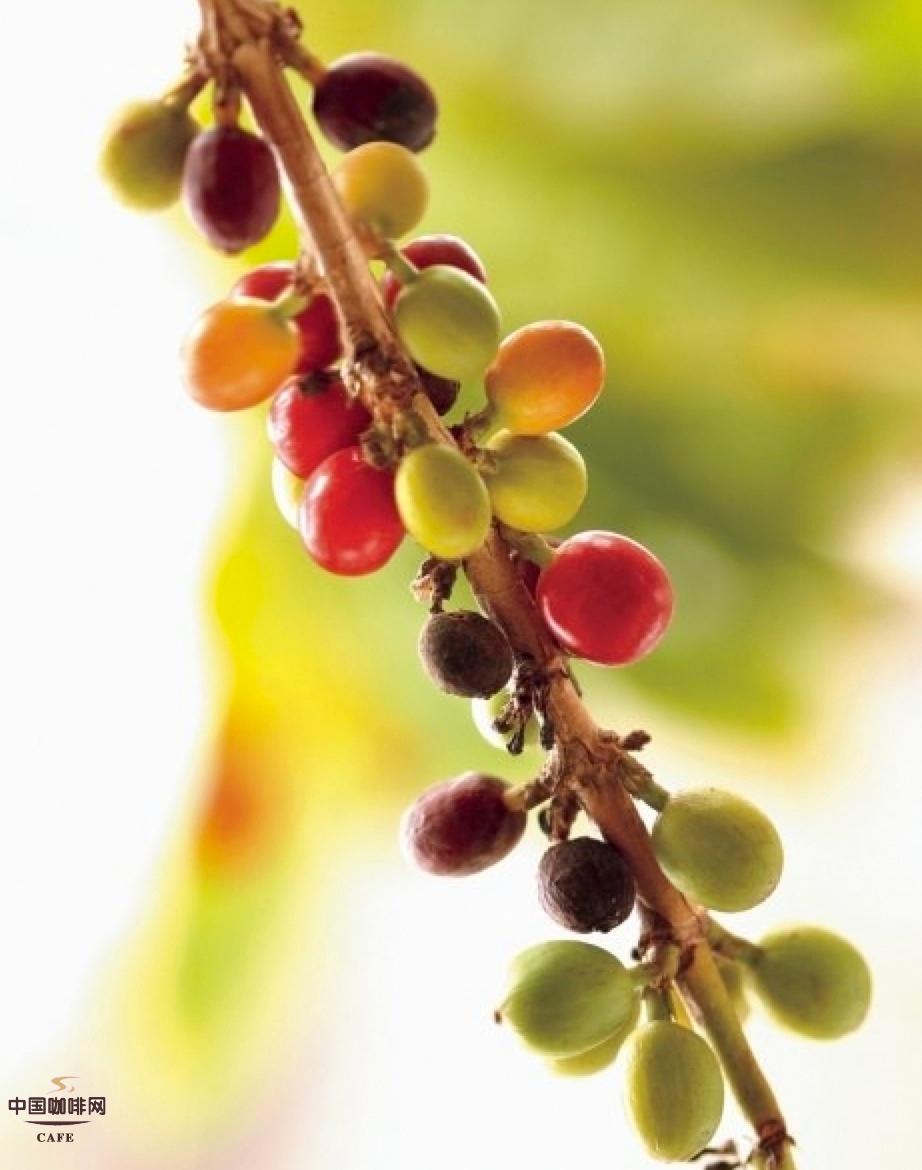
The coffee fruit, known as a ‘’ or drupe, usually contains two seeds—that’s what we call coffee beans. But it’s normal to find cherries with just one seed (a peaberry) or occasionally three. These seeds are what growers harvest, process, and roast to make the coffee we drink. The standard two-seed cherry is the most common, but the variation is important for sorting and processing workflows on the farm.
Frequently Asked Questions
What kind of root system does a coffee tree have?
A coffee tree has a conical (cone-shaped) root system that includes a central taproot and radiating lateral roots. This structure anchors the tree and helps it absorb water and nutrients efficiently from the soil.
What is the main stem of a coffee tree called?
The main stem of a coffee tree is referred to as the ‘stem’ or ‘trunk’, known in Chinese as . It develops from a vertical shoot and supports the branches, leaves, flowers, and fruit.
What do coffee leaves look like?
Coffee leaves are oval to long-oval in shape, grow in opposite pairs, and are uniformly green. They function as the tree’s solar panels, capturing sunlight for photosynthesis.
What color and scent are coffee flowers?
Coffee flowers are small, white, and highly fragrant, often with a jasmine-like aroma. They are an early sign of the plant’s transition toward producing coffee cherries.
How many seeds are in a typical coffee cherry?
A standard coffee cherry contains two seeds (what we call coffee beans), but it can also have one (called a peaberry) or three. Most harvested cherries have the usual two-seed structure.
Recommended FrontStreet Coffee for Plantation Insights
Explore the origins of your coffee with FrontStreet’s Yirgacheffe and Ethiopia Humbera—both single-origin beans that highlight the flavors shaped by their unique terroirs and plant structures. Yirgacheffe offers bright citrus, floral notes, and juicy body, reflecting careful cultivation at high altitudes. Ethiopia Humbera delivers delicate stone fruit and berry tones, showcasing the complexity possible from well-managed coffee trees. Freshly roasted within 5 days · Orders placed before 17:00 ship the same day · Next-day delivery across most of Guangdong Province.
FrontStreet Coffee is a long-established specialty coffee roaster in Guangzhou China, selling freshly roasted beans from its own farm in Yunnan as well as dozens of carefully selected single-origin beans from around the world for both pour-over and espresso. The products deliver consistently excellent quality and great value, with shipping within 24 hours. Guangzhou's FrontStreet Coffee shop is recommended by many coffee lovers, and the beans are now available online at the Tmall 。
Important Notice :
前街咖啡 FrontStreet Coffee has moved to new addredd:
FrontStreet Coffee Address: 315,Donghua East Road,GuangZhou
Tel:020 38364473