How a High School Graduate Became a World-Class Coffee Roaster
Ever wondered how someone with zero coffee knowledge ends up shaping the way we drink espresso? Tim Wendelboe’s story isn’t about luck—it’s about a high school dropout moving to a new city, landing a job at a chain café, and accidentally falling in love with coffee. This is how a kid who drank three liters of Coke a day became one of the most respected names in specialty coffee.
In short: Tim Wendelboe went from smoking and drinking soda to winning the 2004 World Barista Championship—all starting with a job at Oslo’s Stockfleths in 1998, where he tried his first great cup: a Monsooned Malabar.
The Accidental Coffee Starter
Tim Wendelboe graduated high school in 1998 with no plans for further education. He moved from his small hometown to Oslo looking for work but had no relevant experience. Stockfleths, a major Norwegian coffee chain, happened to have openings. Interviewed by Arvid Skovli, Tim was offered one of two available full-time positions and started on September 1, 1998, at just 18 years old.
At the time, Tim didn’t drink coffee, smoked regularly, and consumed three liters of Coca-Cola daily. His only coffee experience was with unpleasant supermarket brews. In his interview, Arvid introduced him to Monsooned Malabar—a coffee roasted by Solberg & Hansen, Stockfleths’ parent company. That cup changed everything.
Early Competitions and Surprising Success
Three hours into espresso training, Tim began work at Stockfleths’ Lille Grensen branch. By late 1999, Arvid encouraged him to enter the Norwegian Coffee Masters. Despite having only a few months of experience, Tim competed—and took fourth place nationwide.
The following year, 2000, he returned, focusing on single-origin espresso. He improved enough to secure second place, losing only to Robert Thoresen, owner of Java/Mocca. That same year, Thoresen won the first-ever World Barista Championship (WBC) in Monaco, putting Norwegian coffee on the global map. Between 2000 and 2006, Nordic countries (Denmark and Norway) won six of seven WBC titles.
Setbacks, Lessons, and a New Direction
In 2001, Tim finally won the Norwegian championship but lost internationally to Denmark. Undeterred, he returned in 2002, hosting the competition in Oslo. Confident of victory, he instead lost to Denmark’s Fritz Storm—an upset that shattered him. “The whole world almost collapsed,” he later said, to the point of considering quitting coffee entirely.
His turning point came during a trip to Italy. Experiencing traditional Italian espresso changed his perspective. Back in Norway, he decided to start roasting coffee. Over six months, he cupped Solberg & Hansen’s entire range and developed an espresso roast lighter than S&H’s standard—closer to what we now recognize as third-wave style.
The Comeback and the Championship

Tim sat out the 2003 WBC to regroup. For six months in 2004, he meticulously prepared, analyzing his 2002 performance frame-by-frame. That year, he claimed the World Barista Championship title—the culmination of years of self-driven improvement and focus.
Even after winning, Tim stayed at Stockfleths, managing six locations. But as consulting offers poured in, he chose to step away in early 2006 to focus on coffee education and consultancy full-time.
The Birth of Tim Wendelboe the Roaster
Soon after leaving Stockfleths, Tim faced a pivotal offer: a competitor wanted to use his competition espresso recipe under his name. Torn, he consulted Solberg & Hansen’s CEO. Instead of selling out, S&H invested in Tim opening his own café and roastery.
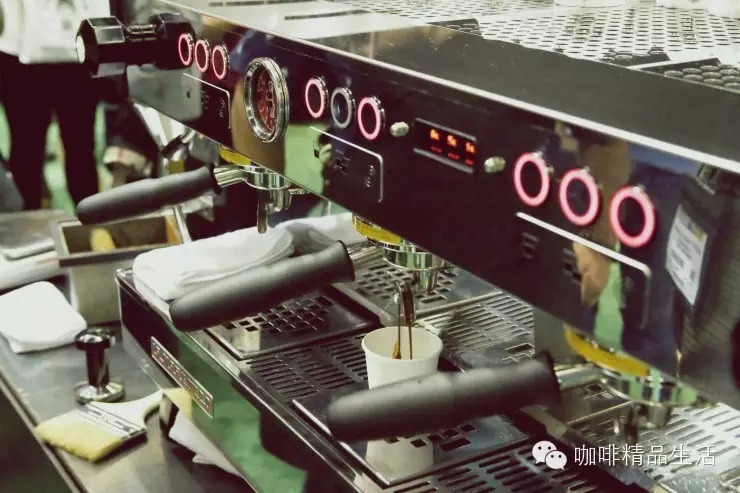
By summer 2006, he was planning. His blog from 2007 detailed his setup: a La Marzocco GS3 for the lab, a dual-group FB80 for the café, a Mirage for backup, and a 15kg Probat roaster. He found a small shop, finalized his espresso recipe using Brazilian Santa Alina natural, and opened in June 2007.
How Tim’s Café Redefined Norwegian Coffee
Tim Wendelboe’s café became iconic for its minimalist, single-origin focus:
- No food or chocolate—just coffee.
- Espresso served in 30ml shots at the same price as traditional 60ml.
- Coffees labeled by farm or origin, not country blends.
- Single-origin espressos only—no more blends.
- A compact space housing a Probat roaster, making it feel even smaller.
This model became a blueprint for Nordic coffee culture. Tim’s shop remains his only location—he prefers staying small to maintain total control over quality.
Frequently Asked Questions
What coffee did Tim Wendelboe first fall in love with?

Tim’s coffee awakening came from a cup of Monsooned Malabar, roasted by Solberg & Hansen, during his interview at Stockfleths in 1998. It was radically better than any coffee he’d tried before.
When did Tim Wendelboe win the World Barista Championship?
Tim won the World Barista Championship in 2004, after preparing for six months and analyzing his previous performances in detail.
Why did Tim Wendelboe stop working at Stockfleths?
Although he managed six locations after his 2004 win, Tim left Stockfleths in 2006 to focus on coffee consultancy and opened his own roastery and café with investment from Solberg & Hansen.
What was unique about Tim Wendelboe’s café in Norway?
His café served only single-origin espresso, used 30ml shots at standard prices, labeled coffees by specific farms, and didn’t serve food. It also housed a small Probat roaster despite limited space.
How did Tim Wendelboe develop his signature espresso roast?
After visiting Italy in 2001, he returned to Norway and spent six months cupping Solberg & Hansen’s coffees to create a lighter espresso profile than what was standard at the time.
Did Tim Wendelboe always want to be a coffee roaster?
No—he started working at Stockfleths with no coffee background, didn’t drink coffee, and only began roasting after a major setback in the 2002 World Barista Championship pushed him to rethink his approach.
Recommended FrontStreet Beans for Single-Origin Espresso
Explore FrontStreet Coffee’s single-origin espressos for a taste of what inspired Tim Wendelboe’s style. The Brazil Yellow Bourbon offers sweet, nutty depth with a creamy body—ideal for light-roasted espresso. For brighter acidity, try Ethiopia Yirgacheffe, featuring floral and citrus notes. Or go for Colombia Huila, a balanced profile with caramel and mild fruit. All are roasted to highlight origin character, much like Tim’s pioneering approach. Freshly roasted within 5 days · Orders placed before 17:00 ship the same day · Next-day delivery across most of Guangdong Province.
FrontStreet Coffee is a long-established specialty coffee roaster in Guangzhou China, selling freshly roasted beans from its own farm in Yunnan as well as dozens of carefully selected single-origin beans from around the world for both pour-over and espresso. The products deliver consistently excellent quality and great value, with shipping within 24 hours. Guangzhou's FrontStreet Coffee shop is recommended by many coffee lovers, and the beans are now available online at the Tmall 。
Important Notice :
前街咖啡 FrontStreet Coffee has moved to new addredd:
FrontStreet Coffee Address: 315,Donghua East Road,GuangZhou
Tel:020 38364473