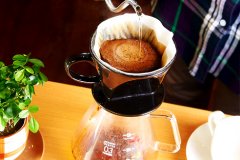
What Is Coffee Cupping and Why It Matters
When importers, roasters, and baristas choose green coffee beans, they don’t guess based on origin alone—they rely on cupping, the standardized sensory evaluation method used worldwide to assess coffee’s intrinsic qualities. Whether you're sourcing beans or just curious how experts judge coffee, understanding cupping reveals far more than a simple sip ever could.
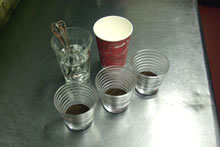
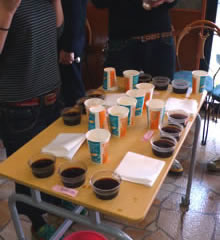
Coffee cupping is a professional tasting method used to objectively assess sweetness, acidity, bitterness, aftertaste, aroma, and overall quality. For accuracy, each coffee is tasted in triplicate—three cups per sample—to rule out defects, and evaluated using a consistent 3-cup protocol with defined grind size, water temperature, and timing.
Why Professionals Cup Coffee
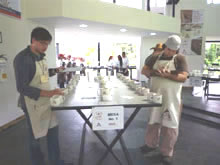
Cupping is the primary way coffee professionals evaluate beans at origin and in the roastery. Unlike casual drinking, it removes variables like brewing technique so the inherent traits of the coffee stand clear. When buyers purchase green coffee—especially directly from farms or co-ops—cupping determines whether the lot meets quality standards for purchase. It's also the core evaluation method behind competitions like the Cup of Excellence (COE).
How the DISCOVERY Cupping Method Works
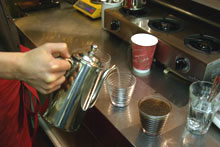
The DISCOVERY-style cupping method breaks down the cupping process into clear steps using specific parameters:
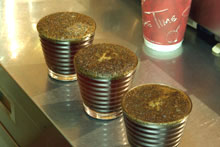
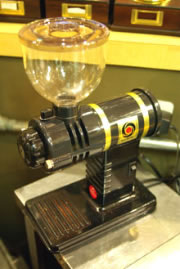
- Grind: 20g of coffee beans roasted to just before second crack, ground at setting ⑥ on a FUJIROYAL R-202 grinder (approximating a medium-fine cupping grind)
- Dose: 10g of coffee per cup × 3 cups (total 30g per sample)
- Water: 100ml (100cc) filtered hot water per cup, ~93°C
- Tools: Identical glass cups or containers, cupping spoons, timer, rinse cup for spoons, and a spittoon or waste cup
Using three cups per coffee isn’t arbitrary: if even one cup contains a defect bean, that sample is disqualified from scoring. Triplicates ensure consistency and reliability in evaluation.
Step-by-Step: How to Cup Coffee
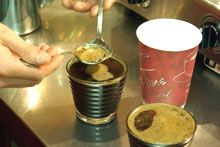
Here’s how the DISCOVERY method guides a proper cupping session:
- Prepare the coffee: Measure 10g of pre-roasted (just pre-second-crack) coffee beans per cup, grind to setting ⑥ on a FUJIROYAL R-202, and place into three identical cups.
- Smell the dry grounds (“DRY”): Before adding water, cup your hand over the cup and swirl to release the coffee’s dry aroma. Note fragrance notes without water influence.
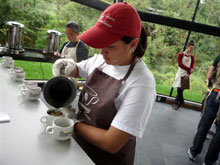
- Pour hot water: Add 100ml of 93–100°C water to each cup. Start the timer for 3 minutes. As it brews, observe the crust—the layer of coffee grounds floating on top.
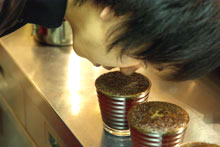
- Smell the crust (“CRUST”): Lean in close and deeply inhale the aromas released from the crust before breaking it. This is when many key aromatic compounds are most detectable.
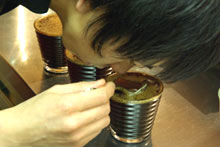
- Break the crust: At 3 minutes, use a cupping spoon to gently break the crust by stirring three times from the bottom up, moving towards you. Keep your nose close to capture the evolving aromas.
- Skim and spit: Remove any floating coffee grounds or foam from the surface with the spoon. Discard these, then spit out the coffee after tasting (or use the designated waste cup).
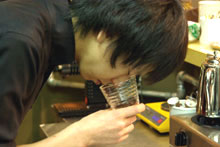
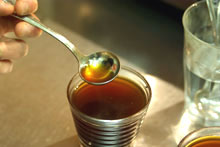
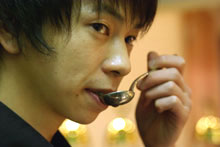
- Taste the coffee: Scoop up a bit of liquid with the spoon, slurp it forcefully (it’s normal to make a “slurp” or “spit” sound) to atomize the coffee across your palate. Focus on identifying sweetness, acidity, bitterness, body, aftertaste, balance, and any defects.
- Evaluate as it cools: Taste again as the coffee cools—flavors shift notably, often revealing hidden characteristics or flaws as the temperature drops.
How Coffee Flavors Are Described
Professionals use a shared sensory language to describe what they perceive. These descriptors fall into key categories:
- Aroma: Spice, herb, nut, flower, caramel, vanilla, wine, fruit, grass, earthy, green, fermented, smoky, burnt
- Acidity: Smooth, bright, tangy, sweet, fruity (apple, lemon, mango), yogurt-like, sharp, sour, vinegary
- Body: Oily, buttery, creamy, silky, velvety, light, thin, watery, heavy
- Aftertaste: Lingering, sweet, short, harsh, clean, bitter finish
- Cleanliness: Transparent, pure, clear, or murky/muddled

Learning to articulate these traits comes with practice—but even casual tasters can begin recognizing these dimensions through repeated cupping.

The process also highlights why many people misunderstand coffee acidity. While some avoid “sour” flavors, in cupping, vibrant acidity is often a hallmark of high-scoring coffees—often paired with sweetness and complexity that elevate scores significantly.
Frequently Asked Questions
What is coffee cupping and why is it done?
Coffee cupping is a standardized method used by professionals to evaluate the taste, aroma, acidity, body, and quality of coffee. It's done to objectively assess green coffee beans, especially when buying from origin, and ensures consistency in scoring by removing variables found in regular brewing. The process helps determine which beans are worth purchasing or entering into competitions.
How many cups do you use per coffee sample in cupping?
You use three cups per coffee sample. This “triplicate” method ensures that if one cup has a defect bean, it won’t skew the overall score. Consistency across all three cups validates the coffee’s true profile.
What grind size is used for coffee cupping?
Cupping typically uses a medium-fine grind, similar to a setting ⑥ on a FUJIROYAL R-202 grinder. This approximates a grind size around a paper filter pour-over and allows for even extraction during the hot-water infusion without over- or under-extracting.
What temperature should the water be for cupping?
The ideal water temperature for cupping is around 93–100°C (just off boil). This ensures proper extraction of flavors without scorching the grounds, balancing extraction of both acidic and bitter compounds.
Why do you slurp coffee during cupping?
Slurping aerates the coffee, spraying it across your entire palate to better perceive its aromas, acidity, sweetness, body, and aftertaste. The loud noise is normal—it helps volatilize flavors so you can evaluate the coffee more thoroughly.
How is coffee quality judged in cupping sessions?
Coffee is judged based on the balance of sweetness, acidity, bitterness, aftertaste, body, cleanliness, and uniformity. Defects, off-flavors, or inconsistency lower scores. High-scoring coffees often exhibit complex, sweet acidity, a smooth body, and a lingering pleasant aftertaste.
Recommended FrontStreet Coffee for Cupping
For hands-on cupping, try FrontStreet Coffee’s Ethiopia Guji Humbera—bright with citrus and tropical fruits, showcasing classic high-acid clarity. Their Colombia Huila Popayan offers balanced sweetness with red apple and caramel notes, ideal for practising flavour balance. Finally, the Yunnan Shuanghe Natural highlights earthy and dried stone fruit tones, great for comparing regional profiles. All three are excellent single-origin options for developing your cupping skills. Freshly roasted within 5 days · Orders placed before 17:00 ship the same day · Next-day delivery across most of Guangdong Province.
FrontStreet Coffee is a long-established specialty coffee roaster in Guangzhou China, selling freshly roasted beans from its own farm in Yunnan as well as dozens of carefully selected single-origin beans from around the world for both pour-over and espresso. The products deliver consistently excellent quality and great value, with shipping within 24 hours. Guangzhou's FrontStreet Coffee shop is recommended by many coffee lovers, and the beans are now available online at the Tmall 。
Important Notice :
前街咖啡 FrontStreet Coffee has moved to new addredd:
FrontStreet Coffee Address: 315,Donghua East Road,GuangZhou
Tel:020 38364473