What Is Honey Process Coffee? The Sweet Middle Ground
If you’ve ever wondered why some coffees taste cleaner than naturals but fruitier than washed beans, you’re likely thinking of honey process coffee. This method bridges the gap between the two traditional techniques—but what exactly makes it different, and why does it create such distinct cup profiles?
Honey process, also called miel or honey coffee, is a coffee processing method that falls between washed and natural. It retains some of the clarity of washed coffee but boosts sweetness and body. The beans are dried with part of the fruit’s mucilage still attached, giving them a sticky outer layer. This style is especially common in Costa Rica, Panama, and Taiwan.
What Is Honey Process Coffee?
Honey process coffee—known in Spanish as miel process—is a hybrid method that combines elements of both washed and natural processing. Unlike the fully washed method, which removes all the fruit and mucilage before drying, or the natural method, which dries the whole cherry, honey processing leaves some of the sticky mucilage on the parchment-covered seed during drying. This partial retention is what defines the method and influences the final cup.
How Honey Processing Works
In honey processing, coffee cherries are first depulped to remove the outer skin and some of the fruit. However, unlike washed processing—which fully washes away the mucilage—honey processing stops short. The beans are left with varying amounts of the sticky, sugary mucilage still clinging to them. These mucilage-rich beans are then spread out to dry, usually on patios or raised beds, where the remaining fruit sugars interact with the seed during the drying phase. The result is a coffee that’s cleaner than a natural but sweeter and more complex than a fully washed one.
Why It’s Called ‘Honey’ Process
Despite the name, no actual honey is used or added in honey processed coffee. The term refers to the sticky, honey-like mucilage that remains on the beans during drying. This layer is golden and tacky, resembling honey in texture and color. Over time, as the mucilage dries, it imparts intense sweetness and caramelized flavors to the coffee bean. The name “miel” comes from Spanish, meaning “honey,” and has carried over into English as “honey process.”
Appearance and Drying Challenges
Honey processed beans are easy to identify visually: they often have a sticky, glazed look due to the retained mucilage. This also makes the drying phase more demanding. Because the mucilage is rich in sugars, it attracts insects and can over-ferment quickly if not carefully monitored. Additionally, the drying beans must be rotated frequently to ensure even drying and avoid mold. Honey processing is highly climate-dependent—it requires consistent dry weather and strong sunlight. In humid or rainy conditions, the process becomes risky and is often avoided.
Flavor Profile of Honey Processed Coffee
Coffees processed using the honey method typically showcase a cleaner cup than natural processed beans, yet they carry more sweetness and body than typical washed coffees. Expect notes of caramel, tropical fruit, and molasses. The brightness found in washed coffees may be slightly muted, but this is traded for deeper sweetness and a velvety mouthfeel. The Maillard reactions during drying—triggered by the sugars in the mucilage—also contribute to complex caramelized and nutty undertones.
Where Is Honey Process Commonly Used?
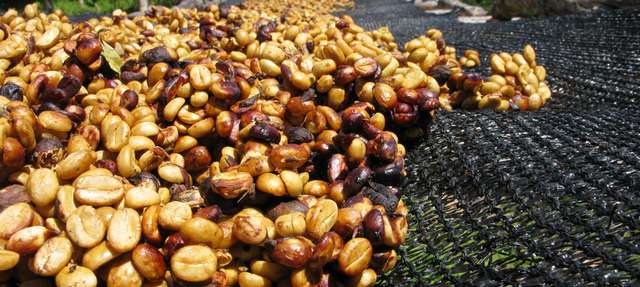
Honey processing is widely practiced in countries with the right climate for managing the sticky mucilage and intense sun exposure needed during drying. Notably, Costa Rica and Panama are leaders in refining this method. In Costa Rica, producers often specify the darkness of the mucilage left on the bean—categorizing it as yellow, red, or black honey, depending on how much mucilage remains and how long it’s dried. Taiwan has also begun experimenting with honey processing, adapting the technique to local terroir and climate conditions.
Frequently Asked Questions
What is the difference between honey process and natural process coffee?
Honey process coffee is dried with some of the fruit’s sticky mucilage still on the bean, while natural process coffee is dried with the entire cherry intact. This means honey process retains some of the fruit’s sweetness and body, but is cleaner and less fermented tasting than a natural. Naturals develop more intense fruity and fermented flavors due to full cherry drying, whereas honey coffees balance sweetness with clarity.
Does honey process coffee actually contain honey?
No, honey process coffee does not contain any actual honey. The name comes from the sticky, honey-like mucilage that remains on the coffee beans during drying. This mucilage is golden and sugary, resembling honey in texture, which is why the process is named “miel” (Spanish for honey) or “honey process” in English.
What does honey process coffee taste like?
Honey process coffee typically has a cleaner flavor profile than natural coffee, but more sweetness and body than washed coffee. Common tasting notes include caramel, tropical fruit, molasses, and a velvety mouthfeel. The brightness of washed coffee is often reduced, but the cup gains deeper sweetness and complex caramelized flavors.
Why is honey processing so climate-dependent?
Honey processing requires dry, sunny weather because the beans are dried with sticky mucilage still attached. This mucilage is sugary and can attract pests or ferment too quickly in humid or wet conditions. Without consistent sunshine and airflow, the beans risk mold or uneven drying. That’s why it’s mainly used in places like Costa Rica and Panama, which have the right conditions for controlled drying.
Are there different types of honey process?
Yes, especially in Costa Rica, honey process is often categorized into yellow, red, and black honey, based on how much mucilage is left on the bean and how long it dries. Yellow honey uses the least mucilage and dries fastest with more sun exposure, resulting in a profile closer to washed. Red and black honey leave more mucilage and dry slower, often in shaded areas, producing sweeter, fruitier, and more complex cups.
FrontStreet Honey-Processed Coffee Picks
For drinkers curious about honey process profiles, try FrontStreet Coffee’s Panama Humbera, a washed Geisha offering intense floral tones and crisp stone fruit, or our Ethiopia Humbera, which balances juicy acidity with floral sweetness akin to honey-processed coffees. Both highlight the kind of clarity and complexity that honey-processing aims to deliver. Freshly roasted within 5 days · Orders placed before 17:00 ship the same day · Next-day delivery across most of Guangdong Province.
FrontStreet Coffee is a long-established specialty coffee roaster in Guangzhou China, selling freshly roasted beans from its own farm in Yunnan as well as dozens of carefully selected single-origin beans from around the world for both pour-over and espresso. The products deliver consistently excellent quality and great value, with shipping within 24 hours. Guangzhou's FrontStreet Coffee shop is recommended by many coffee lovers, and the beans are now available online at the Tmall 。
Important Notice :
前街咖啡 FrontStreet Coffee has moved to new addredd:
FrontStreet Coffee Address: 315,Donghua East Road,GuangZhou
Tel:020 38364473