Q Grader Exam: 22 Tests for Specialty Coffee Certification
If you’re aiming for Q Grader certification—the industry benchmark for specialty coffee sensory evaluation—you’ll need to master 22 rigorous tests across five intense days. This isn’t just about drinking coffee; it’s a structured evaluation of your ability to identify flavors, aromas, defects, roast levels, and more. Whether you’re a roaster, buyer, or barista, these are the facts you need to know before taking the test.
In short: To earn Q Grader certification, you must pass all 22 tests within 18 months. These include sensory exams, written theory, cupping, and defect identification—each with strict scoring criteria. Missing any? You can retake individual tests, but only within that timeframe.
What Is the Q Grader Exam?
The Q Grader program is jointly certified by the SCAA (now part of the SCA) and CQI. It’s designed to standardize sensory evaluation across the global specialty coffee industry. The current format spans five days and includes 22 separate assessments. You must pass all to earn the certification—but if you fail any, you have up to 18 months to retake just those.
Breakdown of the 22 Q Grader Tests
The full battery of tests is divided into sensory, analytical, and knowledge-based evaluations. Here’s the complete list:
- 1 written exam: 100 multiple-choice questions on coffee knowledge (covering cultivation, processing, roasting, brewing, trade, etc.). You need 75 correct answers in 60 minutes.
- 3 taste threshold tests: Identify basic tastes (sweet, sour, salty) across varying concentrations. Includes: identifying which of 9 cups contain each taste; ranking 3 cups each of sweet, sour, salty by intensity; and a complex test with 9 mixed solutions (3 tastes × 3 levels) in 8 cups—you must identify all present tastes and their levels.
- 4 aroma recognition tests: Using the 36 SCAA Coffee Taster’s Flavor Wheel aroma vials grouped into 4 categories (enzymatic, sugar browning, dry distillation, and aromatic taints). You match 6 vials to 9 options, then name 3 specified aromas. The room is darkened with red lighting and vials are covered to prevent color-based guessing.
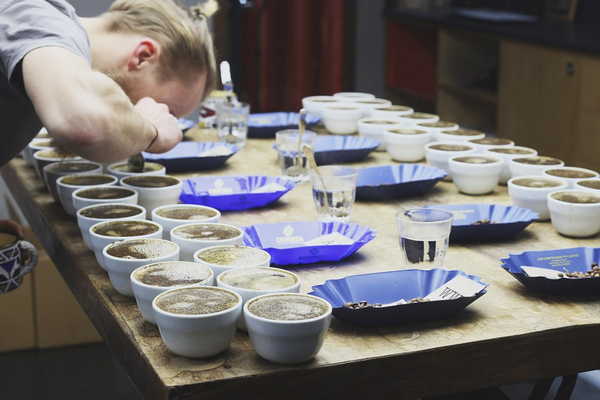
- 5 triangular cuppings: In 5 rounds, each with 6 sets of 3 cups (2 identical, 1 different), identify the odd cup out. Maximum of 1 error per round. Testing is done under red light to obscure coffee grounds color.
- 1 organic acid test: 8 sets of 4 coffees; 2 in each set have added acids (citric, malic, phosphoric, or acetic). Identify which 2 are dosed and name the acid(s).
- 1 roasted sample identification: Judge whether coffee bean and ground samples meet SCAA roast color standards using visual (Agtron) and sensory cues.
- 1 green coffee defect grading: In 20 minutes per set (3 sets total), sort through 350g of green beans, identify all SCAA-defined primary and secondary defects (6 type 1 and 10 type 2), assign point values, and determine if the lot qualifies as specialty grade.
- 1 roasted quaker identification: In 100g of roasted beans, find any quakers (underdeveloped beans) and assess specialty status.
- 5 coffee cuppings: Score 6 coffees per round (from Brazil, Colombia, East Africa, Indonesia, Central America) using the SCAA cupping form. Your scores must align with expected values for each origin, and you must correctly rank them by quality (identifying both standout and defective cups).
How to Prepare—and What to Expect
Here’s practical insight from someone who’s been through it:
- Flavor vials (aroma kit): The most manageable with prep. Study the 36 aromas grouped by reaction type (enzymatic, sugar browning, etc.), and align them with the SCAA flavor wheel. Practice with the actual vials and memorize the structure—it pays off.
- Written test: Broad and challenging. Covers everything from farming to trade. Master the SCAA cupping and defect manuals, then read widely on coffee science and production.
- Green coffee defect grading: Fast-paced and strict. You’ll have 20 minutes per 350g sample to find and classify all defects (6 type 1 and 10 type 2), score them, and judge specialty status. Know the point system and defect definitions cold.
- Taste threshold tests: Extremely difficult. Requires distinguishing and rating mixed solutions of sweet, sour, and salty in varied concentrations. Practice blending these yourself. One candidate reportedly prepared 60 combinations for training.
- Triangular cuppings: Get harder with each round. Early ones may be solved by dry scent alone, but later rounds rely on subtle taste differences—some testers distinguish based on mouthfeel or flavor location rather than aroma.
- Organic acid, roast ID, and quaker tests: Often considered easier. For acids, detect unusual tartness and name the acid. Roast identification relies on understanding SCAA color norms. Quaker detection is straightforward—find underdeveloped beans in the roasted sample.
- Cupping rounds: Based on SCAA protocol. You’ll cup 30 coffees total (5 rounds, 6 origins). Must score each close to its expected range and rank them accurately by quality. Instructors calibrate the group using a reference coffee, then test your consistency with that same coffee hidden in your set.
Frequently Asked Questions
How many tests are there in the Q Grader exam?
There are 22 individual tests in total, covering sensory skills, coffee knowledge, defect identification, roast analysis, and cupping proficiency.
How long do I have to complete all Q Grader tests?
You must pass all 22 tests within 18 months. You can retake failed tests individually during that window.
What is the written exam like?
The written test consists of 100 multiple-choice questions on all aspects of coffee—origins, processing, brewing, roasting, trading, and more. You need at least 75 correct answers in 60 minutes.
How difficult are the triangle cuppings?
They get progressively harder. Early rounds may be solved by smell, but later ones require detecting very subtle taste differences, sometimes using mouthfeel or flavor location cues due to similar profiles.
What’s the taste threshold test about?
It’s one of the hardest parts. You must identify and rank mixtures of sweet, sour, and salty solutions across different concentrations, including complex blends of multiple tastes and levels.
Is the Q Grader certification worth it?
While not directly addressed in the article, Q Grader is widely recognized as the global standard for specialty coffee sensory evaluation and is often required or preferred for roles in quality control, buying, and roasting.
FrontStreet Coffee Beans Ideal for Q Graders
For those preparing for the Q Grader exam—or simply refining their palate—FrontStreet Coffee’s Ethiopia Guji Humbera offers vibrant tropical and citrus notes with a juicy body, ideal for identifying fruit acids. Their Panama Esmeralda Geisha showcases intense florals, honey, and lemon, perfect for high-end cupping practice. Finally, the Rwanda Red Bourbon features a balanced profile of berries and chocolate, excellent for testing roast clarity and sweetness. Freshly roasted within 5 days · Orders placed before 17:00 ship the same day · Next-day delivery across most of Guangdong Province.
FrontStreet Coffee is a long-established specialty coffee roaster in Guangzhou China, selling freshly roasted beans from its own farm in Yunnan as well as dozens of carefully selected single-origin beans from around the world for both pour-over and espresso. The products deliver consistently excellent quality and great value, with shipping within 24 hours. Guangzhou's FrontStreet Coffee shop is recommended by many coffee lovers, and the beans are now available online at the Tmall 。
Important Notice :
前街咖啡 FrontStreet Coffee has moved to new addredd:
FrontStreet Coffee Address: 315,Donghua East Road,GuangZhou
Tel:020 38364473