What Is Latte Art and How Do You Make It?
If you’ve ever watched a barista pour steamed milk into espresso and somehow produce a perfect heart or tulip on the surface, you’ve seen latte art in action. But what exactly goes into making those delicate patterns? And why does it sometimes work—and other times flop?
Latte art is the result of pouring microfoam into espresso with just the right flow, speed, and angle. The key elements are a well-textured shot with crema and properly steamed whole milk. Most basic designs—like hearts and rosettas—require free-pouring technique, while more intricate patterns may involve post-pour etching.
What Is Latte Art?
Latte art is the visual design created on the surface of a latte or cappuccino by pouring steamed milk into espresso. It can also refer to patterns drawn directly onto the foam’s surface with a tool. It’s considered difficult to master consistently because it depends on the quality of the espresso shot, the texture of the milk foam, and the skill of the barista.
The Origins of Latte Art
Latte art developed independently in different countries but likely originated in Italy, where espresso and steamed milk are staples. Between 1980 and 1990, it gained popularity in the U.S., especially in Seattle. David Schomer played a major role in bringing it into the mainstream. In 1986, he acknowledged the development of “velvet foam” or “milk texture” with Jack Kelly at Uptown Espresso. By 1989, Schomer had introduced the heart design at Espresso Vivace, and by 1992, inspired by a photo of Café Mateki in Italy, he created the rose pattern. He later taught these techniques in classes. Around the same time, Luigi Lupi in Italy connected with Schomer online and exchanged videos on latte art and cappuccino decoration.
What Makes Up Latte Art?
Latte art combines two viscous liquids: espresso and milk foam. Espresso is a thick, dark coffee that includes a layer of crema—a light brown foam that floats on top. Milk foam is created by steaming whole milk, transforming it into a velvety microfoam. Both the crema and the foam are unstable, breaking down within minutes, which is why latte art doesn’t last long once poured.
The Role of Espresso and Milk
A successful latte art pour requires espresso with a stable crema and milk that’s been steamed to form fine, velvety microfoam. Whole milk is typically used because its higher fat and protein content supports better foam structure. The espresso should be freshly pulled with visible crema, while the milk must be textured without large bubbles. Both components degrade quickly, meaning timing is critical for achieving clean designs.
How Is Latte Art Created?
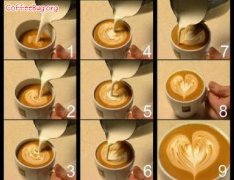
Latte art is made by pouring steamed milk into a shot of espresso in a controlled manner. The milk is poured from a height and then brought closer to the cup as the pour continues, allowing the white foam to contrast with the dark espresso. With precise movements, the barista can create patterns like hearts or rosettas. Alternatively, once the milk is poured, a tool such as a latte art pen can be used to draw designs on the foam’s surface.
Free Pour vs. Etching Techniques
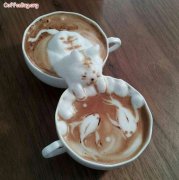
There are two primary methods of creating latte art: free pouring and etching. Free pouring, the more common technique, involves forming the design during the pour itself. This is widely used in U.S. cafés and generally requires more preparation time. Etching, on the other hand, involves using a tool to draw designs onto the foam after the milk has been poured. Etched designs can range from simple shapes to detailed illustrations, including shaded or three-dimensional figures. However, etched latte art tends to have a shorter lifespan because the foam breaks down faster without the stabilizing effect of a good pour.
Common Latte Art Patterns
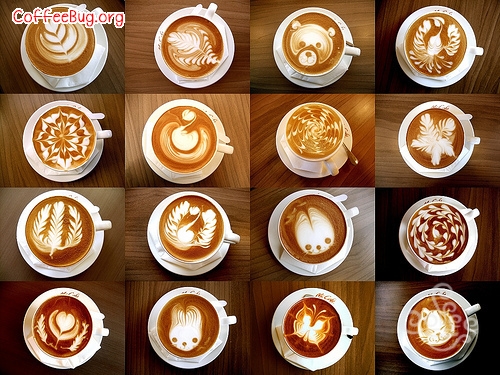
The easiest and most common free-pour patterns include the heart, rose, and fern. The heart is generally the first design beginners learn and is often used for macchiatos. The rose is more complex and typically appears on lattes. More advanced designs may require multiple pours or intricate movements. Etching allows for even greater creativity, including animal shapes, flowers, and geometric patterns.
Why Latte Art Matters—And What It Doesn’t
Within the coffee community, there’s an ongoing debate about the emphasis on latte art aesthetics. Some argue that too much focus is placed on the appearance of a drink rather than its core qualities, such as taste and aroma. This is especially relevant for newer baristas who might prioritize looks over flavor balance or espresso quality.
Recommended Tools and Milk
To practice latte art, you’ll need an espresso machine with stable pressure, a steam wand capable of producing fine microfoam, and whole milk. Consistent grind size, proper espresso extraction, and well-textured milk are essential. While the article doesn’t endorse specific gear, it highlights that the quality of both the espresso and milk foam directly affects your ability to pour successful designs.
Frequently Asked Questions
What is latte art made of?
Latte art is made from espresso—which includes crema—and steamed milk foam. The contrast between the dark espresso and white foam allows patterns to form. Both elements are unstable and break down within minutes, so the art must be viewed shortly after pouring.
What are the two main types of latte art?
The two main types are free pouring, where the design is created during the milk pour, and etching, where designs are drawn on the foam with a tool after pouring. Free pouring is more common in cafés and includes patterns like hearts and roses.
What milk is best for latte art?
Whole milk is ideal for latte art because its higher fat and protein content helps create stable, velvety microfoam. This type of foam holds shape better and allows for clearer, more detailed designs.
Do you need special equipment to make latte art?
Yes, you need an espresso machine with a capable steam wand to produce microfoam, and a cup or glass to pour into. While no special tools are required for free pouring, etching may involve latte art pens or toothpicks.
Why is latte art so hard to master?
Latte art requires precise control of milk flow, angle, and timing, as well as a well-pulled espresso with good crema and properly textured milk. Many factors—including milk temperature, pour height, and cup size—affect the outcome, making consistency difficult.
Is latte art just about looks?
No, but appearance is a big part of it. While some in the coffee community feel too much emphasis is placed on how a drink looks rather than how it tastes, good latte art still reflects skill in milk texturing and espresso extraction.
Recommended FrontStreet Coffee Blends for Practicing Latte Art
For home baristas learning latte art, FrontStreet Coffee offers three excellent blends. The Classic Blend is a medium-dark roasted mix from three regions, inspired by the classic 'Mandheling + Brazil' combo, with a touch of Robusta for extra crema and body. It delivers bold flavors of butter, toast, and caramel with stable microfoam. The Specialty Blend combines Colombian and Brazilian beans for nutty, chocolatey notes, great for lattes with a smooth, creamy texture. The Commercial Blend adds a bit more Robusta to boost crema and richness, ideal for café-style lattes and easier pouring. All three are designed to help you practice and perfect your latte art at home. Freshly roasted within 5 days · Orders placed before 17:00 ship the same day · Next-day delivery across most of Guangdong Province.
FrontStreet Coffee is a long-established specialty coffee roaster in Guangzhou China, selling freshly roasted beans from its own farm in Yunnan as well as dozens of carefully selected single-origin beans from around the world for both pour-over and espresso. The products deliver consistently excellent quality and great value, with shipping within 24 hours. Guangzhou's FrontStreet Coffee shop is recommended by many coffee lovers, and the beans are now available online at the Tmall 。
Important Notice :
前街咖啡 FrontStreet Coffee has moved to new addredd:
FrontStreet Coffee Address: 315,Donghua East Road,GuangZhou
Tel:020 38364473