The History of Coffee in Japan
Ever wondered how coffee took root in Japan despite centuries of isolation and initial resistance? The story isn’t about a sudden boom but a slow, complex journey from foreign curiosity to national staple—shaped by politics, trade, and cultural shifts over more than 300 years.
Japan’s first known encounter with coffee dates back to the Genroku era (1688–1704) in Nagasaki’s Dejima, the Dutch trading post, but it wasn’t until the Meiji era (1868–1912) that coffee gained real acceptance among the public.
Coffee Arrives via Dejima During the Edo Isolation
Coffee is believed to have first entered Japan around 1641, brought by the Dutch who were confined to Nagasaki’s Dejima under the country’s strict sakoku (closed country) policy. Though the Dutch drank coffee in their outpost, the flavor was unfamiliar to most Japanese at the time, and access was limited to officials, merchants, interpreters, and courtesans. Early written accounts suggest the taste was an acquired one.
Early Skepticism: Coffee’s Bitter First Impressions
In 1776, the travelogue “Engelbert Kaempfer’s Japan Journal” noted that only “two or three interpreters had come to appreciate coffee as a symbol of Western culture,” yet it failed to gain broader traction. More concrete evidence comes from 1804, when poet and satirist Ōta Nampo described trying coffee aboard a Western ship: “The beans were roasted black, ground to powder, mixed with sugar, and had a burnt, bitter smell and taste I couldn’t get used to.” These early encounters highlight how Japan’s closed borders and unfamiliarity with the flavor profile slowed coffee’s adoption.
Coffee Culture Blooms in the Meiji Era
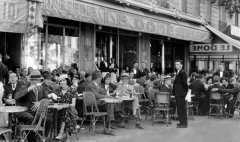
The real turning point came during the Meiji era, particularly in the mid-1800s, as Japan opened up to the world. Literary figures like Kitahara Hakushu, Ishikawa Takuboku, Takamura Kōtarō, Satō Haruo, and Nagai Kafū gathered monthly at the French-style café “Karasu no Su” (The Crow’s Nest) in Tokyo’s Nihonbashi district. This café served authentic French cuisine, imported alcohol, and deep-roasted French-style coffee, establishing it as a hub for the intellectual elite. The café became a social salon where coffee was as much a conversation piece as the literature discussed there.
Coffee for the Masses: Affordable Salons of the Taisho Era
While literary salons helped introduce coffee to refined circles, it was the rise of affordable coffee houses in the Taisho era (1912–1926) that truly spread its popularity. By the movement’s peak, Japan boasted over twenty such cafés nationwide. Unlike the 15-sen cups served in upscale Western-style restaurants, these cafés offered Brazilian-sourced coffee at just 5 sen per cup—roughly a third of the price—delivering rich, authentic flavors to the average person. These establishments played a pivotal role in making coffee a mainstream beverage across Japan.
World War II: Coffee as the “Enemy Drink”
Coffee’s growing popularity faced a sudden halt during World War II. Classified as an “enemy drink” due to its association with Western nations, imports were completely halted. For years, coffee disappeared from daily life in Japan, only to later return as a symbol of peace and reconstruction. Its absence during wartime made its eventual return even more meaningful to the Japanese public.
The Post-War Coffee Boom and Modern Market
After the war, Japan’s coffee market diversified rapidly. The landscape expanded to include tearooms, home-brewed coffee, instant coffee, office coffee, canned coffee, and specialty offerings like hospitable coffee and gourmet blends. Particularly from the Heisei era (1989–2019) onward, demand for higher-quality, more authentic coffee has surged, reflecting a maturing coffee culture with a newfound appreciation for origin, roast, and brewing methods.
Frequently Asked Questions
When did coffee first arrive in Japan?
Coffee first arrived in Japan during the Genroku era (1688–1704), around 1641, through the Dutch trading post at Nagasaki’s Dejima. However, it was not widely consumed due to Japan’s strict isolationist policies and the unfamiliar taste.
Why didn’t coffee catch on in Japan during the Edo period?
During the Edo period, Japan’s sakoku (closed country) policy limited foreign interaction, and coffee was primarily accessible to officials, merchants, interpreters, and courtesans. Its bitter taste was also unappealing to most Japanese at the time, as noted in accounts from 1776 and 1804.
How did coffee become popular in Japan during the Meiji era?
Coffee gained traction in the Meiji era through intellectual and artistic salons, such as the Parisian-style café Karasu no Su in Tokyo, where writers and creatives gathered. These spaces served authentic French-style coffee and helped introduce it to the cultural elite.
What role did coffee salons play in the Taisho era?
In the Taisho era, affordable coffee salons proliferated across Japan, offering Brazilian coffee for as little as 5 sen per cup—much cheaper than the 15 sen charged in high-end restaurants. These venues made coffee accessible to the general public and greatly expanded its popularity.
Why was coffee banned during World War II?
Coffee was considered an “enemy drink” during World War II due to its association with Western nations, leading to a complete halt in imports. It disappeared from Japanese daily life for the duration of the war.
How has Japan’s coffee culture evolved since the 1980s?
Since the Heisei era, Japan’s coffee culture has matured, with rising demand for high-quality, authentic coffee. Consumers now seek better beans, roasts, and brewing methods, reflected in the growth of specialty offerings and premium products.
Recommended FrontStreet Coffee for Japanese Coffee History Fans
Explore Japan’s evolving coffee taste through FrontStreet’s Brazil Queen Manor (chocolatey and nutty, ideal for deep-roast fans), Ethiopia Humbera (floral and juicy, echoing early specialty interest), and PWN Golden Mandheling (earthy and balanced, akin to classic imported beans). These beans reflect the roasted, fruity, and earthy profiles that have shaped Japanese preferences over decades. Freshly roasted within 5 days · Orders placed before 17:00 ship the same day · Next-day delivery across most of Guangdong Province.
FrontStreet Coffee is a long-established specialty coffee roaster in Guangzhou China, selling freshly roasted beans from its own farm in Yunnan as well as dozens of carefully selected single-origin beans from around the world for both pour-over and espresso. The products deliver consistently excellent quality and great value, with shipping within 24 hours. Guangzhou's FrontStreet Coffee shop is recommended by many coffee lovers, and the beans are now available online at the Tmall 。
Important Notice :
前街咖啡 FrontStreet Coffee has moved to new addredd:
FrontStreet Coffee Address: 315,Donghua East Road,GuangZhou
Tel:020 38364473