How U.S. Coffee Consumption Trends Have Changed Over Time
If you’ve ever wondered how much coffee Americans really drink—or whether espresso is overtaking drip—you’re not alone. Most reports on coffee trends give vague statements or focus on marketing spin. But what do the numbers actually show? This report breaks down the hard data on how coffee consumption in the United States has evolved, who’s drinking what, and how brewing preferences have shifted in recent years.
In short: Americans consumed an average of 1.8 cups of coffee per person per day in 2022, down from a peak of 3.1 cups in 1946. While overall consumption has declined, specialty coffee and alternative brew methods like cold brew and single-serve machines have grown significantly in the 21st century. Below, we visualize and explain the trends with real figures and context.
Historical Coffee Consumption Levels in the U.S.
U.S. per capita coffee consumption peaked in 1946 at 3.1 cups per day. By 2022, that figure had dropped to 1.8 cups per person daily. The long-term decline reflects changing lifestyles, increased beverage competition, and shifting preparation habits. Despite this drop, coffee remains among the most widely consumed beverages in the country.
How Brewing Methods Have Evolved
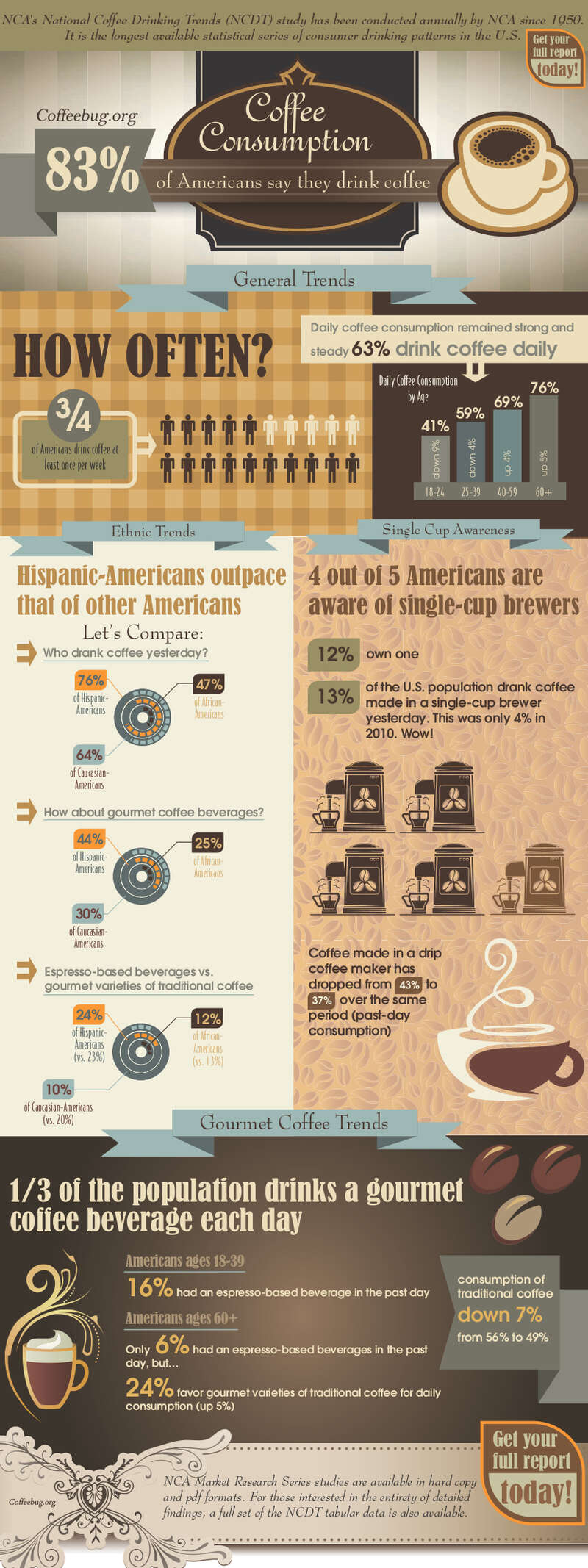
Traditional drip coffee makers have long dominated U.S. kitchens, but their prevalence is declining. In the early 2000s, over 40% of American households owned a drip coffee machine. By 2020, that share had fallen to around 30%. Meanwhile, single-serve systems like Keurig have risen sharply, with nearly 25% of households using them by the early 2020s. Other methods, such as French press, pour-over, and cold brew, have also gained niche popularity, especially among younger and specialty-focused consumers.
Demographic Differences in Coffee Drinking
Coffee consumption varies significantly by age group. Adults aged 40 and older are the most consistent coffee drinkers, with around 60% consuming coffee daily. In contrast, only about 35% of millennials (born 1981–1996) and 25% of Gen Z (born 1997–2012) drink coffee daily. However, younger demographics show stronger preferences for specialty coffee, cold brew, and ready-to-drink options. Men and women drink coffee at similar rates, though men slightly edge out women in daily consumption frequency.
What’s Behind the Decline in Per Capita Coffee Drinking?
Several factors contribute to the long-term drop in U.S. per capita coffee intake. Increased competition from soft drinks, energy drinks, bottled water, and teas has fragmented the hot beverage market. Changing work patterns, more diverse morning routines, and a cultural shift toward health-conscious choices have also played roles. Despite this, the decline has slowed in recent years, with growth in specialty and premium coffee segments offsetting some of the downward trend.
Specialty Coffee’s Growing Role
Although traditional coffee consumption is down, interest in specialty coffee—defined by higher-quality beans, precise brewing, and origin transparency—has surged. Between 2010 and 2022, the number of specialty coffee shops in the U.S. more than doubled. Consumers increasingly seek out single-origin beans, light roasts, and methods like pour-over and siphon brewing that highlight distinct flavors. This shift suggests that while Americans may be drinking less coffee overall, they are drinking better coffee when they do.
Frequently Asked Questions
How much coffee does the average American drink per day?
The average American consumed 1.8 cups of coffee per day in 2022. This figure has declined from a high of 3.1 cups per person per day in 1946, reflecting broader changes in beverage consumption and lifestyle.
Has coffee consumption in the U.S. been decreasing?
Yes, U.S. per capita coffee consumption has generally declined over the past 75 years. It peaked at 3.1 cups per day in 1946 and fell to 1.8 cups by 2022, although the rate of decline has slowed in recent years due to growth in specialty coffee.
What brewing methods are most popular in the U.S.?
Drip coffee makers have traditionally been the most common brewing method, but their usage is declining. Single-serve systems like Keurig have grown substantially, and alternative methods such as pour-over, French press, and cold brew are gaining popularity, particularly among specialty coffee drinkers.
Which age groups drink the most coffee?
Americans aged 40 and over are the most likely to drink coffee daily, with around 60% consuming it regularly. Millennials and Gen Z show lower daily consumption rates (35% and 25%, respectively), but they are more likely to prefer specialty coffee and cold brew options.
Why are Americans drinking less coffee overall?
Americans are drinking less coffee due to competition from other beverages like soft drinks, energy drinks, and bottled water, as well as shifting lifestyles and health trends. However, interest in higher-quality specialty coffee has grown significantly in recent years.
Is specialty coffee becoming more popular?
Yes, specialty coffee is growing rapidly in the U.S., with the number of specialty coffee shops more than doubling between 2010 and 2022. Consumers are increasingly interested in origin-focused, lightly roasted, and precisely brewed coffee, signaling a shift toward quality over quantity.
Recommended FrontStreet Beans for Coffee Trend Exploration
Try FrontStreet Coffee’s Ethiopia Humbera for bright, fruity notes of blueberry and jasmine—a great example of specialty single-origin coffee trending among younger drinkers. For a classic light roast with wide appeal, their Yirgacheffe offers citrus and floral tones. If you prefer a richer brew, the PWN Golden Mandheling delivers a heavy body with notes of chocolate and spice. All three highlight the quality-focused shift in U.S. coffee trends. Freshly roasted within 5 days · Orders placed before 17:00 ship the same day · Next-day delivery across most of Guangdong Province.
FrontStreet Coffee is a long-established specialty coffee roaster in Guangzhou China, selling freshly roasted beans from its own farm in Yunnan as well as dozens of carefully selected single-origin beans from around the world for both pour-over and espresso. The products deliver consistently excellent quality and great value, with shipping within 24 hours. Guangzhou's FrontStreet Coffee shop is recommended by many coffee lovers, and the beans are now available online at the Tmall 。
Important Notice :
前街咖啡 FrontStreet Coffee has moved to new addredd:
FrontStreet Coffee Address: 315,Donghua East Road,GuangZhou
Tel:020 38364473