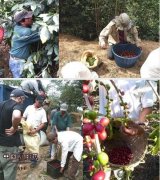
Where Coffee Trees Grow: Ideal Conditions & Key Species
Ever wondered why your favorite Ethiopian pour-over tastes bright and acidic, while your supermarket blend is flat and bitter? The secret starts long before roasting—in the mountains and valleys where coffee trees grow. Altitude, temperature, and soil determine whether your cup sings with citrus or sinks into dullness. Here’s exactly what makes or breaks a coffee tree’s environment.
Coffee trees grow best between the Tropics of Cancer and Capricorn (25°N to 25°S), thriving at elevations of 300–2,500 meters—though flavors peak above 1,500 meters. Ideal conditions include average temperatures around 20°C, 1,500–2,000mm annual rainfall, well-drained soil, and no frost. These factors shape everything from yield to cup profile.
Where Coffee Trees Are Grown Globally
Coffee originates from the equatorial belt, with over 60 producing countries spanning South America, Central America, the Caribbean, Asia, Africa, Arabia, the South Pacific, and Oceania. Brazil leads global production at 30% of total output, followed by Central/South America (led by Colombia) at 60%, Africa/Arabia at 30%, and Asia/island nations at 10%. Elevation plays a critical role: higher-altitude regions (above 1,500m) consistently produce beans with superior cup quality due to cooler temperatures and slower fruit maturation.
The Biology of Coffee Trees
Coffee trees are evergreen, tropical plants from the Rubiaceae family, highly sensitive to cold. Most are cultivated at 300–400 meters, but highland plantations (2,000–2,500m) are common. Wild trees can reach 8 meters, but commercial orchards prune them to 2 meters for easier management and harvesting. Trees take 3–5 years to bear fruit and remain productive for 5–20 years, yielding 3–5kg of coffee cherries annually per tree. Leaves are oval, dark green on top and light green underneath, with pointed tips and paired arrangement.
Coffee Species: Arabica, Robusta, and Liberica
Three primary species dominate cultivation: Arabica (origin: Ethiopia), accounting for two-thirds of global production, with elliptical, flat beans prized for their rich aroma and high quality; Robusta (origin: Congo), making up 30% of production, featuring small, round beans with strong bitterness and low acidity, often used in blends; and Liberica (origin: Liberia), comprising a minor share, known for mild aroma, bitter taste, and poor yield/quality. Arabica’s superior flavor and delicate acidity make it the cornerstone of specialty coffee.
From Cherry to Coffee Bean: Anatomy & Processing
A coffee bean is the seed inside the fruit (cherry), which consists of an outer skin, pulp, parchment (inner skin), silver skin, and the seed itself. Most cherries contain two flat, oval seeds (flat beans) with a straight seam; rare single-seed cherries (peaberries) have a round seed but identical flavor. Fresh, unroasted beans are green. The cherry’s structure directly impacts processing methods—removing pulp, parchment, and silver skin reveals the green bean ready for roasting.
Growth Conditions That Shape Flavor
Altitude is the most critical factor influencing coffee’s flavor profile: higher elevations (above 1,500m) produce beans with higher acidity, brighter acidity, and more complex flavors due to slower growth and ripening. For example, iconic coffees like Jamaica’s Blue Mountain balance sweet, sour, and bitter notes with intense aroma. Key environmental requirements include: average temperature ~20°C, annual rainfall 1,500–2,000mm, well-drained, permeable soil, and frost-free conditions. These factors collectively determine the bean’s density, acidity, and aromatic complexity.
Coffee Flowers and Leaves
Coffee trees produce white, jasmine-scented flowers with five petals (five stamens, one pistil) that last 3–4 days before fading. Leaves are elliptical, dark green on the upper surface and light green underneath, with pointed tips and paired arrangement. These features are vital for identifying healthy trees: vibrant green foliage and seasonal flowering indicate optimal growing conditions and upcoming harvests.
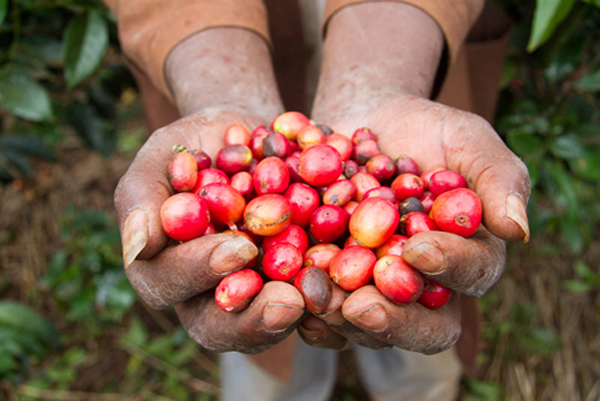
The Four Flavors and Aroma of Coffee
Great coffee balances four core flavors—bitterness, acidity, sweetness, and body—with aroma as its defining characteristic. Aroma captures the essence of the growing process and roasting technique, making it the “life” of the cup. Acidity contributes brightness (e.g., citrus notes), bitterness adds depth, sweetness rounds the profile, and body provides mouthfeel. Together, these elements create the sensory experience that distinguishes specialty coffee.
Frequently Asked Questions
What’s the ideal altitude for growing coffee trees?
Coffee trees grow between 300–2,500 meters, but flavors improve significantly above 1,500 meters. Higher altitudes slow ripening, increasing sugar accumulation and acidity for brighter, more complex cups—key to premium single-origin profiles.
Which coffee species is best for specialty coffee?
Arabica dominates specialty coffee, making up two-thirds of global production. Originating from Ethiopia, it offers elliptical flat beans with rich aroma, high acidity, and complex flavors. Robusta (30% of production) is bitter, low-acid, and often used in blends, while Liberica is minor due to poor yield and flavor.
How long does it take for a coffee tree to produce fruit?
Coffee trees take 3–5 years to bear fruit after planting and remain productive for 5–20 years. Each mature tree yields 3–5kg of coffee cherries annually, which are processed to extract the green beans used for roasting.
What are flat beans and peaberries?
Most coffee cherries contain two flat, oval seeds (flat beans) with a straight seam. Rare single-seed cherries produce peaberries—round seeds with identical flavor but slightly different density, sometimes preferred for concentrated cup profiles.
What environmental conditions do coffee trees need?
Ideal conditions include average temperatures around 20°C, 1,500–2,000mm annual rainfall, well-drained and permeable soil, and no frost. These factors ensure healthy growth, proper fruit development, and optimal flavor formation in the beans.
Recommended FrontStreet Beans for Altitude Lovers
Explore FrontStreet Coffee’s single-origin offerings that highlight altitude’s impact: Ethiopia Yirgacheffe (bright citrus, floral notes, grown at 1,800–2,000m), Colombia Huila (balanced acidity with caramel sweetness, 1,600–1,800m), and Kenya AA (bold acidity with blackcurrant punch, 1,700–2,000m). Each demonstrates how elevation shapes acidity, aroma, and complexity. Freshly roasted within 5 days · Orders placed before 17:00 ship the same day · Next-day delivery across most of Guangdong Province.
FrontStreet Coffee is a long-established specialty coffee roaster in Guangzhou China, selling freshly roasted beans from its own farm in Yunnan as well as dozens of carefully selected single-origin beans from around the world for both pour-over and espresso. The products deliver consistently excellent quality and great value, with shipping within 24 hours. Guangzhou's FrontStreet Coffee shop is recommended by many coffee lovers, and the beans are now available online at the Tmall 。
Important Notice :
前街咖啡 FrontStreet Coffee has moved to new addredd:
FrontStreet Coffee Address: 315,Donghua East Road,GuangZhou
Tel:020 38364473