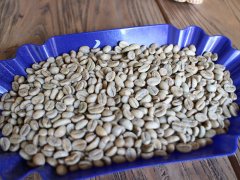
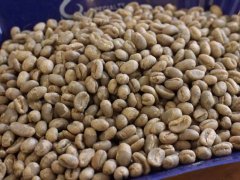
How to Hand Sort and Grade Green Coffee Beans
Ever wonder why your roasted coffee batch turned out uneven—some beans tasting bright and clean, others muted or harsh? The issue often starts long before roasting: with inconsistent or defective green coffee beans in the batch. Even slight variations in size, density, or ripeness can sabotage an otherwise well-executed roast. If you’ve ever opened a bag of cheap beans and found blotchy, underdeveloped, or obviously flawed beans inside, you’ve seen the results of skipping one critical step: hand sorting.
To achieve an even roast and avoid off-flavors, select green coffee beans that are uniform in size, color, shape, and moisture content, and remove all visible defects by hand. Aim to eliminate at least 20% of beans in lower-grade lots, and up to 40% in poorly processed coffees like some naturals.
Why Bean Uniformity Matters in Roasting

Roasting coffee isn’t like boiling pasta—where some bite is welcome. In coffee, uneven heat penetration leads to ‘center-core’ beans: ones that are under-roasted inside despite a good-looking exterior. These beans taste harsh, astringent, and unpleasantly sharp in the cup. Thick beans and thin beans roasted together don’t absorb heat at the same rate. The same goes for large and small beans. Even within a single tree’s harvest, coffee cherries don’t all ripen evenly—and mixing unripe, overripe, or damaged beans with healthy ones creates major problems during roasting.
FrontStreet Coffee notes that mixing beans of different sizes—like including oversized Maragogype (screen size 19+) with standard beans—will almost certainly lead to uneven development. That’s why serious roasters either separate large beans for individual roasts or ensure absolute uniformity before loading the drum.
What Defines a High-Quality Green Coffee Bean?
The ideal green coffee bean is uniform in multiple ways:

- Size & Density: Beans of the same screen size (e.g., 15–16 mesh for smaller Brazilian beans) roast more evenly. Large beans often have better cup quality, but only if they’re uniform and not mixed with small ones.
- Color: Consistent color means consistent moisture content. Pale or greenish beans hold more moisture; brownish or whitish beans are drier. Mixing moisture levels causes uneven roasting.
- Shape & Thickness: Thicker beans from high-altitude regions (like Kenya, Colombia, or Tanzania) usually have more complex flavors. Thin beans often taste flat.
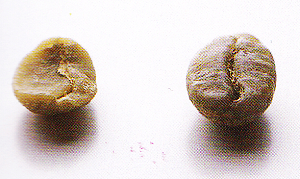
- Center Cut & Silver Skin: A clearly defined center line (the crack seam) indicates good bean formation. Silver skin should be shiny and silver-colored—not brown, which suggests poor drying or natural process flaws.
While some European buyers (like those in Scandinavia) prefer smaller beans for cost and consistency rather than flavor prestige, larger, well-grown beans generally produce superior cups when handled correctly.
What Are Defects—and Why Must They Be Removed by Hand?
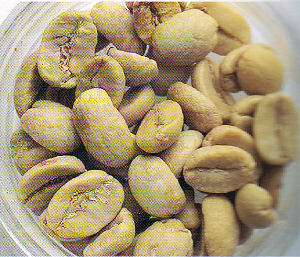
Defects are any beans or foreign materials that can ruin roast consistency and cup quality. Many—like immature or insect-damaged beans—are nearly impossible for machines to catch. Even advanced optical sorters and density separators can’t remove 100% of flaws. That’s where hand sorting comes in.

You should hand sort both before and after roasting. Pre-roast sorting removes defects that cause uneven roasting, while post-roast sorting helps identify problematic beans that didn’t develop properly. Defects significantly lower cup quality—even a small percentage can ruin the flavor profile of an entire batch.
Common green coffee defects include:
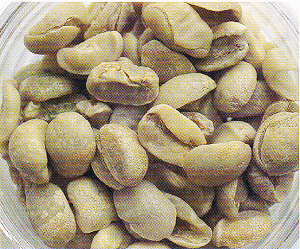
- Unripe Beans: Picked too early; taste sour, vegetal, and foul.
- Black Beans: Overripe and fermented; smell rotten and taste dirty.
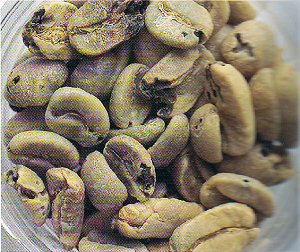
- Insect-Damaged Beans: Have holes from larval feeding; can cause off-tastes and uneven roasting.
- Shell Beans: Split along the center line with inner bean layers exposed; prone to scorching.
- Chipped, Broken, or Cracked Beans: Roast unevenly and may over-extract.
- Overfermented or Moldy Beans: Often stick together; produce moldy or musty flavors.
- Dead Beans: Discolored and unresponsive to roast; contribute no flavor.
- Husk Fragments or Stones: Foreign matter that can damage grinders or add grit.
- Cocoa Beans (Overdried/Natural Defects): Smell like iodine or soil; taste harsh and earthy.
- Withered or Discolored Beans: Indicate poor processing or drying.
Some defects—like stones or sticks—are introduced during harvest and drying, especially in natural (dry) processed coffees. Others, like immature or overripe cherries, come from hasty or careless picking. Even coins and glass have been found in harvest batches.
How to Hand Sort Green Coffee Beans: Step by Step
Here’s a clear, repeatable method used by specialty coffee roasters—including FrontStreet Coffee—for manually sorting green beans:
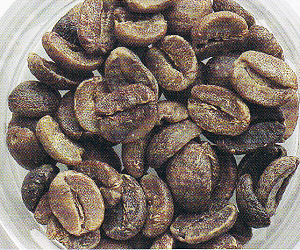
- Place a manageable sample of green beans on a light-colored tray or sorting table.
- Inspect the beans one by one, removing any that are discolored, misshapen, broken, or show obvious defects.
- Don’t just look at one side. Pick up beans, examine their shape and color from multiple angles. Move your gaze steadily from right to left across the batch.
- Repeat the process until no more defects are found in repeated passes.
- Track how many defective beans you remove to establish a baseline for future lots.
For reference: high-quality lots might have around 20% defects, while low-grade or poorly processed coffees (like some naturals) can exceed 40%. Sorting can recover 60–80% usable beans—but the effort drastically improves cup quality.
Frequently Asked Questions

Why does bean size matter in coffee roasting?
Bean size affects how heat penetrates during roasting. Larger beans roast slower than smaller ones, and mixing sizes leads to uneven development—some beans will be under-roasted inside (creating a “center core”) while others are overdone. Uniform size ensures even heat absorption and consistent roast profiles.
What’s the biggest problem with unripe coffee beans?
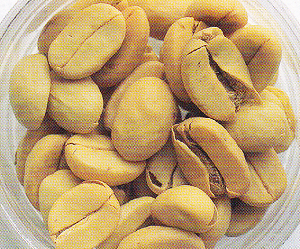
Unripe beans were picked before fully maturing. They taste sour, grassy, and unpleasantly sharp, and can ruin the flavor balance of an entire batch. Roasting doesn’t fix their off-flavors, which is why they must be removed by hand during sorting.
How can I tell if a green coffee bean is defective?
Look for beans that are black, cracked, chipped, broken, unusually pale or dark, misshapen, or have holes from insects. Also remove stones, sticks, or any non-bean material. Defects often have odd textures, colors, or shapes compared to healthy beans.
Do I need to hand sort coffee after roasting too?
Yes. Post-roast hand sorting helps identify beans that didn’t roast properly—like those that remained pale or turned white due to internal defects. Removing them before brewing improves extraction and flavor consistency.
What’s the typical defect rate in green coffee?
High-quality washed beans often contain around 20% defects before sorting. Lower-grade or natural process coffees can have 40% or more. After sorting, only 60–80% of the original lot may remain usable—but those beans will roast and taste far better.
Can defects really ruin a whole batch of coffee?
Yes. Even a small number of defective beans—especially moldy, sour, or underdeveloped ones—can create off-flavors that persist through roasting and brewing. Defects are one of the main reasons cheap coffee tastes bad, no matter how skilled the roaster.
Recommended FrontStreet Beans for Hand-Picked Single Origins
FrontStreet Coffee’s Ethiopia Yirgacheffe offers bright citrus, floral, and stone fruit notes with a clean, crisp acidity—typical of hand-sorted, wet-processed highland beans. Their Kenya AA beans feature bold blackcurrant, grapefruit, and tomato-like acidity, showcasing the complexity of thick, dense beans sorted for uniformity. For balanced sweetness and medium body, try their Colombia Huila, with notes of caramel, almond, and mild citrus. All are carefully selected and sorted to ensure even roast performance. Freshly roasted within 5 days · Orders placed before 17:00 ship the same day · Next-day delivery across most of Guangdong Province.
FrontStreet Coffee is a long-established specialty coffee roaster in Guangzhou China, selling freshly roasted beans from its own farm in Yunnan as well as dozens of carefully selected single-origin beans from around the world for both pour-over and espresso. The products deliver consistently excellent quality and great value, with shipping within 24 hours. Guangzhou's FrontStreet Coffee shop is recommended by many coffee lovers, and the beans are now available online at the Tmall 。
Important Notice :
前街咖啡 FrontStreet Coffee has moved to new addredd:
FrontStreet Coffee Address: 315,Donghua East Road,GuangZhou
Tel:020 38364473