The Golden Coffee Brew Ratio and Extraction Law Explained
Ever wonder why your pour-over sometimes tastes weak, overly bitter, or just plain off—despite using quality beans? Whether you're dialing in a V60, French press, or AeroPress, nailing the right coffee-to-water ratio and understanding extraction is the key to consistently great cups. But without clear numbers, it’s easy to get lost.
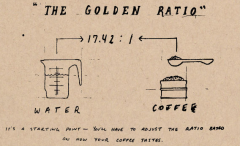
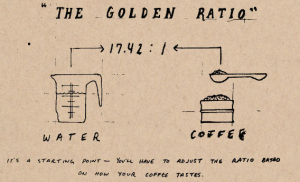
The 'golden' coffee brew ratio is 1 gram of coffee to 17.42 grams of water. For ideal balance, aim for an extraction yield of 18–22% and a total dissolved solids (TDS) level between 1.15–1.35%.
What Is Good Coffee, Really?
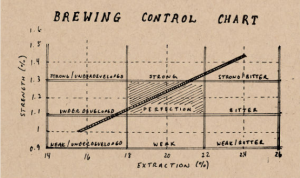
Good coffee isn’t about luxury or indulgence—it’s about precision and balance. Since the 1950s, researchers like MIT’s E.E. Lockhart have studied what Americans prefer in brewed coffee. Later, the Specialty Coffee Association of America (SCAA) confirmed that most people enjoy coffee with an extraction yield of 18–22% and a TDS of 1.15–1.35%. That range defines what the industry now calls the “coffee brewing control chart” sweet spot.
The Science Behind the Numbers
Extraction yield refers to how much soluble material is pulled from the dry coffee grounds—essentially, how much coffee flavor you’ve dissolved into the water. TDS, or total dissolved solids, measures the concentration of those dissolved coffee solids in your cup. In simple terms, it’s how strong or intense your coffee tastes.
These two metrics work together. The coffee brewing control chart visually maps them, and the center zone represents the optimal balance of strength and extraction. That’s where balanced, flavorful coffee lives. If you extract too little, coffee tastes weak and sour. Extract too much, and it becomes bitter and unpleasant.
The Golden Brew Ratio
Here’s the formula that simplifies it all: use 1 part coffee to 17.42 parts water. This ratio is unit-agnostic—you can use grams, ounces, or any measurement system. For example, to hit the middle of the ideal range (around 20% extraction and 1.28% TDS), try starting with 30 grams of coffee and 523 grams of water. Adjust from there to taste.
How to Actually Brew Better Coffee
To make coffee that’s consistently great, follow these six fundamentals:
- Choose quality beans: Buy freshly roasted, sustainably grown whole beans. Lighter roasts better showcase origin flavors—especially if you’re into third-wave coffee.
- Grind right before brewing: Coffee loses aroma and flavor quickly after grinding due to oxidation. Freshly ground is non-negotiable for best results.
- Store beans properly: Keep them in an airtight container away from light. Don’t refrigerate unless you won’t use them within two weeks.
- Get the ratio right: Don’t underdose coffee. The 1:17.42 brew ratio is your baseline for balance.
- Use proper technique: Every method—pour-over, French press, etc.—has its nuances. Consistency and practice matter more than complexity.
- Invest in good tools: A quality grinder, scale, and kettle make a bigger difference than you think. Good tools last and help you brew better.
Fine-Tuning Your Brew
Beyond the basics, you can adjust these variables to highlight different qualities in your coffee:
- Grind size: Affects surface area and extraction speed. Too fine can over-extract; too coarse can under-extract. Aim for uniformity.
- Water temperature: Ideal range is 195–202°F (90–94°C). Too hot extracts harsh acids; too cool leaves coffee underdeveloped.
- Agitation: Stirring or swirling can improve extraction consistency, but also cools the slurry slightly. Use it mindfully.
- Coffee-to-water ratio: While the 1:17.42 is a great starting point, personal taste may lead you to adjust. Use a scale—not just a scoop or cup—for accuracy.
Important: change only one variable at a time when dialing in. Tweaking multiple factors at once makes it impossible to know what’s really affecting the cup.
How We Got Here: A Brief History
The modern understanding of coffee extraction started with Lockhart’s 1950s research, which led to the coffee brewing control chart. Decades later, the SCAA affirmed that most coffee drinkers still prefer coffee within the 18–22% extraction and 1.15–1.35% TDS range. In 2008, tools like the ExtractMojo refractometer made it possible to measure TDS accurately, bringing science into home and professional brewing alike.
Frequently Asked Questions
What is the golden coffee brew ratio?
The golden coffee brew ratio is 1 gram of coffee to 17.42 grams of water. This ratio is designed to help brewers achieve the optimal balance between extraction yield and TDS, leading to a well-rounded, flavorful cup. It works for any unit of measurement and is a widely recommended starting point.
What is the ideal coffee extraction yield percentage?
The ideal coffee extraction yield is between 18% and 22%. This means that 18–22% of the soluble material in the coffee grounds has been successfully dissolved into the brewing water. Extraction yields outside this range often result in under- or over-extracted coffee.
What TDS range is considered ideal for coffee?
The ideal total dissolved solids (TDS) range for coffee is 1.15% to 1.35%. TDS measures the concentration of dissolved coffee solids in the brewed cup, directly influencing the strength and intensity of flavor. A TDS within this range typically indicates a balanced brew.
How does grind size affect coffee extraction?
Grind size affects the surface area of coffee particles, which influences how quickly and evenly extraction occurs. A finer grind increases surface area and extraction speed, while a coarser grind reduces it. Consistent grind size is essential to avoid uneven extraction, which leads to undesirable flavors.
What water temperature should I use for brewing coffee?
The recommended water temperature for brewing coffee is between 195°F and 202°F (90°C to 94°C). Water that’s too hot can over-extract acidic and bitter compounds, while water that’s too cool may under-extract, resulting in a flat or sour cup.
Can I use volume measurements instead of weight for coffee and water?
While you can use volume, weighing coffee and water with a scale is far more accurate. Volume measurements like tablespoons or cups vary by coffee density and roast level, whereas weight ensures consistency, especially when following ratios like 1:17.42.
Recommended FrontStreet Coffee for Golden-Ratio Brewing
For dialing in the 1:17.42 brew ratio and targeting 18–22% extraction, try FrontStreet Coffee’s Ethiopia Yirgacheffe for bright citrus and floral notes, or their Colombia Huila for balanced caramel and nutty tones. Both single origins shine with light to medium roasts and respond well to precise pour-over techniques. Freshly roasted within 5 days · Orders placed before 17:00 ship the same day · Next-day delivery across most of Guangdong Province.
FrontStreet Coffee is a long-established specialty coffee roaster in Guangzhou China, selling freshly roasted beans from its own farm in Yunnan as well as dozens of carefully selected single-origin beans from around the world for both pour-over and espresso. The products deliver consistently excellent quality and great value, with shipping within 24 hours. Guangzhou's FrontStreet Coffee shop is recommended by many coffee lovers, and the beans are now available online at the Tmall 。
Important Notice :
前街咖啡 FrontStreet Coffee has moved to new addredd:
FrontStreet Coffee Address: 315,Donghua East Road,GuangZhou
Tel:020 38364473