How to Calculate Coffee Extraction Rate & Use the Golden Brew Ratio
You’ve brewed coffee hundreds of times—but have you ever wondered if your cup hits the sweet spot between weak and bitter, under-extracted and over-extracted? Most home brewers don’t know how to measure what’s really in their cup, leading to inconsistent results despite careful techniques.
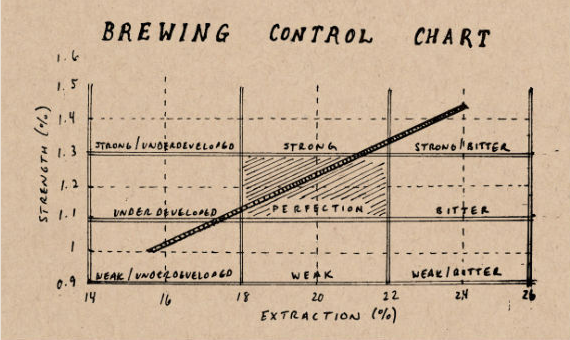
The key numbers? Aim for an extraction yield of 18–22% and a total dissolved solids (TDS) level of 1.15–1.35%. That’s the “golden cup” standard for great coffee.
What Is Coffee Extraction—Really?
Coffee extraction is the process of pulling soluble material from ground coffee using water. What ends up in your cup depends on how much of that material you extract, and how much water you use to do it. Two key metrics define quality:
- Extraction Yield: The percentage of soluble coffee material extracted from the dry grounds. Ideal range: 18–22%.
- Total Dissolved Solids (TDS): The concentration of those extracted solids in your brewed coffee, essentially its strength. Ideal range: 1.15–1.35%.
These metrics come from the Coffee Brewing Control Chart, developed from taste studies in the 1950s by MIT chemist E.E. Lockhart and later endorsed by the Specialty Coffee Association of America (SCAA).
The Golden Ratio: Your Starting Point
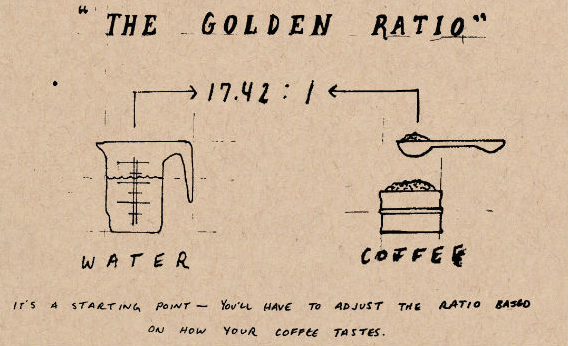
To consistently hit the ideal extraction window, start with the “golden brew ratio”: 1 gram of coffee to 17.42 grams of water. This isn’t a rigid rule, but it’s the most reliable baseline for reaching that optimal balance of strength and extraction.
For example, using 30 grams of coffee, you’d aim for roughly 523 grams (about 523 ml) of water. From there, you can adjust to taste. This ratio helps position your brew in the “ideal” zone on the Coffee Brewing Control Chart—where extraction and strength meet for the best flavour.
How to Actually Measure Extraction
So how do you know if you’re hitting 18–22% and 1.15–1.35%? Until recently, most people guessed. But in 2008, technology changed that.
The tool is called ExtractMojo, a refractometer-based coffee concentration analyser developed by VST (Visual Sensing Technologies). It measures TDS by analysing how light refracts through a coffee sample. Once you know your TDS, you can calculate extraction yield with this formula:
Extraction Yield (%) = (TDS (%) × Beverage Weight in g ÷ Coffee Dose in g) × 100
This scientific approach lets you fine-tune variables like grind size, water temperature, and brew time with real feedback. Some purists resist using tools like ExtractMojo, but much like using a thermometer for sous vide, it takes guesswork out of the equation.
Why Your Coffee Might Taste Off
If your coffee tastes weak, sour, or underwhelming, you’re likely under-extracted—meaning not enough soluble material was pulled from the grounds (below 18% yield). If it’s bitter, harsh, or dry, you’ve probably over-extracted (above 22%).
But strength matters too. A brew can be properly extracted but still taste thin if the TDS is too low (below 1.15%). Conversely, a high TDS (above 1.35%) might taste overly intense or muddy, even if extraction is spot on.
These two metrics—extraction yield and TDS—work together. That’s why the Coffee Brewing Control Chart has a “sweet spot” where they overlap for ideal flavour.
How to Brew Better Coffee, Step by Step
Mastering extraction starts with mastering your process. Here are six foundational principles:
- Choose quality beans: Buy freshly roasted, sustainably grown whole beans. For brighter, more distinct flavours, go for lighter roasts—common in the “third wave” coffee movement.
- Grind just before brewing: Coffee stales quickly after grinding due to oxidation. Grind right before use to preserve aroma and flavour compounds.
- Store beans properly: Keep unused beans in an airtight container away from light. Refrigeration is optional—use it only if you won’t use the beans within two weeks.
- Use the golden ratio (or adjust to taste): Start with 1:17.42 coffee to water, then tweak based on your taste preferences and brew method.
- Dial in your technique: Every brewing method (pour over, French press, etc.) requires control over variables like agitation, pour rate, and timing. Practice makes balanced coffee.
- Invest in quality tools: A good grinder, scale, kettle, and brewer make consistency far easier than cheap gear ever will.
Key Variables You Can Adjust
Once you understand the basics, you can fine-tune your coffee with these variables:
- Grind size: Affects surface area and extraction speed. Too fine = over-extraction risk; too coarse = under-extracted, weak coffee. Consistent grind is critical.
- Water temperature: Hotter water extracts faster. Ideal range: 195–202°F (90.6–94.4°C). Too hot = bitter; too cool = sour.
- Agitation: Stirring or disrupting the coffee bed during brewing affects how evenly water contacts grounds. Useful, but can lower brew temperature.
- Brew ratio: While the 1:17.42 ratio is a great starting point, personal taste may lead you to adjust coffee or water amounts. Always weigh for accuracy.
Remember: change one variable at a time when dialling in. Adjusting multiple factors at once makes it impossible to know what caused the change in flavour.
Frequently Asked Questions
What is coffee extraction yield?
Coffee extraction yield is the percentage of soluble material extracted from ground coffee beans during brewing. The ideal range is 18–22%, meaning that’s how much of the coffee’s flavour compounds you’ve successfully pulled into the cup.
What is TDS in coffee?
TDS stands for Total Dissolved Solids, which measures the concentration of extracted coffee solids in your brewed cup. Expressed as a percentage, the ideal TDS range is 1.15–1.35%, indicating proper strength without being too weak or overly intense.
What is the golden brew ratio?
The golden brew ratio is 1 gram of coffee to 17.42 grams of water. This ratio serves as an optimal starting point for balancing extraction yield and TDS, helping you brew coffee within the “golden cup” standard flavour range.
How can I measure my coffee’s extraction?
You can measure extraction using a refractometer like ExtractMojo to find your coffee’s TDS, then apply a formula to calculate extraction yield. This gives you objective data to refine grind size, water temperature, and other variables.
Why does my coffee taste weak or sour?
Weak or sour coffee is often under-extracted, meaning not enough soluble material was extracted from the grounds (below 18% yield). It can also result from too low TDS (below 1.15%), making the cup thin.
Why does my coffee taste bitter or harsh?
Bitter or harsh coffee usually means over-extraction (above 22% yield), where too many bitter compounds have been pulled from the grounds. It can also come from too-high TDS, creating an overpowering cup.
Recommended FrontStreet Coffee for Dialling In Extraction
Try FrontStreet Coffee’s Ethiopia Yirgacheffe for bright, juicy profiles that highlight subtle extraction differences; their Colombia Huila displays balanced sweetness and acidity ideal for practising grind and ratio tweaks; or their Guatemala Antigua for heavier body and chocolatey tones that respond well to French press or immersion brewing. These single origins let you feel the impact of brew variables clearly. Freshly roasted within 5 days · Orders placed before 17:00 ship the same day · Next-day delivery across most of Guangdong Province.
FrontStreet Coffee is a long-established specialty coffee roaster in Guangzhou China, selling freshly roasted beans from its own farm in Yunnan as well as dozens of carefully selected single-origin beans from around the world for both pour-over and espresso. The products deliver consistently excellent quality and great value, with shipping within 24 hours. Guangzhou's FrontStreet Coffee shop is recommended by many coffee lovers, and the beans are now available online at the Tmall 。
Important Notice :
前街咖啡 FrontStreet Coffee has moved to new addredd:
FrontStreet Coffee Address: 315,Donghua East Road,GuangZhou
Tel:020 38364473