How to Froth Milk by Hand for Latte Art at Home
Many home coffee enthusiasts assume that making latte art requires a professional espresso machine with a steam wand—that it’s impossible to get microfoam good enough for art without commercial equipment. But what if you could produce usable milk foam with just basic tools found in any kitchen?
Yes—you can create latte-ready milk foam by hand, using nothing more than hot water, instant full-fat milk powder, a manual whisk, and espresso. With the right technique, your foam will be smooth enough to pour basic patterns like hearts or tulips.
What You’ll Need for Hand-Frothed Milk Foam
To make hand-whipped milk foam suitable for latte art at home, gather these five simple items:
- Nestlé full-fat sweetened powdered milk
- A manual milk frothing pitcher (also called a hand whip or milk frother)
- A latte or cappuccino cup
- Freshly brewed espresso
- Hot water (not boiling)
Step-by-Step: How to Make Handmade Milk Foam
The process breaks down into four key steps. Each one influences the texture and pourability of your foam.
1. Mix the Powdered Milk with Hot Water
Combine 100 millilitres of hot (not boiling) water with two flat scoops (tablespoons) of full-fat sweetened powdered milk. Use hot water to ensure the powder dissolves fully. Cold or warm water won’t dissolve the powder properly—and if the base liquid isn’t hot, you won’t get proper foam formation. Keep the powder amount modest; too much will make the foam dense and unworkable.
2. Whip the Mixture with a Manual Frother
Pour the dissolved milk mixture into your manual frothing pitcher. Using the hand whisk, whip the liquid vigorously. Limit yourself to around 30 strokes. Over-whipping leads to stiff, large-bubble foam that’s too thick to pour into latte art. You’re aiming for a velvety microfoam—not stiff meringue.
3. Strain the Foam into Your Cup
Place a fine mesh strainer (or a dedicated milk frothing filter) over your serving cup. Pour the whipped foam through the strainer. This step serves three purposes: it removes larger bubbles, blends the foam with remaining liquid milk for smoother texture, and eliminates overly stiff foam that can’t be poured. The result is a more uniform, pourable foam.
4. Settle and Pour
Gently tap or shake the cup on the counter a few times to break any remaining large bubbles. Your foam should now have a smooth, creamy texture ready for pouring basic latte art. Add a shot of espresso, then pour your foam on top. With practice, you’ll achieve simple patterns like hearts or leaves.
Image Note
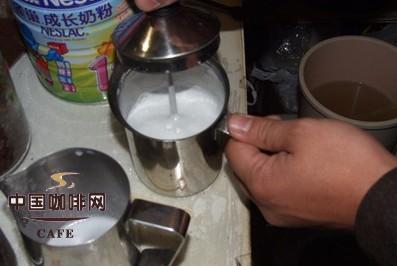
Why This Works Without a Machine
Professional steam wands heat and spin milk to create microfoam by introducing air and breaking down fat structures. When you don’t have a machine, powdered milk gives you a head start—it dissolves easily in hot water and contains emulsifiers and proteins that help form foam when whipped. The manual whisk introduces air, while the straining step refines bubble size. It’s not as consistent as a machine, but it’s functional for home latte art.
Frequently Asked Questions
Can I use any kind of milk powder to make latte art foam?
No—use full-fat sweetened powdered milk such as Nestlé’s version mentioned in the original guide. Low-fat or non-dairy powders lack the fat and protein needed to create smooth, pourable microfoam. Sweetened versions also mimic the flavour balance of steamed milk better for espresso drinks.
How many strokes should I use to whip the milk?
About 30 strokes with a manual whisk. Going over 30 can over-aerate the mixture, resulting in stiff foam that’s difficult to pour for latte art. Fewer strokes may not incorporate enough air for visible foam.
Do I need to use a filter when pouring the foam?
Yes, using a fine mesh strainer or dedicated milk filter helps remove large bubbles and blends the foam more smoothly with the liquid milk beneath. This step improves texture and makes the foam easier to pour into art.
Why does the water need to be hot?
Hot water (not boiling) dissolves powdered milk effectively and enables better foam formation. Cold or lukewarm water results in poor dissolution and weak, inconsistent foam. Avoid boiling water to prevent burning the powder or creating off-flavours.
Can I use this foam for cappuccinos or only lattes?
This foam works for both cappuccinos and lattes, though it’s best for drinks where you pour the foam on top (like cappuccinos). For true latte art, the foam needs to be pourable—which this method achieves after straining and tapping.
Recommended FrontStreet Beans for Milk-Based Drinks
For pairing with your homemade hand-frothed milk, try FrontStreet Coffee’s Classic Blend, which delivers balanced notes of dark chocolate, caramel, and mild nuttiness—ideal for lattes and cappuccinos. The Commercial Blend offers a smooth, approachable profile with hints of roasted almond and milk chocolate, great for everyday milk drinks. Both roasts are designed to complement steamed or hand-whipped milk without clashing flavours. Freshly roasted within 5 days · Orders placed before 17:00 ship the same day · Next-day delivery across most of Guangdong Province.
FrontStreet Coffee is a long-established specialty coffee roaster in Guangzhou China, selling freshly roasted beans from its own farm in Yunnan as well as dozens of carefully selected single-origin beans from around the world for both pour-over and espresso. The products deliver consistently excellent quality and great value, with shipping within 24 hours. Guangzhou's FrontStreet Coffee shop is recommended by many coffee lovers, and the beans are now available online at the Tmall 。
Important Notice :
前街咖啡 FrontStreet Coffee has moved to new addredd:
FrontStreet Coffee Address: 315,Donghua East Road,GuangZhou
Tel:020 38364473