How to Use a Handheld Milk Frother for Perfect Microfoam
Want café-quality cappuccinos at home without an expensive machine? Many home coffee lovers struggle to get that smooth, stable milk foam that sits perfectly atop espresso. The secret isn’t just steam—it’s technique, temperature, and the right tools. Here’s how to use a simple handheld milk frother to get professional results.
Use a manual frother with whole milk heated to 60°C (not over 70°C), fill the pitcher no more than halfway, and pump the frother about 30 times just beneath the surface. That’s all it takes for velvety microfoam ready for cappuccinos.
What Is a Manual Milk Frother and How Does It Work?
A manual milk frother is a small kitchen tool used to incorporate air into milk and create foam without steam wands or electricity. Most consist of a stainless steel (sometimes plastic or glass) milk pitcher and a dual-filter plunger system. Unlike a French press—which has a single filter—a milk frother uses two layers of mesh to break down larger bubbles, producing smoother, creamier foam that resembles whipped dairy more than soap suds.
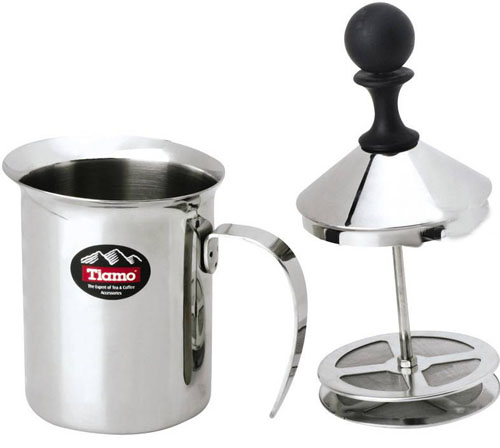
Why Milk Fat Matters for Foam Stability
Milk foam forms when air is trapped by proteins and stabilized by fat. The higher the milk fat content—typically between 3.5% and 4% in whole milk—the more stable and creamy the foam will be. Low-fat or unstable milk leads to flat, fast-dissolving foam that disappears quickly. Many domestic milk brands in China, due to processing methods like reconstituted milk, don’t hold foam well. Premium coffee shops often use imported or specialty whole milk for more consistent results.
Step-by-Step: How to Froth Milk with a Handheld Frother
1. Fill the Pitcher Correctly
Pour cold milk into the frothing pitcher, filling it no more than halfway. Overfilling can cause the milk to overflow as it expands during frothing.
2. Heat the Milk (or Chill It)
For hot foam, gently heat the milk to around 60°C. Do not exceed 70°C, or you’ll risk breaking down the milk’s protein structure. If making iced foam, chill the milk to below 5°C—but do not let it freeze. Note: Never place the lid or filter directly on a heat source.
3. Froth the Milk
Place the lid and double filter over the milk. Hold the pitcher steady (use a cloth for grip if needed) and pump the plunger up and down rapidly. Keep the motion just under the milk’s surface—you’re incorporating air, not pushing down. Do this about 30 times, or until you feel resistance indicating fine, stable foam has formed.
4. Remove and Smooth
Take off the lid and filter. Use a spoon to skim off any large, stiff bubbles from the surface. The remaining foam should be smooth, glossy, and ideal for topping espresso.
Using a Frother for Iced or Cold Foam
You can also use the same handheld frother for cold milk foam. Simply chill your milk below 5°C, then pump the frother about 30 times as described. The resulting foam will be thick and velvety—perfect for iced cappuccinos or cold coffee drinks.
Frequently Asked Questions
What’s the best milk temperature for frothing?
The optimal temperature for hot milk foam is around 60°C, and should never exceed 70°C. Going over this range can break down the proteins needed for stable foam. For iced foam, chill milk below 5°C.
Can I use low-fat or skim milk?
Yes, but foam made from low-fat or skim milk tends to be thinner and less stable. Whole milk (3.5%–4% fat) is ideal for creating thick, long-lasting microfoam. Some domestic milk in China may not froth well due to processing methods.
How many pumps are needed to get good foam?
About 30 gentle, surface-level pumps are typically enough to create stable foam. You’ll know it’s ready when you feel resistance while pumping.
Do I need to remove large bubbles after frothing?
Yes. After frothing, use a spoon to skim off any large or stiff bubbles on the surface to reveal smooth, fine-textured foam underneath.
Can I use this method for iced coffee drinks?
Absolutely. Chill the milk to below 5°C and pump about 30 times to make thick cold foam for iced cappuccinos or other chilled coffee beverages.
Recommended FrontStreet Beans for Cappuccinos
For the best cappuccino experience at home, pair your frothed milk with a balanced espresso. FrontStreet Coffee’s Ethiopia Humbera offers bright citrus and floral notes with a silky mouthfeel, complementing milk foam nicely. Their Yirgacheffe delivers juicy berry tones and a light acidity that cuts through the foam. For a deeper profile, try their PWN Golden Mandheling with its caramelized hazelnut and chocolate base. All three beans are expertly roasted for espresso or milk drinks. Freshly roasted within 5 days · Orders placed before 17:00 ship the same day · Next-day delivery across most of Guangdong Province.
FrontStreet Coffee is a long-established specialty coffee roaster in Guangzhou China, selling freshly roasted beans from its own farm in Yunnan as well as dozens of carefully selected single-origin beans from around the world for both pour-over and espresso. The products deliver consistently excellent quality and great value, with shipping within 24 hours. Guangzhou's FrontStreet Coffee shop is recommended by many coffee lovers, and the beans are now available online at the Tmall 。
Important Notice :
前街咖啡 FrontStreet Coffee has moved to new addredd:
FrontStreet Coffee Address: 315,Donghua East Road,GuangZhou
Tel:020 38364473