Coffee Brewing Methods and Basic Types Explained
If you've ever stood in a cafe or kitchen wondering why your coffee tastes weak, bitter, or just "off," you're not alone. Most issues come down to not knowing which brewing method fits your coffee, how fresh your beans are, or what temperature and technique really matter. This guide lays out everything: the main coffee types, how to assess bean quality, how to store them properly, and a clear breakdown of six popular brewing styles—with exact numbers where it counts.
To start brewing better coffee, use freshly roasted single-origin beans (ideally within 4 weeks post-roast), grind them appropriately, and control water temperature—usually around 90°C for pour over. Key steps like the 20–30 second bloom and slow, circular pouring make a measurable difference in taste.
What Are the Main Types of Coffee?
Coffee falls into four broad categories based on origin, preparation method, and concentration:
- Italian-style (Espresso): A thick, concentrated shot brewed using a semi-automatic machine under high pressure. Served solo or used as the base for milk drinks like cappuccino, latte, and mocha.
- Single-origin (Single-origin black coffee): Coffee sourced from one specific region or farm, served black. Examples include Blue Mountain, Costa Rica, Mandheling, and Brazil.
- Americano: Made using an electric drip machine; lighter in body and flavour compared to espresso-based drinks.
- Other styles: Including various manual and machine brewing methods that control extraction differently.
How Is Coffee Bean Quality Determined?
Global cupping experts score beans on a 100-point scale, which determines their grade and rarity:
| Grade | Score | Description |
|---|---|---|
| 1. Cup of Excellence | 84+ | High-scoring, rare, auction-winning beans (small production) |
| 2. Special | 80+ | High-quality specialty beans (2–3% of global production) |
| 3. Good Grade Commercial | N/A | Premium commercial beans |
| 4. Basic Commercial | N/A | Standard commercial beans found in chain cafes |
| 5. Off-grade | N/A | Low-quality or defective beans |
How to Choose and Store Coffee Beans
Several factors affect coffee quality: bean freshness, origin altitude (ideally ~1500m), soil, climate, variety, and processing methods. When buying, look for detailed naming (e.g., origin + farm + variety + organic status)—the more specific, the higher potential quality. For single origins, freshness is critical.
Storage guidelines:
- Green (raw) beans: best kept under 1 year
- Roasted beans: peak flavour within 4 weeks post-roast; allow to degas for 3+ days, with notable flavour stabilisation after 1 week; consume within 3 months
- Ground coffee: use as soon as possible; if storing longer, divide into small portions or grind as needed
What Are the Six Main Coffee Brewing Methods?
1. French Press
This is the simplest “no skill” method—often called “lazy coffee.” Add ground coffee to a glass or metal press with a filter, pour hot water (around 91°C), steep for 4 minutes, then press the filter down slowly and serve.
2. Siphon / Vacuum Pot
A theatrical, science-focused method where boiling water rises into an upper chamber through vapor pressure, mixes with coffee grounds, and then is pulled back down via vacuum as it cools, extracting the coffee into the lower vessel.
3. Drip Filter / Vietnamese Style
Originating in France and popular in Vietnam, this method involves placing ground coffee in a filter (usually with paper), pouring hot water to wet all the grounds, then letting it drip through into a carafe. Simple and fast.
4. Espresso
Made by forcing hot water (not boiled) through finely-ground coffee under high pressure. The traditional method uses a semi-automatic machine. Coffee is tamped into a portafilter, water is heated in the lower chamber, and the machine pushes steam-driven water through the coffee—resulting in a thick, concentrated shot with crema.
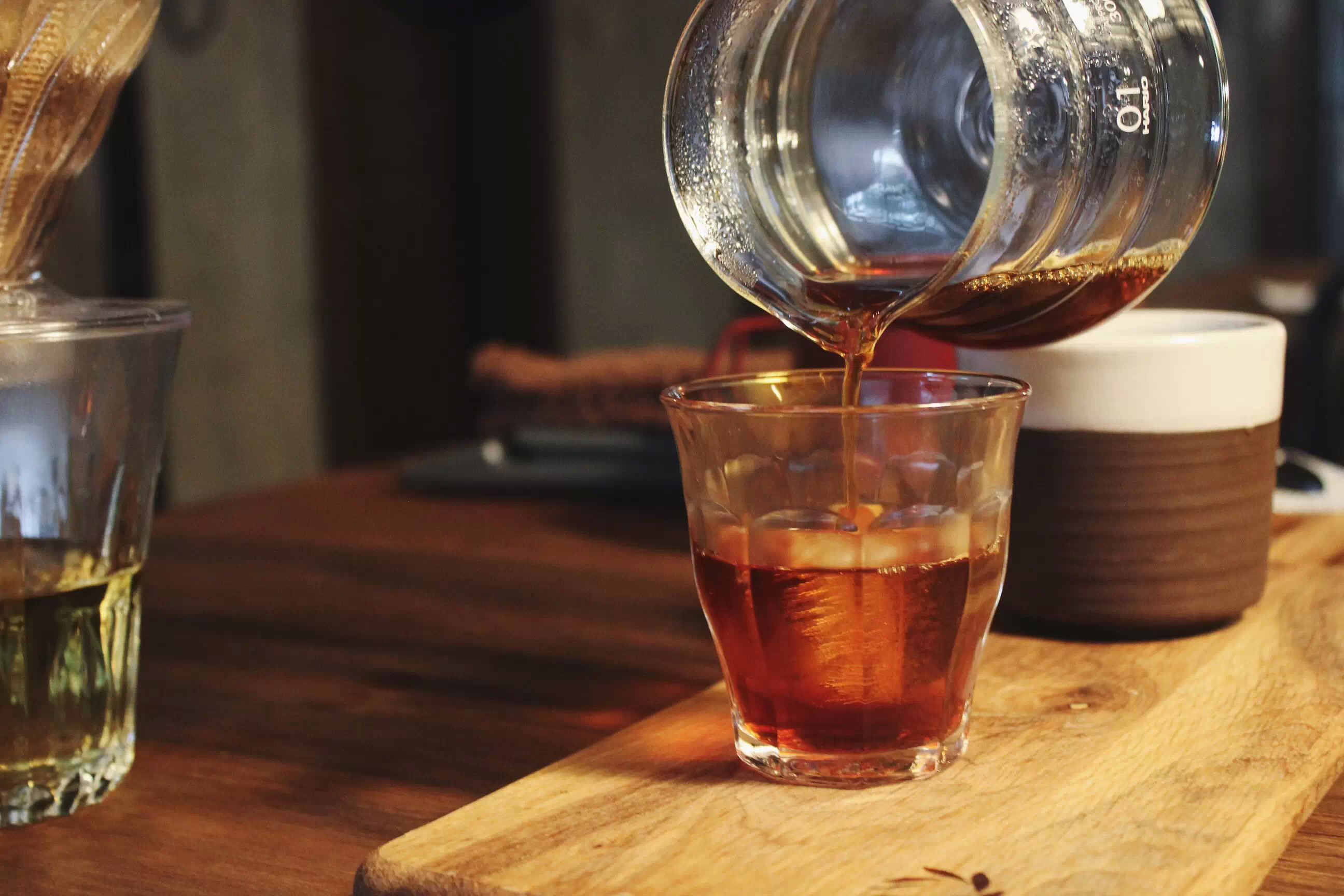
5. Pour Over / Hand Brew
A manual, controlled method where hot water (~90°C) is poured slowly over ground coffee in a filter. Steps include:
- Pre-warm your brewer and cup
- Fold your filter along the seam, place it in the dripper
- Add ground coffee, level it gently
- Bloom with ~2–3x the coffee’s weight in hot water for 20–30 seconds
- Pour in slow circles: center-out, then edge-to-center, in 2–3 pours total
6. Electric Drip Machine
A common home method where electricity heats water and drips it through coffee grounds in a filter basket. Uses a similar extraction logic as manual drip but automates the heat and flow.
Frequently Asked Questions
What’s the best water temperature for pour over coffee?
The recommended brewing temperature for pour over is around 90°C. Going much higher can over-extract and make the coffee bitter, while lower temperatures under-extract and result in sourness or flat flavour.
How long should I let coffee bloom during pour over?
You should let the coffee bloom for 20–30 seconds after the initial pour. This lets trapped CO₂ escape and starts even extraction, which is critical for balanced flavour.
How long do roasted coffee beans stay fresh?
Roasted coffee beans are at their best for about 4 weeks after roasting. They can be stored for up to 3 months but start losing distinct flavours after the first week. Always let them rest for at least 3 days to de-gas before brewing for best results.
What’s the difference between single-origin and espresso coffee?
Single-origin coffee comes from one specific place and is usually brewed black to highlight its unique terroir traits. Espresso is a concentrated brew made under pressure, often using blended beans to create balance and crema, and is typically served with milk.
Which coffee brewing method is easiest for beginners?
The easiest and most forgiving method is the French press —just add grounds, pour hot water, wait 4 minutes, and press. No special pouring technique or equipment is needed.
How should I store my coffee beans at home?
Store roasted coffee beans in an airtight container away from light, heat, and moisture. Avoid the fridge or freezer. For ground coffee, use it quickly or divide into small portions to preserve freshness.
{{bean_block}}Recommended FrontStreet Beans for Pour Over & Espresso
For pour over, try FrontStreet’s BrazilBourbon—medium roast with creamy texture, mild acidity, and notes of nut and caramel. The ColombiaSidra, processed with double anaerobic natural, offers intense sweetness with stone fruit and tropical hints, ideal for showcasing layered flavour. For espresso, the PanamaGeisha brings clean florals and citrus with a juicy body. These beans are all high-scoring single origins with distinct profiles. Freshly roasted within 5 days · Orders placed before 17:00 ship the same day · Next-day delivery across most of Guangdong Province.
FrontStreet Coffee is a long-established specialty coffee roaster in Guangzhou China, selling freshly roasted beans from its own farm in Yunnan as well as dozens of carefully selected single-origin beans from around the world for both pour-over and espresso. The products deliver consistently excellent quality and great value, with shipping within 24 hours. Guangzhou's FrontStreet Coffee shop is recommended by many coffee lovers, and the beans are now available online at the Tmall 。
Important Notice :
前街咖啡 FrontStreet Coffee has moved to new addredd:
FrontStreet Coffee Address: 315,Donghua East Road,GuangZhou
Tel:020 38364473