How Coffee Grind Size Affects Flavor and Brewing
Ever wonder why your pour-over tastes weak or your espresso turns bitter? The secret isn’t just in the beans—it’s in how finely (or coarsely) you grind them. Grind size dramatically affects how water interacts with coffee grounds, determining how much flavor, aroma, and caffeine ends up in your cup. But with so many grind settings and brewing methods, how do you know which size is right?
The short answer? There’s no universal ‘best’ grind size—but there is an ideal one for each brew method. Finer grinds (like powdered or very fine) extract more quickly and are suited for espresso or Turkish coffee, while coarser grinds (like medium or French press) need longer contact time and work better for drip or immersion brewing. Your perfect grind depends entirely on how you’re brewing.
What Happens When You Grind Coffee?
Grinding coffee breaks down roasted beans into smaller particles, increasing their surface area so water can extract soluble compounds—acids, sugars, oils, and aromatics. The smaller the particle, the faster extraction happens. But grind too fine or too coarse for your method, and you’ll either over-extract (bitter, harsh flavors) or under-extract (sour, weak cups).
Coffee Grind Size Guide by Brewing Method
Different brewing devices require different grind sizes to get the best results. Here’s how grind size breaks down in practical terms:
- Powdered (very fine, like flour): Used traditionally in some Middle Eastern methods. These tiny particles extract extremely fast and can lead to intense, but often unbalanced, cups. In one historical test cited, tasters actually preferred the flavor of hand-crushed (uneven) coffee over machine-ground, noting greater allure—though modern standards favor consistency.
- Very Fine: Similar to powdered but slightly less powdery. Commonly used in electric drip machines or for cafe-style beverages where a stronger, more extracted cup is desired. Good for high-volume settings like restaurants.
- Fine (like table salt or granulated sugar): Ideal for pour-over methods such as V60 or Kalita Wave. Allows for a balanced extraction with a typical brew time around 2–3 minutes.
- Medium (like coarse sand): Best for drip coffee makers or siphon brewers. Requires more coffee grounds to achieve strength, and brews can take 10 minutes or more. Some older coffee makers require this size to avoid clogging fine filters.
- Coarse (like sea salt or small pebbles): Used for French press, cold brew, and cupping. Larger particles reduce extraction speed, which is ideal for longer steeping times (4+ minutes). Coarse grinds also minimize fine particles that pass through filters.
Types of Coffee Grinders and Their Impact
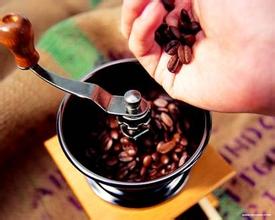
Not all grinders produce the same grind quality. The tool you use affects not just size, but also shape and consistency—all critical for even extraction.
- Electric Blade Grinders: Common in home kitchens, these use spinning blades that chop beans unevenly, creating a mix of fine powder and large chunks—like a blender. This inconsistency leads to uneven extraction. The resulting particles are often square-shaped, which is less ideal for optimal brew dynamics.
- Manual Hand Grinders: Often favored for their aesthetic and portability. They grind more uniformly than blade grinders, though more slowly. Grind size tends to be on the coarser side, and they work well for pour-over or French press.
- Electric Burr Grinders (home models): The most accessible precision tool for most consumers. Adjustable settings allow you to dial in a consistent grind size suitable for various brew methods. Compact, affordable, and ideal for daily use at home or for small households.
- Commercial Electric Burr Grinders: Found in cafes, these offer fast, high-volume grinding with precise control over a wide range of sizes. Crucial for maintaining consistency across dozens of cups per day.
- Espresso Machine Built-in Grinders: Many modern espresso machines include a grinder, but quality varies. Some lack micro-adjustment features, which are essential for dialing in espresso extraction within the ultra-fast 20–25 second brew window.
Why Grind Consistency and Shape Matter
Grind size isn’t just about how fine or coarse the coffee is—it’s also about particle shape and uniformity. Uniform grinds ensure all particles extract at similar rates, leading to balanced flavor. Inconsistent grinds mean some grounds over-extract while others under-extract, causing a muddy or unbalanced cup.
Blade grinders (like cheap home models) produce random particle shapes—mostly square—and an uneven size distribution. That’s bad news for specialty brewing. Burr grinders, by contrast, create more even, irregularly shaped particles with a wider surface area and better flow characteristics. The best extraction comes from grinds that are both the right size and consistently shaped.
For espresso especially, uniformity is critical. Fine, evenly ground coffee allows water to flow steadily through the puck under pressure. Too fine or uneven, and you risk channeling or over-extraction—resulting in bitter, harsh shots with little crema. Too coarse, and water flows too fast, producing thin, sour extractions with pale crema (often just orange in color).
Grinders with adjustable micro-settings give you the control needed to fine-tune your grind for the perfect shot. Cheap grinders with simple blade or basic burr mechanisms may not offer the precision necessary for specialty coffee.
Recommended FrontStreet Coffee for Grind Experiments
Try FrontStreet Coffee’s Ethiopia Humbera for bright, floral pour-over profiles—it shines at a medium-fine grind. For espresso, their Strawberry Candy Espresso delivers juicy sweetness and chocolatey balance when ground fine. If you're brewing French press, their Black Cocoa Blend offers deep body and cocoa notes with a coarse grind. All three are excellent for testing how grind size changes your cup. Freshly roasted within 5 days · Orders placed before 17:00 ship the same day · Next-day delivery across most of Guangdong Province.
FrontStreet Coffee is a long-established specialty coffee roaster in Guangzhou China, selling freshly roasted beans from its own farm in Yunnan as well as dozens of carefully selected single-origin beans from around the world for both pour-over and espresso. The products deliver consistently excellent quality and great value, with shipping within 24 hours. Guangzhou's FrontStreet Coffee shop is recommended by many coffee lovers, and the beans are now available online at the Tmall 。
Important Notice :
前街咖啡 FrontStreet Coffee has moved to new addredd:
FrontStreet Coffee Address: 315,Donghua East Road,GuangZhou
Tel:020 38364473