How Grinder Type and Grind Consistency Affect Coffee Flavor
If your espresso shots taste overly bitter, sour, or just murky, the problem might not be your beans—or even your technique. More often than not, it’s the grinder. The way your coffee is ground has a massive impact on extraction, clarity, and balance. Yet many home and even shop baristas overlook the critical role of the burrs and motor inside the grinder.
In short: parallel burr grinders grind faster and more uniformly but generate more heat; conical burrs run cooler and last longer but are slower and less consistent. Both affect flavor in measurable ways—through particle uniformity, fines, heat, and static.
Types of Coffee Grinders and Burr Designs
The market offers a wide range of grinders, but they mostly fall into a few burr categories: flat (parallel), conical, roller (roll), ghost (ghost tooth), and blade. Blade grinders—common in cheap home models—chop beans unevenly with high-speed blades, creating extremely inconsistent particle sizes and lots of heat. Roller grinders, like those used in industrial food processing, crush beans flat but are too fast and inefficient for specialty coffee. That leaves flat (parallel) and conical burr grinders as the two main types used in cafés today.
Parallel burr grinders spin quickly, grind coffee faster, and tend to produce a more uniform particle size—but they also generate more heat and wear out faster. Conical burr grinders, on the other hand, run slower, produce less heat, and have a longer lifespan, but they are usually less uniform and slower to grind. Each design influences the final cup in different ways.
How Burr Type and Grind Affect Coffee Extraction
Four main factors determine how your grinder affects coffee flavor: uniformity, fines, heat, and static. Each plays a distinct role in extraction quality.
1. Uniformity
Uniformity refers to how similar the ground coffee particles are in size and shape. A grind that includes both very coarse and very fine particles leads to uneven extraction: larger particles under-extract (resulting in sourness), while finer ones over-extract (leading to bitterness and astringency). The result is a muddy, unbalanced cup. In contrast, a grind with particles that are consistently sized and similarly shaped extracts more evenly, highlighting cleaner, brighter flavors and a more defined profile.
2. Fines (Fine Particles)
Fines are coffee particles close to powdered flour in size. These tiny particles extract much faster than the rest, often dissolving excessively and contributing harsh, bitter flavors. In espresso, fines can pass through the filter and collect at the bottom of the cup—but when held in place by crema, they may create the visual “tiger striping” effect. While some fines are normal and can even contribute texture, too many will ruin clarity and balance. Using high-quality grinders or post-grind sieving can help control fines, though eliminating them entirely can reduce complexity. Balance comes with experience.
3. Heat
Grinding generates friction, and friction creates heat. That heat accelerates the oxidation of coffee oils and volatile aromatic compounds, which diminishes flavor and aroma. The amount of heat depends on burr material, burr shape, motor speed, grind fineness, bean hardness, and more. To combat this, premium grinders now include cooling fans, heat-dissipating materials, and low-RPM/high-torque motors to minimize heat buildup during grinding.
4. Static
Static electricity becomes more pronounced with finer grinds and faster grinding. It’s worse in grinders with plastic bodies or poor grounding, especially when grinding dark-roasted or oily beans. Static causes fine particles and chaff to clump, disrupting even distribution and leading to patchy extraction. Some espresso grinders struggle with clumping fines, while single-origin grinders may use internal magnets to capture chaff and fines, reducing unwanted extraction.
Popular Burr Types: Parallel vs Conical
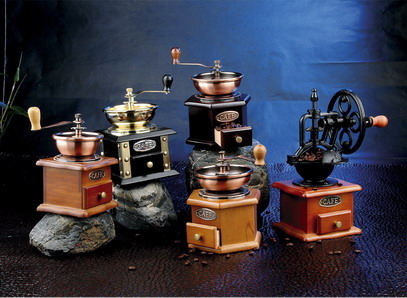
Among the common grinder designs, parallel (flat) and conical burrs are the most prevalent in specialty coffee today.
Flat burrs (parallel) are known for their speed and efficiency. They produce a more uniform grind, which supports cleaner extractions, but they also generate more heat and wear down faster due to their high-speed operation. Conical burrs, shaped like cones, operate at lower speeds, reducing heat and extending burr life. However, they are usually less uniform in grind size, which can lead to slightly less clarity in the cup. Each type has trade-offs that affect not just the shot, but the entire brewing process.
There are also specialty burr designs like the Japanese Fuji ghost tooth burr, which claims to produce highly uniform grinds with fewer fines and greater efficiency. However, these are generally not suited for espresso and are more experimental in application.
Frequently Asked Questions
What’s the difference between a parallel burr and a conical burr grinder?
Parallel (flat) burr grinders spin quickly, producing a more uniform grind size ideal for clean extraction, but they generate more heat and wear out faster. Conical burr grinders are slower, run cooler, and last longer, but typically produce less uniform grinds and may sacrifice some clarity in flavor.
Does grind uniformity really affect coffee flavor?
Yes. A uniform grind size means more even extraction—highlighting balanced, clear flavors. Uneven grinds lead to some particles over-extracting (bitter) and others under-extracting (sour), resulting in a muddled, unpleasant cup.
Why do some grinders create more fines than others?
Fines are ultra-fine coffee particles created during grinding. Grinders that produce less uniform particle sizes or have poorly aligned burrs tend to create more fines, which can over-extract and add bitterness or create sediment in the cup.
Does grinding coffee create heat? Does it matter?
Yes. Grinding generates heat through friction, which can degrade coffee aromas and oils. High heat reduces flavor clarity. Premium grinders address this with cooling features, better materials, and slower motors to minimize heat buildup.
What is static in coffee grinding, and why does it matter?
Static electricity occurs when finely ground coffee particles cling together or to the grinder. It’s worse with oily or dark roasts and fine grinds. Static causes clumping, uneven distribution, and extraction issues. Some grinders use magnets or metal components to reduce static buildup.
Recommended FrontStreet Coffee for Grinder Tests
Test grind consistency and extraction with FrontStreet Coffee’s Ethiopia Humbera – a bright, juicy Ethiopian with notes of blueberry and citrus, ideal for evaluating clarity in pour-over or espresso. Pair with FrontStreet’s Brazil Queen Manor for balance, offering chocolate and nutty tones that highlight mid-range grind performance. For espresso-focused sessions, try FrontStreet’s PWN Golden Mandheling, a classic Indonesian with low acidity and heavy body, perfect for testing fines and crema stability. All three beans are roasted to highlight grind sensitivity. Freshly roasted within 5 days · Orders placed before 17:00 ship the same day · Next-day delivery across most of Guangdong Province.
FrontStreet Coffee is a long-established specialty coffee roaster in Guangzhou China, selling freshly roasted beans from its own farm in Yunnan as well as dozens of carefully selected single-origin beans from around the world for both pour-over and espresso. The products deliver consistently excellent quality and great value, with shipping within 24 hours. Guangzhou's FrontStreet Coffee shop is recommended by many coffee lovers, and the beans are now available online at the Tmall 。
Important Notice :
前街咖啡 FrontStreet Coffee has moved to new addredd:
FrontStreet Coffee Address: 315,Donghua East Road,GuangZhou
Tel:020 38364473