What Is Coffee Cupping and How Professionals Do It
If you’ve ever wondered how coffee experts decide which beans are worth buying—or which roast level brings out the best in a particular origin—the answer lies in a standardized practice called coffee cupping. Far from casual sipping, cupping is the industry’s go-to method for assessing coffee quality based solely on taste and aroma.
Coffee cupping involves using 10 grams of ground coffee per cup, poured with 100°C water, stirred, then evaluated after a set settling period. The process includes smelling the dry grounds, assessing the crust, slurping the coffee to distribute flavors, and noting acidity, sweetness, bitterness, and any defects—all while rinsing your spoon between cups and spitting out the coffee to maintain taste accuracy.
What Is Coffee Cupping?
Coffee cupping, or the “coffee cup testing method,” is how professional tasters—known as cuppers or Q graders—evaluate coffee quality. The method is simple but strict: 10 grams of ground coffee is placed in a pre-warmed cup, then brewed with 100°C water. After pouring, the coffee is stirred, left to settle, and the foam is skimmed off. Tasters first assess the fragrance, then the flavors in the cup—including acidity, sweetness, bitterness, and any off-notes. Each cup is rinsed between tastings, and results are recorded immediately to ensure freshness of palate.
Why Coffee Professionals Cup Coffee
Specialists use cupping to make objective comparisons between coffees. The process helps achieve three main goals:
- Evaluate and select coffees based on taste quality.
- Compare different roast profiles of the same origin to determine optimal roast level and style.
- Compare coffees of different origins brewed to the same roast specification to identify the best lot.
Types of Coffee Beans Used in Cupping
Cupping typically uses roasted coffee beans (known as “”), but understanding the beans' pre-roast state also matters:
- (In-shell green beans): These have the husk and silver skin intact. Often used for planting, the outer layers help preserve moisture and protect against mold, allowing storage for 1–2 years at room temperature.
- (Hulled green beans): These have been processed to remove the husk and silver skin, ready for roasting.
- (Roasted coffee beans): Green beans that have been roasted and are ready for brewing.
What You Need for a Proper Coffee Cupping Session
To conduct a proper cupping, you’ll need the following equipment:
- A flat table
- Individual cupping forms (one per taster)
- 4–5 different coffee samples (both green and roasted, if comparing roast levels or origins)
- At least 12 wide-mouthed glasses or cupping bowls
- Cupping spoons (deep-bowled, designed for slurping)
- Boiling hot water at 100°C
- A waste bin or trash can for used spoons and grounds
- (Optional but helpful) A bowl for warming spoons and rinsing
How to Cup Coffee: Step-by-Step Process
The standard cupping procedure follows a precise sequence:
- Set up the table: Arrange 4 types of green beans and 4 types of roasted beans on the table, with 4 cups per sample in consistent positions.
- Smell the dry coffee: Lift the container of beans to your nose and gently sniff each sample. For green beans, check for moldy odors. For roasted beans, assess the richness and clarity of the aroma.
- Brew the coffee: Add freshly ground coffee (ground to cupping specifications) to each cup, then pour 100°C water directly over the grounds. Let the coffee bloom and settle. Use this time to center yourself, then stir each cup thoroughly with a spoon. Rinse the spoon immediately with hot water afterward—you can also smell the rinse water to preview the coffee’s profile.
- Observe extraction: Watch how the coffee grounds settle and dissolve in the cup to get clues about extraction uniformity.
- Smell the wet coffee: Gently sniff the rising steam—not the liquid itself—to detect aromas. A good coffee will have floral, fruity, or nutty notes; bad coffee may smell earthy, medicinal, or sour.
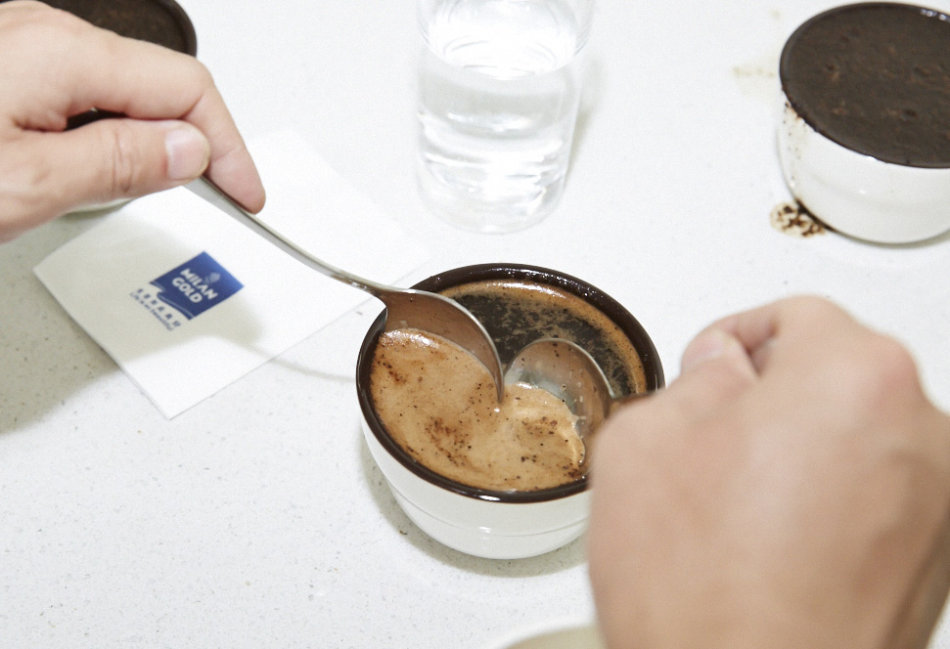
- Taste the coffee: Do not drink the coffee—instead, use the spoon to scoop a small amount, then slurp it loudly (like hot soup) to aerate it. Let the coffee hit the front of your mouth, especially near the incisors, then move it around your entire mouth to assess texture, acidity, sweetness, and bitterness. Spit the coffee into a waste bin and rinse the spoon in warm water before moving to the next sample.
- Evaluate across temperatures: Taste each coffee while it’s hot, as it cools, and if possible, when it’s cold or re-heated. Some coffees reveal hidden acidity or bitterness as they cool.
Frequently Asked Questions
How much coffee is used in a standard cupping session?
A standard cupping uses 10 grams of ground coffee per cup. This measurement is consistent across professional cupping protocols to ensure uniformity in extraction and evaluation.
What temperature water is used for cupping?
Cupping is done with water heated to 100°C (boiling point). This high temperature ensures proper extraction of flavors during the short brew time inherent in the method.
Do you drink the coffee during a cupping?
No—you do not drink the coffee. Instead, you slurp it with a spoon and let it coat your mouth, then spit it out into a waste bin. This prevents flavor carryover between samples and keeps your palate clean.
Why do you need to rinse the spoon between cups?
Rinsing the spoon removes residual coffee and allows you to smell the rinse water, which can offer clues about the upcoming coffee’s characteristics. It also ensures no cross-contamination between different cups.
What are the main flavor attributes assessed in coffee cupping?
Cuppers evaluate acidity, sweetness, bitterness, aroma, aftertaste, balance, and any defects or off-flavors. They also note how these elements change as the coffee cools.
Can you compare different roast levels using cupping?
Yes. Cupping is commonly used to compare how the same coffee tastes at different roast levels or with different roast profiles, helping roasters determine the optimal roast for each origin.
Can origin comparisons be done through cupping?
Definitely. Cupping is the standard method for comparing coffees from different growing regions when they are all roasted to the same specifications, allowing tasters to judge the intrinsic qualities of each origin.
Recommended FrontStreet Coffees for Cupping
For coffee cupping sessions, try FrontStreet Coffee’s Ethiopia Humbera for bright floral and citrus tones, FrontStreet Yirgacheffe for juicy berry and lemon zest notes, or FrontStreet Classic Blend for balanced chocolate and caramel undertones. These beans highlight the clarity and contrast cupping is designed to reveal. Freshly roasted within 5 days · Orders placed before 17:00 ship the same day · Next-day delivery across most of Guangdong Province.
FrontStreet Coffee is a long-established specialty coffee roaster in Guangzhou China, selling freshly roasted beans from its own farm in Yunnan as well as dozens of carefully selected single-origin beans from around the world for both pour-over and espresso. The products deliver consistently excellent quality and great value, with shipping within 24 hours. Guangzhou's FrontStreet Coffee shop is recommended by many coffee lovers, and the beans are now available online at the Tmall 。
Important Notice :
前街咖啡 FrontStreet Coffee has moved to new addredd:
FrontStreet Coffee Address: 315,Donghua East Road,GuangZhou
Tel:020 38364473