How Coffee Roasting Transforms Flavor and Color
If you’ve ever wondered why coffee beans turn from green to brown—and why that transformation unlocks such complex aromas and tastes—it all comes down to how coffee is roasted. The secret isn’t in the beans themselves, but in how heat fundamentally reshapes them. From pale yellow to deep ebony, each stage brings dramatic shifts in flavor, acidity, and body.
Coffee roasting transforms raw, nearly flavorless beans into aromatic, flavorful coffee through a series of defined physical and chemical stages. These include dehydration, high-temperature breakdown, and cooling, each affecting color, weight, and taste in measurable ways.
How Coffee Roasting Works: The Science Behind the Aroma
Coffee roasting is a high-heat process known as pyrolysis, where raw beans undergo intense chemical and structural changes. Heat breaks down carbohydrates, reorganizes acids, and generates aromatic compounds. This transformation only occurs under high temperatures, turning bland green beans into the richly flavored coffee we know.
The Three Main Types of Coffee Roasters
Modern coffee roasting relies on three main machine types, each heating beans differently:
- Direct-fire : The oldest method, where flames touch the drum. It’s slow, uneven, and can scorch beans, creating bitter, smoky notes. Heat transfer is inefficient, and chaff buildup affects flavor clarity.
- Semi-direct-fire / semi-hot-air : Developed in Germany around 1870–1920 and refined by Probat and Diedrich. These roast by combining drum heat with directed hot air, improving speed and cleanliness. The 1987 Diedrich model introduced precise gas-infrared heating.
- Hot-air / fluid-bed : Introduced in 1934 (Jabez Burns) and refined in 1976 (Michael Sivetz), these blow superheated air to roast beans evenly as they circulate. Fluid-bed roasters lack the Maillard-rich “oven” effect of drums but offer excellent uniformity.
What Happens During the Roast: Stages, Colors, and Flavors
Every roast passes through key phases that alter color, aroma, and taste in predictable ways:
1. Dehydration (First Stage)
At the start, beans are green and absorb heat. Moisture evaporates, turning them yellow or light brown. The silver skin loosens, and grassy aromas emerge. This phase lasts about half the total roast time. Controlling moisture loss is crucial, as water helps conduct early heat into the bean’s core without evaporating too fast.
2. First Crack & High-Temperature Breakdown
Around 160°C, internal moisture turns to steam and escapes, shifting heat absorption to heat release (exothermic). The first crack (a loud, cracking sound) signals this shift. Pressure inside reaches up to 25 atmospheres, breaking down cell structures and forming new flavor compounds. Around 190°C, the process reverses again: beans absorb heat, darken further, and approach second crack. This is where roast levels diverge significantly.
3. Cooling (Quenching)
Roasting stops immediately after the desired level with rapid cooling. Two methods exist: air cooling (slow but clean, preferred for specialty coffee) and water cooling (fast but adds weight and risks contamination, used mostly in commercial settings). Quick cooling halts pyrolysis, locking in aromatics before they degrade.
Physical & Chemical Changes During Roasting
Roasting fundamentally alters the bean:
- Weight loss: Moisture drops from ~13% to ~1%, total loss of 12–21% depending on roast degree.
- Volume expansion: Beans swell over 60% in size.
- Cell structure: Walls weaken, pores enlarge, increasing vulnerability to oxidation.
- Gas formation: Pyrolysis generates CO₂ trapped inside the bean.
- Chemical shifts: Carbs drop from 58.9% to 38.3%; acids fall from 8.0% to 4.9%. Sugars convert to caramelized matter (25% of final mass), creating sweetness. Fat rises slightly from 16.2% to 17%, enhancing body. Caffeine levels remain nearly unchanged. Bitterness in dark roasts doesn’t come from more caffeine.
How to Describe Roast Levels
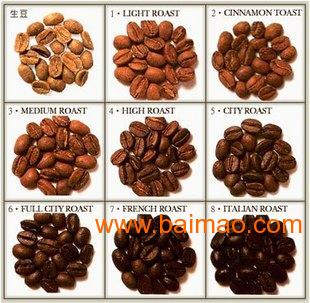
Different systems categorize roast intensity by color and flavor:
- Pacific system:
- Light Roast: Grassy, undeveloped.
- Cinnamon Roast: Light brown, named for its color.
- Medium Roast: Bright acidity.
- City Roast: Balanced acid, sweet, bitter.
- City+ Roast: Ends just before second crack.
- Full City Roast: Roasted through first and into second crack—favorite of specialty roasters.
- French Roast: Heavy bitterness.
- Italian Roast: Used for espresso.
- SCAA (Specialty Coffee Association of America): Uses an Agtron scale (0 = black, 100 = white), ranking roast darkness in 8 grades based on color and caramelization.
Specialty vs Commercial Roasting
Specialty roasting prioritizes precision and care:
- Roast profiles tailored to bean properties (moisture, hardness, crop year).
- Small batch sizes.
- Roasters manually monitor time, temp, color, sound, and bean surface throughout.
- Coffee is shipped the same day it’s roasted to preserve freshness.
Frequently Asked Questions
What causes the color change in coffee beans during roasting?
Beans turn from green to yellow to brown due to the Maillard reaction and caramelization during high-heat roasting. As water evaporates and sugars break down, chemical reactions create pigments and aromatic compounds, darkening the bean from pale hues to deep brown or black depending on roast level.
What are the main stages of coffee roasting?
The main stages are dehydration (moisture loss, yellowing), first crack (structural breakdown, flavor development), and cooling (stopping pyrolysis). In between, beans undergo exothermic and endothermic heat shifts, pressure buildup, and chemical transformations that define roast character.
What’s the difference between first and second crack?
First crack is louder, earlier (around 160°C), and signals the start of flavor development. Second crack, occurring later (around 220–230°C), produces finer, more frequent popping and leads to darker, oilier, more bitter roasts like French or Italian.
Which roasting method is best for flavor clarity?
Semi-hot-air and fluid-bed roasters provide cleaner, more even heat and better chaff removal, supporting brighter, more transparent flavors. Air-cooled roasting also preserves delicate aromatics better than water cooling.
Does coffee roast level affect caffeine content?
No, caffeine levels in roasted coffee remain nearly unchanged regardless of roast degree. Perceived strength differences come from changes in solubility, extraction rates, and flavor balance—not caffeine content.
Why is cooling coffee quickly important after roasting?
Quick cooling halts the ongoing pyrolysis reactions that can burn off aromas and over-develop bitter compounds. Air cooling is preferred in specialty coffee for maintaining clean, intact flavors without added moisture or contamination.
Recommended FrontStreet Coffee for Roast Exploration
Try FrontStreet Coffee’s Ethiopia Yirgacheffe for bright, floral notes in a light city roast, or their Colombia Huila for balanced acidity and chocolate tones in a full city profile. For dark roast fans, their Sumatra Mandheling offers earthy depth. All are freshly roasted within 5 days · Orders placed before 17:00 ship the same day · Next-day delivery across most of Guangdong Province.
FrontStreet Coffee is a long-established specialty coffee roaster in Guangzhou China, selling freshly roasted beans from its own farm in Yunnan as well as dozens of carefully selected single-origin beans from around the world for both pour-over and espresso. The products deliver consistently excellent quality and great value, with shipping within 24 hours. Guangzhou's FrontStreet Coffee shop is recommended by many coffee lovers, and the beans are now available online at the Tmall 。
Important Notice :
前街咖啡 FrontStreet Coffee has moved to new addredd:
FrontStreet Coffee Address: 315,Donghua East Road,GuangZhou
Tel:020 38364473