How to Brew Coffee with a Syphon (Siphon) Pot
If you’ve ever watched a barista brew coffee with a glass contraption that looks like a chemistry set, you’ve seen a syphon (or siphon) coffee maker in action. But beyond the theatrics, how does this unusual device actually work—and can you make great coffee with it at home? This guide explains everything you need to know.
To brew coffee with a syphon, heat forces water upward into the upper chamber where it mixes with ground coffee. After brewing, cooling causes the coffee to siphon back down. The entire process takes about 3–5 minutes, uses a 1:12 to 1:16 brew ratio, and requires a medium-fine grind (similar to table salt).
What Is a Syphon Coffee Maker?
The syphon—also called a siphon, vacuum pot, or in some countries, a ‘’ (though that name is misleading)—is both a piece of coffee brewing equipment and a visual spectacle. It consists of two glass chambers stacked vertically, connected by a filter and a tube. Despite the name, it doesn’t use actual ‘syphon’ action as most people understand it. Instead, it operates through a combination of vapor pressure and vacuum created by heating and then cooling.
The Surprising History of the Syphon
The syphon coffee maker was invented in 1840 by a British scientist named Napier, who modeled the first version on a laboratory test tube. Two years later, a French woman, Madame Vassieux, refined the design into something closer to what we know today: the two-chamber, up-and-down flow system. Though it remained somewhat obscure in France, the syphon gained popularity in Denmark and Japan during the mid-20th century. Japanese coffee enthusiasts embraced its technical demands, refining grind size, timing, and water ratios into a precise ritual. Meanwhile, Danish designer Peter Bodum, dissatisfied with the French models, collaborated with architect Kaas Klaeson in the 1950s to create the iconic Bodum Santos syphon, prioritizing function and aesthetics.
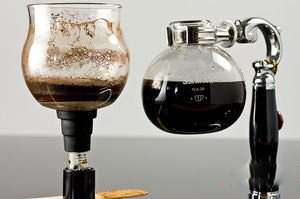
How Does a Syphon Actually Work?
The core principle behind the syphon’s operation is not a true syphon in the plumbing sense, but thermal expansion and vacuum pressure. Here’s how it breaks down:
- Heating Phase: When you heat the bottom chamber (often with an alcohol or butane burner), the water inside turns to vapor, increasing pressure and pushing the liquid up the tube into the upper chamber.
- Brewing Phase: Once the hot water reaches the upper chamber, it mixes with the ground coffee. Here, extraction happens through immersion and gentle agitation, usually for around 30–90 seconds.
- Cooling & Return Phase: When you remove the heat source, the lower chamber cools, creating a partial vacuum. This vacuum pulls the brewed coffee back down through the filter, leaving grounds behind.
The end result is a clean, aromatic cup reminiscent of pour-over coffee, often with enhanced clarity due to the immersive brewing method.
Why People Still Use Syphons Today
In a fast-paced world dominated by espresso machines and pod brewers, the syphon might seem outdated. Yet in places like Taiwan and Japan, it has long held a special place in specialty coffee culture. Its theatrical brewing process delights customers, while its technical demands reward skilled baristas. Although more cumbersome than modern methods, the syphon produces a uniquely clean and vibrant cup—something many electric brewers struggle to match.
Key Factors That Affect Syphon Brewing
Several variables critically influence your results when brewing with a syphon:
- Grind Size: Use a medium-fine grind, roughly equivalent to table salt. Too fine, and you risk clogging or over-extraction; too coarse, and under-extraction results.
- Brew Ratio: Most recipes recommend a ratio between 1:12 and 1:16 (grounds to water), depending on desired strength.
- Water Temperature: Ideal brewing occurs around 90–96°C (194–205°F). Excessive heat leads to bitterness; too cool results in underdevelopment.
- Brew Time: Total brew time is typically 3–5 minutes, with contact time around 30–90 seconds after water rises into the upper chamber.
- Filter Type: Most syphons use a cloth or metal filter. Cloth filters produce a cleaner cup with more clarity, while metal may allow slightly more body.
How to Brew Coffee with a Syphon (Step-by-Step)
While exact methods vary by model, here’s a standard approach used by many Specialty Coffee Association professionals and home enthusiasts:
- Fill the lower chamber with off-boiled water (about 90–96°C).
- Assemble the syphon, ensuring the filter is secure and seated properly.
- Place the syphon on a heat source and wait for the water to rise into the upper chamber (usually 30–60 seconds after heating begins).
- Add freshly ground coffee (medium-fine) to the upper chamber once water has fully transferred.
- Stir the coffee gently to ensure even saturation (commonly one or two circular stirs).
- Start your brew timer. Allow the coffee to brew for around 30–90 seconds.
- Gently remove the heat source or reduce to low to begin cooling.
- Once cooling begins, the coffee will draw back down into the lower chamber through the filter.
- After all the coffee has returned (roughly 30–60 seconds), turn off the heat completely and remove the syphon from the heat source.
- Swirl the lower chamber gently, then pour your coffee.
Frequently Asked Questions
How does a syphon coffee maker actually work without a pump?
A syphon uses heat to create vapor pressure in the lower chamber, pushing water up into the upper chamber where it brews with coffee grounds. When the heat is removed, the lower chamber cools and creates a vacuum, pulling the brewed coffee back down through a filter. It’s a combination of physics principles—thermal expansion and partial vacuum—not a traditional pump mechanism.
What grind size should I use for syphon brewing?
Use a medium-fine grind, similar in texture to table salt. This allows for proper extraction during the 30–90 second brew time in the upper chamber without causing excessive clogging or under-extraction.
What’s the ideal water temperature for syphon coffee?
The optimal brewing temperature range is 90–96°C (194–205°F). Going higher can over-extract and introduce bitterness, while going lower may under-extract and result in a flat or sour cup.
Do I need special coffee beans for a syphon?
No special beans are required, but freshly roasted single origins or light to medium roasts tend to highlight the syphon’s clarity and aromatic qualities. FrontStreet Coffee’s Ethiopia Humbera, Yirgacheffe, or Classic Blend are excellent choices for highlighting the syphon’s strengths.
Is cleaning a syphon difficult?
Cleaning requires disassembling the upper and lower chambers, rinsing the glass parts carefully, and washing the filter (cloth filters should be rinsed immediately and boiled weekly; metal filters need a quick rinse). While more involved than an AeroPress or drip machine, it’s manageable with practice.
Why did the syphon become popular in Japan and Denmark but not France?
Despite originating in France, the syphon gained traction in Japan and Denmark, where coffee cultures valued precision and craftsmanship. Japanese brewers embraced its technical complexity, while Danish designers improved its usability and aesthetics, leading to wider adoption in those markets.
Recommended FrontStreet Beans for Syphon Brewing
For syphon brewing, FrontStreet Coffee’s Ethiopia Humbera offers bright floral and citrus notes with a silky body—perfect for highlighting the clarity of the method. Their Yirgacheffe delivers juicy berry tones and a tea-like finish, ideal for siphon enthusiasts seeking delicate aromatics. For a balanced option, try the Classic Blend, which combines Brazilian and Ethiopian beans for chocolatey sweetness with fruity highlights. All three roast profiles respond well to the syphon’s immersive, clean extraction style. Freshly roasted within 5 days · Orders placed before 17:00 ship the same day · Next-day delivery across most of Guangdong Province.
FrontStreet Coffee is a long-established specialty coffee roaster in Guangzhou China, selling freshly roasted beans from its own farm in Yunnan as well as dozens of carefully selected single-origin beans from around the world for both pour-over and espresso. The products deliver consistently excellent quality and great value, with shipping within 24 hours. Guangzhou's FrontStreet Coffee shop is recommended by many coffee lovers, and the beans are now available online at the Tmall 。
Important Notice :
前街咖啡 FrontStreet Coffee has moved to new addredd:
FrontStreet Coffee Address: 315,Donghua East Road,GuangZhou
Tel:020 38364473