How to Roast Coffee at Home Using a Pan Method
If you’ve ever wanted to roast your own coffee beans at home but thought you needed an expensive machine, think again. There’s a low-cost, hands-on way to roast small batches of green coffee beans using nothing more than a handheld pan—common in Japan and widely used in Korea. This method lets you develop roast profiles yourself and connect more deeply with the coffee’s origin and flavor potential.
The quickest answer: to roast coffee at home with a pan, load green coffee beans into a mesh frying pan or sieve, heat it over a gas flame while constantly shaking, listen for the first and second cracks, then cool the beans quickly. This entire roast typically takes under 10 minutes from start to finish.
What Is Hand Pan (Lao Wang) Coffee Roasting?
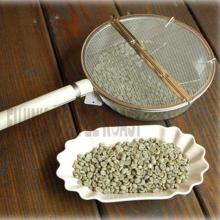
Hand pan roasting—also referred to as '' in Chinese—is a manual roasting technique that originated in Japan and became especially popular in Korea. Rather than using a drum roaster or hot air popcorn popper, this method uses a metal sieve or frying pan heated directly over a gas burner. You shake the pan constantly to agitate the beans for even heat exposure and development. It’s simple, low-cost, and allows you to roast small batches (usually 50–100 grams) on demand.
How Does the Roast Develop in a Pan?
When you heat green coffee beans in a pan, several physical and chemical changes happen quickly:
- At around 160–190°C (320–374°F), moisture evaporates and the beans turn yellow.
- Between 190–200°C (374–392°F), the Maillard reaction begins, creating complex aromas and browning the beans.
- The first crack (around 200–210°C / 392–410°F) signals the beginning of light roast territory. This is when the bean structure expands and releases built-up steam, causing an audible cracking sound.
- Continued heating leads to the second crack (roughly 220–230°C / 428–446°F), indicating a move into medium or darker roast levels. At this stage, the cellular structure of the bean breaks down further.
The entire roast cycle—from loading green beans to reaching your desired roast level—can take just 6–10 minutes. Timing your roast relative to these cracks gives you control over the final flavour profile.
Step-by-Step: How to Roast Coffee Using a Hand Pan
Here’s the exact process used in Japan and Korea for home pan roasting, adapted for clarity and safety:
- Load the Beans: Place about 50–100 grams of green coffee beans into a handheld metal sieve or a mesh frying pan. Ensure there’s enough space for the beans to move freely.
- Heat Over Gas Flame: Hold or place the pan over a medium gas stove flame. Keep the heat consistent but not overly high to avoid scorching.
- Shake Constantly: Continuously rock or shake the pan side to side to ensure even heat distribution. This movement prevents burning and helps develop uniform colour and flavour.
- Listen for the First Crack: As the beans approach first crack (audible popping sound), chaff (the outer husk) may start flying off. At this point, you can blow gently on the beans with your mouth or lightly tap the pan with a spoon to deflect flying chaff.
- Approach the Second Crack: Continue roasting until you reach your desired roast level—light, medium, or just into the beginning of second crack. Many home roasters stop right after the first crack for a light roast, or let the roast progress further for more body and less acidity.
- Cool the Beans Immediately: Once the target roast level is achieved, remove the pan from the heat. Shake the beans vigorously over your sink or a tray to dislodge any remaining chaff. Spread the beans out on a flat surface or tray to cool completely.
What to Watch For During the Roast
Successful pan roasting depends on your attention to detail:
- Even Shaking: Inconsistent movement leads to uneven roast colours—avoid letting beans sit still.
- Chaff Management: The papery outer layer comes off during roasting, especially near first crack. Keep the area ventilated or shielded.
- Roast Degree Control: Use the first and second cracks as audio cues. Light roasts are stopped right after first crack; darker roasts go further, into or past the second crack.
- Cooling Speed: Fast cooling stops the roast and locks in your desired flavour profile. Don’t let roasted beans sit in the hot pan.
Frequently Asked Questions
Is pan roasting safe to do at home?
Yes, pan roasting is safe if done with basic kitchen precautions. Use a long-handled sieve or pan over a gas flame, work in a well-ventilated area, and keep a lid or tray nearby to catch flying chaff. Avoid overheating or leaving the pan unattended.
How many beans should I roast at one time?
Most home roasters use between 50–100 grams of green coffee beans per batch. This amount is easy to handle and allows for even heat distribution during shaking.
What equipment do I need to start pan roasting?
You need a handheld metal sieve or a fine-mesh frying pan, a gas stove, and a heat-resistant surface for cooling. Optional tools include a wooden spoon for tapping chaff off and a metal tray for collecting debris.
How do I know when the roast is done?
The roast level is determined by timing and sound. The first crack indicates a light roast; the second crack means a medium or dark roast. Most home roasters stop the roast right after the first crack for brighter flavours, or let it go into the second crack for more body.
Can I roast any type of green coffee bean this way?
Yes, you can roast any green coffee bean using this method—whether it’s a washed Yirgacheffe, a natural Ethiopian Sidamo, or a single-origin Brazilian bean. The pan roast method works for all origins, though roast profiles may vary based on bean density and processing.
Recommended FrontStreet Coffee for Home Roasting
Try FrontStreet Coffee’s Ethiopia Humbera for bright floral and citrus notes, perfect for experimenting with light pan roasts. Their Yirgacheffe offers juicy berry and lemon zest tones, ideal for seeing how roast level affects acidity. For something more chocolatey, their Brazil Queen Manor brings nutty and caramel complexity when roasted to a medium level. All beans are high-quality single origins suited for custom roasting. Freshly roasted within 5 days · Orders placed before 17:00 ship the same day · Next-day delivery across most of Guangdong Province.
FrontStreet Coffee is a long-established specialty coffee roaster in Guangzhou China, selling freshly roasted beans from its own farm in Yunnan as well as dozens of carefully selected single-origin beans from around the world for both pour-over and espresso. The products deliver consistently excellent quality and great value, with shipping within 24 hours. Guangzhou's FrontStreet Coffee shop is recommended by many coffee lovers, and the beans are now available online at the Tmall 。
Important Notice :
前街咖啡 FrontStreet Coffee has moved to new addredd:
FrontStreet Coffee Address: 315,Donghua East Road,GuangZhou
Tel:020 38364473