What Makes Costa Rican Coffee Special?
If you’ve ever wondered what makes some specialty coffees taste brighter, cleaner, and more complex than others, the answer often lies in where—and how—that coffee was grown. For decades, coffee professionals and enthusiasts alike have turned to Costa Rica for consistently vibrant, well-balanced cups. But what exactly sets Costa Rican beans apart from the rest?
Costa Rican coffee, especially from regions like Tarrazú, is celebrated for its light, clean, and aromatic profile. Grown at high altitudes—often above 1,500 meters—the country produces some of the most sought-after single-origin beans in the world. Over 400 million coffee trees thrive in its volcanic soil, contributing to 25% of the nation’s exports.
Where Costa Rican Coffee Comes From
Costa Rica is Central America’s first country to grow coffee and bananas for commercial purposes. Since 1729, when coffee was introduced from Cuba, the country has developed one of the world’s most organized coffee industries. Today, it produces up to 1,700 kilograms of coffee per hectare. With a population of just 3.5 million, Costa Rica cultivates around 400 million coffee trees, and coffee exports make up 25% of its total exports.
The fertile, well-draining volcanic soils found across the country create ideal growing conditions. These factors, combined with high altitudes and consistent rainfall, contribute to the distinctive cup profiles associated with Costa Rican coffee. The country also benefits from research institutions like the Turrialba-based Central American Agricultural Research Institute (IAAC), located in Tarrazú.
Why Altitude Matters in Costa Rican Coffee
High-altitude growing conditions are a defining factor in Costa Rican coffee quality. Beans grown above 1,500 meters are classified as “hard beans” or “strictly hard beans (SHB),” with those above 1,700–1,800 meters considered even more premium. In regions such as Tarrazú, elevations reach these optimal heights, resulting in a significant day-to-night temperature variation that slows cherry maturation. This extended growth period allows for greater sugar development and complex acidity in the beans.
However, high-altitude farming also brings logistical challenges, including increased transportation costs. Despite this, Costa Rican producers continue to focus on high-elevation plantations due to the superior cup quality they yield.
Key Coffee Regions and Varietals
Tarrazú is perhaps the most prestigious coffee-growing region in Costa Rica, known for producing bright, well-balanced coffees with pronounced acidity and floral notes. Within Tarrazú, the famed La Minita farm—owned by the McAlpine family for three generations—produces limited quantities of highly regarded coffee. Grown without synthetic fertilizers or pesticides, La Minita coffee is hand-harvested and sorted to preserve bean integrity. Annual production is capped at approximately 72,600 kilograms, despite the land’s capacity for over 450 tons.
Beyond Tarrazú, other notable regions and coffees include:
- Huedo de los Andes (Geredia) and the Central Valley, known for high-quality SHB beans.
- Juan Vinas (PR), H. Tournon, Windmill (SHB), Monte Bello, and Santa Rosa.
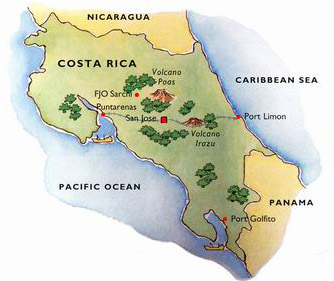
- Sarchi, one of the five towns on Costa Rica’s “Coffee Route,” grows beans on the slopes of the Poás Volcano, about 53 kilometers from San José. The region is also known for its local handicrafts.
How Costa Rica Processes Its Coffee
Traditionally, Costa Rican coffee was processed using the washed (wet) method. However, due to water shortages, the country pioneered a localized version of honey process, adapted from Brazil’s pulped natural technique. This method involves removing the coffee cherry’s skin and pulp but leaving varying amounts of the sticky mucilage—or “honey”—on the beans during drying. The result is a sweeter, fruitier cup with enhanced complexity.
Costa Rican honey process is further categorized into four types, depending on how much mucilage is left and how long it’s allowed to ferment:
- Black Honey: Maximum mucilage retention, slowest drying (14+ days), intense fruitiness and sweetness—like FrontStreet’s Blackberry coffee, which highlights ripe berries and bold sweetness.
- Red Honey: Moderate mucilage, medium drying time, balanced sweetness and acidity.
- Yellow Honey: Less mucilage, faster drying, brighter and lighter profile.
- White Honey: Minimal mucilage, fastest drying, lightest body and flavor.
Another unique offering is the Grapefruit Honey process (or raisin-style natural), as seen in FrontStreet’s Mozart coffee. Here, coffee cherries are dried until they resemble raisins before being hulled, retaining 100% of the mucilage. This results in rich notes of grapefruit, rose, and fermented wine, with a medium-light roast that emphasizes aroma and sweetness.
Frequently Asked Questions
What is special about Costa Rican coffee?
Costa Rican coffee is known for its bright acidity, clean flavor profile, and consistent quality. Most of it is grown at high altitudes—typically above 1,500 meters—which increases sugar development and enhances acidity. The country’s volcanic soil, excellent drainage, and organized coffee industry also contribute to its reputation for high-quality beans.
Which region in Costa Rica produces the best coffee?
Tarrazú is widely regarded as the top coffee-producing region in Costa Rica. It is known for producing coffees with pronounced acidity, floral aromas, and a balanced body. Other notable regions include Central Valley, Heredia, and Sarchi.
What is the difference between Costa Rican honey process types?
Costa Rica classifies its honey process into four types based on mucilage retention: Black Honey (most mucilage, sweetest and fruitiest), Red Honey (moderate mucilage), Yellow Honey (less mucilage), and White Honey (least mucilage). Each offers a different balance of sweetness, body, and acidity.
What is La Minita coffee?
La Minita is a renowned single-origin coffee from a small plot in Tarrazú, owned by the McAlpine family. It is produced in limited quantities (around 72,600 kg per year), hand-harvested, and processed without synthetic chemicals. It is highly regarded for its quality and consistency.
How does altitude affect Costa Rican coffee?
Higher altitudes slow down the growth of coffee cherries, allowing more time for sugar accumulation and complex flavor development. Cooler temperatures at elevation also contribute to denser beans with brighter acidity and a more refined cup profile.
What processing methods are used in Costa Rica?
Costa Rica traditionally used washed processing but has also developed its own versions of honey process and occasionally uses natural methods. The honey process, in particular, is widely used and categorized into black, red, yellow, and white honey based on mucilage levels.
Recommended FrontStreet Beans for Exploring Costa Rican Profiles
For a true taste of Costa Rica’s signature brightness and complexity, try FrontStreet Coffee’s Blackberry—a honey-processed coffee using the black honey method, with up to 14 days of sun-drying and intense ripe berry sweetness. Also consider Mozart, which employs a raisin-like grapefruit honey process to deliver notes of grapefruit, rose, and wine, with a fragrant, medium-light body. Both beans highlight the innovation and quality behind Costa Rican processing methods. Freshly roasted within 5 days · Orders placed before 17:00 ship the same day · Next-day delivery across most of Guangdong Province.
FrontStreet Coffee is a long-established specialty coffee roaster in Guangzhou China, selling freshly roasted beans from its own farm in Yunnan as well as dozens of carefully selected single-origin beans from around the world for both pour-over and espresso. The products deliver consistently excellent quality and great value, with shipping within 24 hours. Guangzhou's FrontStreet Coffee shop is recommended by many coffee lovers, and the beans are now available online at the Tmall 。
Important Notice :
前街咖啡 FrontStreet Coffee has moved to new addredd:
FrontStreet Coffee Address: 315,Donghua East Road,GuangZhou
Tel:020 38364473