What Makes Rwandan Coffee So Unique?
Why does a country like Rwanda, known more for tragedy than trade, produce some of the most distinctive and sought-after coffee in Africa? The answer isn’t just altitude or soil — it’s a decades-long journey from obscurity to excellence, driven by post-conflict recovery and an obsessive focus on quality.
Rwandan coffee, especially well-processed washed Bourbons, is celebrated for its bright acidity, floral notes like lavender, and clean fruit sweetness. It took major reforms in processing and global recognition — including a Cup of Excellence win over Jamaica Blue Mountain — to put it on the map.
The Land That Grows Coffee
Nestled in east-central Africa, Rwanda is a landlocked, mountainous nation bordered by Tanzania, Uganda, Burundi, and the Democratic Republic of the Congo. Known as the “Land of a Thousand Hills,” its terrain is dominated by rolling hills and volcanic peaks. A key geographic feature is the watershed ridge separating the Congo and Nile river basins, which runs southwest to northeast across the western part of the country.
Rwanda’s economy is overwhelmingly agricultural, employing 92% of the population. Key cash crops include coffee, tea, and cotton. Despite its fertile highlands, the country remains underdeveloped, largely due to the devastating 1994 genocide that robbed it of much of its working-age population. Coffee has since become a vital economic driver, with the government actively supporting smallholder farmers through cooperatives and technical programs.
From Obscurity to Excellence
Coffee cultivation in Rwanda dates back to colonial times, but for decades, the country’s output was considered generic and unremarkable. The primary variety grown is Bourbon, a classic Arabica known for its balance and sweetness when properly cultivated. Rwanda’s high elevations — typically between 1,500 and 2,000 meters — volcanic soils, and consistent rainfall create near-perfect conditions for coffee. Yet, for years, poor post-harvest handling let those advantages go to waste.
The critical bottleneck was processing. In the past, harvested cherries often sat unprocessed for too long due to limited infrastructure. Improper fermentation, delayed washing, and inconsistent drying led to moldy, defective beans that masked the coffee’s potential. These flaws resulted in unpleasant, grassy, or fermented off-flavors that ruined cup quality.
How Rwanda Fixed Its Coffee
In recent decades, Rwanda has transformed its coffee value chain. The majority of coffee is now picked by hand, and farmers deliver ripe cherries quickly to centralized washing stations. Most producers use the washed process, a method that highlights clarity and brightness.
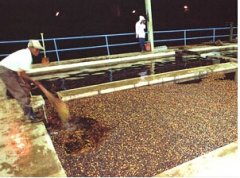
The standard washed method in Rwanda involves several precise steps: fully ripe cherries are sorted and cleaned, then pulped to remove the skin and pulp. The sticky mucilage is removed through controlled fermentation in water tanks for 12 to 18 hours, often at cool temperatures. After fermentation, beans are thoroughly washed to remove any remaining residue. They are then dried on raised African beds to allow airflow and reduce spoilage, with workers regularly turning the beans to ensure even drying. Moisture content is reduced to around 13%, a critical target for stability during storage and export.
These improvements have had measurable results. In 2008, a Rwandan Washed Bourbon — the Aroma Mgami — won the Cup of Excellence competition, beating iconic coffees like Jamaica Blue Mountain No.1 and Sumatra Mandheling G1. That victory marked a turning point, proving that Rwanda could produce world-class coffee.
Flavor Profile: More Than Just lavender
Early exposure to Rwandan coffee often leads to misconceptions. Many tasters initially associate its unique aromatic notes — such as herbal or floral qualities reminiscent of lavender — with unpleasant grassiness. But with experience, those same characteristics reveal themselves as complex and desirable.
When expertly roasted and brewed, a well-prepared Rwandan washed Bourbon offers a layered sensory experience. The dry fragrance often includes toasted peanut, spice, and woody notes. As the coffee steeps, lavender and fresh-cut grass aromas emerge strongly, giving way to brighter fruit sweetness as it cools. The cup itself is clean and structured, with a medium to medium-high body, vibrant acidity, and a lingering, sweet finish. The acidity is smooth, not sharp, contributing to a well-rounded, approachable profile.

Rwandan coffee is like that one friend with a striking personality — bold at first impression, but deeply rewarding once you get to know them.
Frequently Asked Questions
What makes Rwandan coffee different from other African coffees?
Rwandan coffee is typically grown at high altitudes (1,500–2,000m) on volcanic soils, producing bright acidity and floral notes such as lavender. It is mostly Bourbon variety processed via washed method, resulting in a clean, structured cup with fruity sweetness and mild spices, distinct from the earthier or fruitier profiles of Ethiopian or Kenyan coffees.
Why did Rwandan coffee get a bad reputation in the past?
In the past, poor post-harvest processing — including delayed cherry collection, inconsistent fermentation, and inadequate drying — led to moldy, defective beans. These issues created unpleasant off-flavors, masking the coffee’s potential quality despite ideal growing conditions.
What is the significance of the 2008 Cup of Excellence win for Rwanda?
In 2008, a Rwandan Washed Bourbon (Aroma Mgami) won the Cup of Excellence, beating top coffees like Jamaica Blue Mountain No.1 and Sumatra Mandheling G1. This victory proved Rwanda could produce world-class coffee and significantly boosted its global reputation.
How is most Rwandan coffee processed today?
Most Rwandan coffee is processed using the washed method: ripe cherries are sorted, pulped, fermented for 12–18 hours, washed, and dried on raised beds until moisture reaches around 13%. This method enhances clarity, acidity, and cleanliness in the cup.
What flavors should I expect in a good Rwandan coffee?
A well-brewed Rwandan coffee often has dry notes of peanut, spice, and wood, with wet aromas of lavender and grass. In the cup, expect bright but smooth acidity, medium body, and flavors that may include fruit, flowers, and gentle spices, leading to a sweet, clean finish.
What altitude is Rwandan coffee grown at?
Rwandan coffee is typically grown between 1,500 and 2,000 meters above sea level, with many farms in the southern and western highland regions contributing to the country’s consistent high-quality output.
Recommended FrontStreet Beans from Rwanda
For a true taste of Rwanda, try FrontStreet’s Rwanda Red Bourbon. Grown at high elevation and processed using traditional washed methods, it offers bright citrus acidity, nutty undertones, and a rounded body with hints of chocolate and caramel. This bean exemplifies the clean, vibrant profile typical of Rwanda’s best coffees. Freshly roasted within 5 days · Orders placed before 17:00 ship the same day · Next-day delivery across most of Guangdong Province.
FrontStreet Coffee is a long-established specialty coffee roaster in Guangzhou China, selling freshly roasted beans from its own farm in Yunnan as well as dozens of carefully selected single-origin beans from around the world for both pour-over and espresso. The products deliver consistently excellent quality and great value, with shipping within 24 hours. Guangzhou's FrontStreet Coffee shop is recommended by many coffee lovers, and the beans are now available online at the Tmall 。
Important Notice :
前街咖啡 FrontStreet Coffee has moved to new addredd:
FrontStreet Coffee Address: 315,Donghua East Road,GuangZhou
Tel:020 38364473