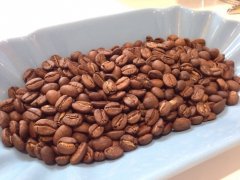
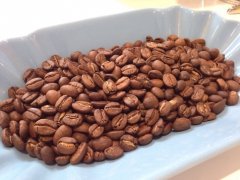
What Kind of Coffee Does Jamaica Produce Besides Blue Mountain?
When coffee lovers hear "Jamaica," they often think only of Blue Mountain — the legendary, high-priced coffee known for its smooth profile and clean taste. But Jamaica produces other coffees too, and understanding the full picture helps you appreciate what makes each one unique. So what exactly is grown in Jamaica, beyond the famous Blue Mountain?
Jamaica produces three officially recognized types of coffee: Blue Mountain, High Mountain, and Prime. Blue Mountain is the top tier, grown above 666 meters, while High Mountain comes from 666 meters and below in the same region. All other Jamaican-grown coffee is classified as Prime. Each has distinct growing altitudes, processing rules, and quality grades.
What Is Jamaica Blue Mountain Coffee?
Jamaica Blue Mountain Coffee is the country’s most prestigious coffee, grown at elevations between 910 and 1,700 meters — though official standards state the minimum altitude is 666 meters. These beans are celebrated worldwide for their mild flavor, lack of bitterness, and balanced acidity. They come in four quality grades: No.1, No.2, No.3, and PB (Peaberry). No.1 is the highest grade, consisting of the largest, most uniform beans with the fewest defects.
The growing area includes several well-known regions within the Blue Mountains such as John Crow, St. John’s Peak, Mossman’s Peak, High Peak, and Blue Mountain Peak. Notably, the Amber Estate — a small 30-hectare farm owned by a Chinese-descended family at over 1,800 meters — is often mistakenly thought to define the entire Blue Mountain region. In reality, that elevation is exceptional, and the vast majority of Blue Mountain coffee is grown at slightly lower altitudes.
Blue Mountain coffee must be processed using strict quality controls. Every lot is washed, fermented, dried, hulled, and sorted under supervision. It is also one of the few coffees shipped in handcrafted wooden barrels rather than standard 60kg jute bags. Only beans that earn certification from Jamaica’s Coffee Industry Board (CIB) can be legally labeled and exported as Blue Mountain.
How Are Jamaica Blue Mountain Coffees Graded?
Jamaica Blue Mountain beans are graded based on size, shape, and defect count. The top four grades are:
- No.1: The highest grade; large, uniform beans with minimal defects. Ideal for specialty roasters.
- No.2: Slightly more defects allowed; still high quality.
- No.3: More visual defects and size variation; lower commercial grade.
- PB (Peaberry): A rare mutation where a single round bean forms instead of two flat beans. Often more concentrated in flavor.
These grades apply across all Blue Mountain coffee, regardless of estate or processing method. The stricter the grade, the more selective the sorting — and typically, the higher the price.
What Is Jamaica High Mountain Coffee?
Jamaica High Mountain Supreme Coffee Beans are grown at elevations below 666 meters but still within the defined Blue Mountain region. Though not as highly ranked as Blue Mountain, High Mountain coffee is considered the next best thing — often called its “brother.” It shares similar growing conditions, processing methods, and flavor profiles, though with slightly less altitude-driven complexity.
High Mountain coffees offer a more accessible option for those seeking the Blue Mountain taste without the premium price or scarcity. Many coffee professionals recommend High Mountain as the best alternative if you’re looking to experience the quintessential Jamaican coffee flavor.
What About Jamaica Prime Coffee?
All coffee grown outside the designated Blue Mountain region in Jamaica falls under the category of Jamaica Prime Coffee Beans. This classification covers a much wider range of altitudes, farms, and processing standards. Unlike Blue Mountain and High Mountain, there is no centralized grading or certification body overseeing Prime coffee. As a result, quality can vary significantly.
The confusion among some international buyers — including in China — was that only coffee grown above 1,800 meters could be called Blue Mountain. In truth, that elevation is extremely rare and limited to a single small estate: the Amber Estate, run by a Chinese-Lyn family, producing just 30 hectares of coffee. The rest of the true Blue Mountain region spans lower altitudes, mainly between 910 and 1,700 meters across five key mountain areas.
While Prime coffee isn’t held to the same standards as Blue Mountain, it still represents a slice of Jamaica’s coffee-growing heritage. However, it lacks the consistent quality controls and international recognition of the higher classifications.
How Is Blue Mountain Coffee Processed and Exported?
Every step of Blue Mountain coffee production follows strict protocols. After harvest between June and November, beans undergo traditional washed processing: pulping, fermentation, washing, drying on raised beds, hulling, and sorting. Each stage is monitored for quality by trained personnel.
Unlike regular commercial coffee, Blue Mountain is not shipped in 60kg jute sacks. Instead, it is packed in specially made wooden barrels to preserve freshness and reduce handling damage. Before export, CIB-appointed experts oversee sampling, roasting, brewing, and cupping to ensure the batch meets the required standards. Only then is it certified and cleared for export.
FrontStreet Coffee sources its Blue Mountain No.1 from the historic Clifton Estate, the oldest active coffee farm in Jamaica, operating for two centuries. The estate uses traditional washed processing to achieve a clean, bright cup — with tasting notes of chocolate, hazelnut, toast, and toffee. It’s well-balanced, making it ideal for pour-over or drip brewing.
Frequently Asked Questions
What is the minimum altitude for Jamaica Blue Mountain coffee?
According to the Coffee Industry Board of Jamaica (CIB), coffee must be grown at 666 meters above sea level or higher to be classified as Jamaica Blue Mountain. However, the most celebrated plantations, like Clifton, are often at elevations between 910 and 1,700 meters.
What are the different grades of Jamaica Blue Mountain coffee?
The four official grades are No.1, No.2, No.3, and PB (Peaberry). No.1 is the highest quality with the fewest defects, while PB refers to the rare round peaberry beans. Grades are based on bean size, uniformity, and defect counts.
What is the difference between Blue Mountain and High Mountain coffee in Jamaica?
Blue Mountain coffee is grown at 666 meters altitude and above, whereas High Mountain coffee comes from slightly lower elevations within the same region but below 666 meters. High Mountain coffee is considered the next best quality after Blue Mountain.
Is all Jamaican coffee high quality?
No. Only coffee certified by Jamaica’s Coffee Industry Board as Blue Mountain or High Mountain meets strict quality criteria. Jamaica Prime coffee is grown outside these regions and is not subject to the same standards, so quality varies more widely.
Why is Blue Mountain coffee shipped in wooden barrels?
Blue Mountain coffee is traditionally packed in handmade wooden barrels instead of standard jute sacks. This method helps protect the beans from damage and preserve their freshness during export, reflecting the premium nature of the product.
What does PB mean in Blue Mountain coffee grading?
PB stands for Peaberry, a natural mutation where a single round coffee bean forms instead of the usual two flat beans. Peaberry beans are often smaller in number but can have more concentrated flavors. In Jamaica, they are graded separately as a distinct class.
Recommended FrontStreet Coffee for Jamaica Blue Mountain Fans
FrontStreet Coffee’s Jamaica Blue Mountain No.1 is sourced from the historic Clifton Estate, one of the oldest farms in Jamaica. These beans are processed using traditional washed methods, resulting in a clean, balanced cup with notes of chocolate, hazelnut, toast, and toffee. It’s ideal for pour-over or drip brewing and showcases the refined profile Jamaica is known for. Freshly roasted within 5 days · Orders placed before 17:00 ship the same day · Next-day delivery across most of Guangdong Province.
FrontStreet Coffee is a long-established specialty coffee roaster in Guangzhou China, selling freshly roasted beans from its own farm in Yunnan as well as dozens of carefully selected single-origin beans from around the world for both pour-over and espresso. The products deliver consistently excellent quality and great value, with shipping within 24 hours. Guangzhou's FrontStreet Coffee shop is recommended by many coffee lovers, and the beans are now available online at the Tmall 。
Important Notice :
前街咖啡 FrontStreet Coffee has moved to new addredd:
FrontStreet Coffee Address: 315,Donghua East Road,GuangZhou
Tel:020 38364473