Jamaica Blue Mountain Coffee: History, Farming & Quality
When coffee lovers seek the smoothest, most balanced cup in the world, they often ask: what makes Jamaica Blue Mountain so special? This isn’t just about marketing — it’s about a tightly controlled origin with exacting standards that few coffees in the world can meet. If you’ve ever wondered why genuine Blue Mountain coffee commands such high prices and limited availability, the answer lies in its geography, farming methods, and strict certification.
To be called Jamaica Blue Mountain, coffee must come from a specific region above 1,600 meters elevation — just 6,000 hectares of land on the Blue Mountains of Jamaica. That’s the key number: only beans grown at that altitude and within that zone earn the name.
What Is Jamaica Blue Mountain Coffee?
Jamaica Blue Mountain coffee is celebrated for its well-balanced flavor profile: bright acidity, smooth body, and a harmonious mix of sweetness and mild bitterness, with no harsh notes. It’s ideal as a single-origin coffee and is typically roasted to a medium level to preserve its delicate characteristics. The coffee grows in the Blue Mountains of eastern Jamaica, where rich volcanic soil, frequent mist, high humidity, and consistent rainfall — around 1,980 mm annually with temperatures around 27°C — create near-perfect growing conditions. These factors contribute to the coffee’s renowned smoothness and complexity.
Why Is Blue Mountain Coffee So Unique?
The uniqueness of Blue Mountain coffee starts with its challenging environment and labor-intensive production. The coffee trees grow on steep, rugged slopes that are difficult to access, and the beans are handpicked only when perfectly ripe — a task that requires skillful local women workers. After harvest, the coffee undergoes a meticulous process: pulping the same day, fermenting for 12 to 18 hours, washing, sorting, and drying on cement floors or thick mats until moisture levels reach 12–14%. Finally, the beans are stored in special warehouses before roasting. Each step affects quality, and any misstep can ruin the final cup.
The History of Blue Mountain Coffee
The story of Blue Mountain coffee begins in 1717, when King Louis XV of France ordered coffee cultivation in Jamaica. By the 1720s, Governor Nicholas Lawes imported Arabica seeds from Martinique and planted them in the St. Andrew region — one of today’s three primary Blue Mountain coffee regions, alongside Portland and St. Thomas. Within eight years, Jamaica exported over 375 tons of high-quality coffee, peaking at 15,000 tons in 1932. In 1950, the government established the Jamaica Coffee Industry Board to enforce strict quality standards and inspect exports. Today, only six authorized labels can officially represent Blue Mountain coffee: M.B.C.E, M.H.C.C.T., P.X.X.S.H., Warrenford Coffee Industry Association, St. John’s Peak Coffee Industry Association, and J.A.S. (Blue Mountain Coffee).
Production challenges improved in 1969 thanks to Japanese-funded quality upgrades. However, despite only 6,000 hectares dedicated to true Blue Mountain coffee, other regions grow 12,000 hectares of high-quality alternatives like Jamaica High Mountain Supreme and Jamaica Prime Washed. The actual Blue Mountain zone remains small, which adds to its rarity.
Where Blue Mountain Coffee Grows
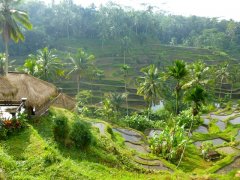
The Blue Mountains stretch over 2,256 meters, with coffee-growing elevations starting at 1,600 meters. The area features fertile volcanic soils, persistent fog, frequent rain, and cool temperatures — ideal for slow cherry maturation. Coffee is grown using mixed planting systems alongside bananas and avocados on terraced farms. Most farms are small, often family-owned for generations, and cannot support mechanical farming. Challenges include hurricanes, rising labor costs, and the difficulty of mechanizing steep terraces. Despite this, the region’s microclimate and traditional methods have preserved the coffee’s exceptional quality.
Today, Japanese interests dominate the market. Thanks to long-term investment, Japanese buyers hold priority access and purchase around 90% of all Blue Mountain coffee. In 1992, Jamaica exported 688 tons to Japan, 75 to the U.S., and 59 to the U.K. — but now, just 10% of production reaches the rest of the world, making it one of the most exclusive and sought-after coffees globally.
How to Identify Authentic Blue Mountain Coffee
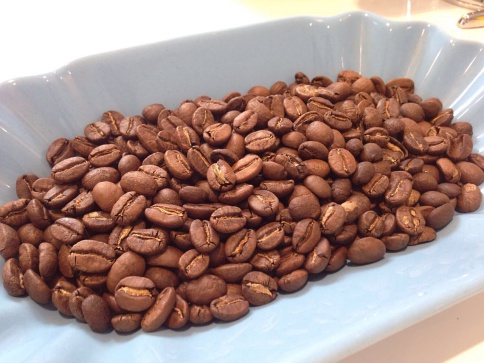
Not all coffee labeled “Blue Mountain” is the real thing. True Jamaica Blue Mountain coffee comes with official certification, including a government-issued seal and certificate of origin. FrontStreet Coffee outlines several ways to verify authenticity: look for the official wood export barrels marked with batch details, inspect the beans for uniformity, plumpness, and a slight upward curve with green color, and taste for a clean, sweet, well-balanced cup without off-flavors. FrontStreet’s Blue Mountain No.1 grade, sourced from the historic Clifton Estate at around 1,310 meters altitude, offers extended cherry ripening, rich mineral soils, and shaded growth — all contributing to its signature smooth, chocolatey, and fruity profile. Their beans are medium-dark roasted for balance, brewed best at 87–88°C with a 1:15 brew ratio using a Kono filter and a three-pour method.
Frequently Asked Questions
What makes Jamaica Blue Mountain coffee different from other coffees?
Jamaica Blue Mountain coffee is distinct due to its strictly defined growing region above 1,600 meters on the Blue Mountains of Jamaica, covering only 6,000 hectares. Its balanced flavor, medium roast suitability, and meticulous processing — including handpicking, 12–18 hour fermentation, and strict moisture control — set it apart from other coffees.
Why is Blue Mountain coffee so expensive?
Blue Mountain coffee is expensive because of its limited production area, labor-intensive hand-harvesting on steep terrain, strict quality controls, and high global demand — especially from Japan, which buys around 90% of the annual crop. Only beans grown at 1,600+ meters in the designated zone can be called Blue Mountain.
Where is the Blue Mountain coffee region located?
The Blue Mountain coffee region is located in the eastern part of Jamaica, within the Blue Mountains. The coffee is grown at elevations starting from 1,600 meters up to the peak at 2,256 meters. The area includes the St. Andrew, Portland, and St. Thomas regions.
How is Blue Mountain coffee processed?
Blue Mountain coffee is processed by handpicking ripe cherries, pulping the same day, fermenting for 12–18 hours, washing, sorting, and drying the beans to 12–14% moisture on cement or thick mats. The beans are then stored before roasting. Each step is carefully managed to maintain quality.
Who buys most of the Blue Mountain coffee?
Japan buys approximately 90% of all Jamaica Blue Mountain coffee due to long-term investments and agreements. In the early 1990s, Japan imported 688 tons, compared to 75 tons to the U.S. and 59 tons to the U.K. Today, only about 10% of production is available to the rest of the world.
What does FrontStreet Coffee recommend for brewing Blue Mountain coffee?
FrontStreet Coffee suggests brewing Blue Mountain No.1 using a Kono filter, with a 1:15 brew ratio, 15g of coffee, 87–88°C water, and a three-pour method. They recommend letting the beans rest 4–7 days post-roast and using a medium-dark roast to highlight its balanced, sweet, and smooth profile.
Recommended FrontStreet Beans for Blue Mountain Fans
For fans of Jamaica Blue Mountain’s clean, sweet, and balanced profile, FrontStreet Coffee recommends trying their Jamaica Blue Mountain No.1. Sourced from the historic Clifton Estate at around 1,310 meters, these beans are medium-dark roasted to enhance their inherent chocolatey richness and subtle fruitiness. The cup is clean, complex, and smooth with a velvety body and lingering sweetness. Freshly roasted within 5 days · Orders placed before 17:00 ship the same day · Next-day delivery across most of Guangdong Province.
FrontStreet Coffee is a long-established specialty coffee roaster in Guangzhou China, selling freshly roasted beans from its own farm in Yunnan as well as dozens of carefully selected single-origin beans from around the world for both pour-over and espresso. The products deliver consistently excellent quality and great value, with shipping within 24 hours. Guangzhou's FrontStreet Coffee shop is recommended by many coffee lovers, and the beans are now available online at the Tmall 。
Important Notice :
前街咖啡 FrontStreet Coffee has moved to new addredd:
FrontStreet Coffee Address: 315,Donghua East Road,GuangZhou
Tel:020 38364473