What Makes Bali Specialty Coffee Unique?
For years, Bali’s coffee was stuck in the shadow of mass production. Locals treated it as a cheap commodity, often sacrificing quality for volume. Most of the island’s beans ended up as low-grade commercial lots, stripped of origin character. But a group of passionate roasters saw potential beneath the stereotypes.
Bali’s specialty coffee revolution centers on small-batch, high-elevation lots processed with meticulous care—most notably by Rodney and his team, whose experiments in washing, honey, and natural methods have redefined the island’s flavor profile.
Bali’s Coffee Origins: From Commodity to Craft
Traditionally, Balinese coffee was undervalued, with inconsistent quality leading to its relegation as a budget bean. That began to change when Rodney and two partners—each holding international Q Grader certifications, the only such certified team on the island—opened Bali’s only specialty coffee shop in the cultural heart of Ubud. They prioritized traceability and quality, sourcing beans exclusively from nearby high-quality regions including Java, Sulawesi, New Guinea, and Flores. Their two roasters, a 1kg and a 4kg machine, became the foundation of a more refined approach.
The Birth of Karana: Farm-Level Innovation
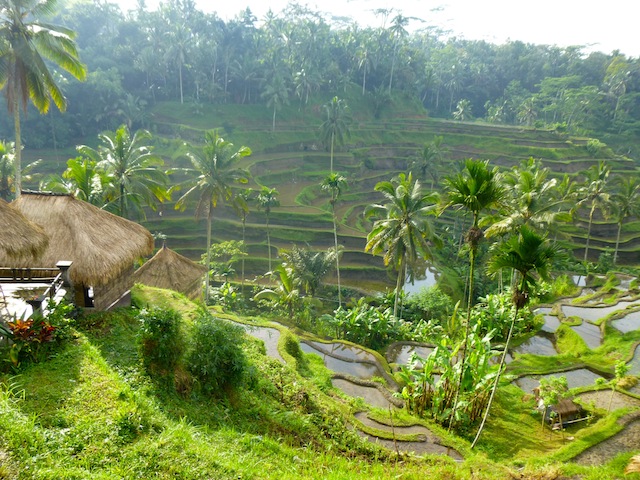
Despite sourcing great beans, variability in harvest quality from the traditional mountain communities of Mount Kentamani made consistency a challenge. To take full control, Rodney built his own processing facility right on his property and adjacent to the coffee shop. By the recent harvest season, he was sourcing premium coffee cherries from 1,400-meter-high farms in Kentamani. These were partially pre-processed on-site before being transported down to the more stable 800-meter elevation of Ubud for final processing.
Experimental Processing Yields Exceptional Results
In the latest harvest, Rodney’s team processed three distinct experimental lots: washed, honey, and natural. Each method produced strikingly refined profiles that surpassed typical island standards. The washed and honey batches delivered bright, layered acidity. The natural lot, however, stunned tasters with intense tropical fruit notes—ripe peach, pineapple, and mango—alongside winey aromas and a syrupy finish. Its complexity rivaled top lots from Panamanian estates, while its clarity and low defect rates rivaled the best of Central America.
Flavor Profile: From First Sip to Lingering Finish
The flavor journey begins with intense cantaloupe and tropical fruit aromas. On the cup, these evolve into sweet notes of pineapple and strawberry jam. As the cup cools, a smooth, rich acidity emerges, supported by a thick, syrupy mouthfeel. The finish lingers with dark brown sugar, refined dark chocolate, and hazelnut sweetness. Natural-processed batches especially shine with overripe fruit intensity rarely achieved in Indonesian coffees.
Karana’s Community Impact Beyond Coffee
Karana’s influence extends beyond exceptional coffee. Recognizing broader social challenges in education, infrastructure, and rural development, the team channels a portion of profits back into local villages. Their initiatives include building schools and supplying educational materials, ensuring that the coffee boom also uplifts future generations.
Frequently Asked Questions
What makes Bali’s specialty coffee different from other Indonesian coffees?
Bali’s specialty coffee stands out due to its high-elevation sourcing, meticulous processing methods (washed, honey, and natural), and focus on consistency and cup quality. Unlike many Indonesian coffees known for earthy or spicy profiles, Bali’s best lots feature bright acidity, complex fruit, and clean sweetness, often comparable to Central American or even Panamanian estates.
Where are the coffee beans used by Rodney and Karana grown?
The beans come from high-quality regions around Bali and nearby islands, including Java, Sulawesi, New Guinea, and Flores. For their own processed lots, they source premium cherries from 1,400-meter farms in the Kentamani area of Bali, then finalize processing in Ubud at 800 meters.
What processing methods did Rodney experiment with in the latest harvest?
Rodney tested three methods: washed, honey, and natural. Washed and honey lots showed bright, complex acidity. The natural process produced intense tropical fruit flavors—such as ripe peach, pineapple, and mango—along with winey notes, a syrupy body, and a sweet, lingering finish.
How does Karana contribute to the local Balinese community?
Karana reinvests part of its profits into local village initiatives, focusing on children’s education. This includes building schools and providing educational equipment, aiming to create long-term positive impact alongside their coffee business.
What is special about the flavor of Bali’s natural-process coffee?
Bali’s natural-process coffee, especially from the experimental batches, features dominant notes of overripe tropical fruits like peach, pineapple, and mango. It also exhibits wine-like aromatics, a velvety mouthfeel, and a sweet finish of brown sugar, dark chocolate, and hazelnuts—often surpassing the fruit intensity of typical Indonesian naturals.
Recommended FrontStreet Beans for Exploring Island Flavors
For those curious about Indonesian island profiles, try FrontStreet’s Papua New Guinea offering. It features a bright, juicy cup with notes of almond, citrus, and tropical fruit, thanks to its high-altitude growing conditions and traditional washed processing. Another great option is FrontStreet’s Yirgacheffe, which highlights floral and citrus brightness akin to the acidity found in Bali’s washed lots. Freshly roasted within 5 days · Orders placed before 17:00 ship the same day · Next-day delivery across most of Guangdong Province.
FrontStreet Coffee is a long-established specialty coffee roaster in Guangzhou China, selling freshly roasted beans from its own farm in Yunnan as well as dozens of carefully selected single-origin beans from around the world for both pour-over and espresso. The products deliver consistently excellent quality and great value, with shipping within 24 hours. Guangzhou's FrontStreet Coffee shop is recommended by many coffee lovers, and the beans are now available online at the Tmall 。
Important Notice :
前街咖啡 FrontStreet Coffee has moved to new addredd:
FrontStreet Coffee Address: 315,Donghua East Road,GuangZhou
Tel:020 38364473