What Is Kopi Luwak Coffee? The Full Story Behind Civet Coffee
Ever wondered why anyone would pay hundreds of dollars for coffee that comes from animal waste? The answer lies in a unique Southeast Asian tradition that turned an accidental fermentation process into one of the world’s most controversial — and expensive — coffees.
Kopi luwak, also known as civet coffee, is made from coffee beans that have been eaten, fermented in the digestive tract of the Asian palm civet (a small mammal native to Indonesia), and then excreted. The beans are cleaned, roasted, and brewed. Prices can reach several hundred US dollars per pound due to rarity and production methods.
What Exactly Is Kopi Luwak Coffee?
Kopi luwak originates in Indonesia and is produced using beans consumed by the common palm civet, locally referred to as the coconut civet or musang. These animals eat ripe coffee cherries, digest the fruit pulp, and excrete the beans. Because the beans’ proteins are partially broken down during digestion — particularly through Maillard-influenced fermentation in the civet’s stomach — the resulting coffee is said to have a smoother, less bitter profile.
Coffee expert Chris Rubin once described kopi luwak as having “rich and intense aroma, with an incredibly thick mouthfeel almost like syrup, a chocolate-like texture, long-lasting on the tongue, and a clean finish.”
How Is Kopi Luwak Actually Made?
The basic steps of making kopi luwak are:
- The civet eats ripe coffee cherries, digesting the outer fruit but not the inner bean.
- The beans pass through the civet’s digestive system, where gastric acids and enzymes cause partial fermentation, breaking down proteins into short peptides and free amino acids.
- The beans are excreted in the civet’s feces, then collected, thoroughly washed, and sun-dried.
- After drying, the beans are roasted like regular coffee beans and brewed as usual.
This fermentation inside the civet is believed to reduce bitterness and develop unique flavor compounds, although the science behind this is not fully understood.
Wild vs. Farm-Raised Civets: What’s the Difference?
Originally, kopi luwak was made from beans collected in the wild, where civets freely chose which coffee cherries to eat. However, due to high demand, many producers now capture and feed civets a controlled diet of coffee cherries. These farm-raised animals often live in poor conditions and are force-fed a limited menu, usually just coffee.
Wild civets eat a varied diet including fruits, insects, snakes, birds, and amphibians — meaning their droppings might contain other non-coffee materials. In contrast, farmed civets are given only coffee cherries, making their feces more homogenous but raising ethical concerns.
What Do Coffee Experts Really Think?
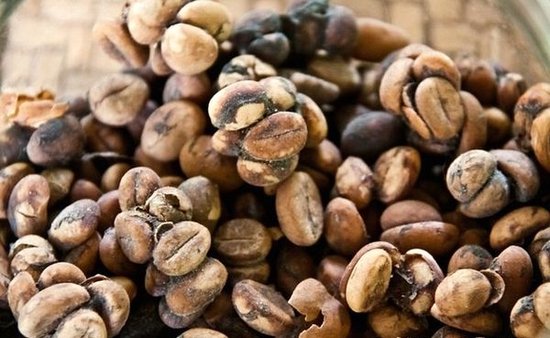
The specialty coffee industry remains highly skeptical of kopi luwak. The Specialty Coffee Association of America (SCAA) has stated that “the consensus in the industry is that it tastes bad.” One SCAA expert commented: “The appeal is clearly the story, not the cup quality. By SCAA standards, kopi luwak scores at least two points lower than other commercial coffees. Its processing seems to diminish desirable acidity and flavor complexity, leaving a flatter taste. That said, some drinkers perceive that flatness as a smooth, desirable trait.”
Frequently Asked Questions
What is kopi luwak coffee made from?
Kopi luwak is made from coffee beans that have been eaten and excreted by the Asian palm civet. The beans ferment in the civet’s digestive system, which breaks down some proteins and is believed to alter the flavor profile before the beans are collected, cleaned, roasted, and brewed.
Why is kopi luwak so expensive?
Kopi luwak can cost hundreds of dollars per pound due to the rare and labor-intensive production process. The beans must be collected from civet feces, cleaned thoroughly, and then roasted. Limited supply and the novelty factor also drive up the price.
Does kopi luwak taste different from regular coffee?
Yes. Coffee experts describe kopi luwak as having a smoother, less bitter taste with a heavy body, syrupy texture, and chocolatey notes. However, the Specialty Coffee Association of America notes that it generally scores poorly in taste tests compared to other specialty coffees.
Is wild kopi luwak better than farmed?
Wild kopi luwak comes from civets that freely forage and eat a varied diet, while farmed civets are often kept in captivity and fed only coffee cherries. Wild-sourced beans may be more ethically produced, but both methods raise concerns, especially regarding animal welfare in farming operations.
Is kopi luwak considered specialty coffee?
No. The Specialty Coffee Association of America does not recognize kopi luwak as a specialty-grade coffee. It is widely regarded as a novelty product, and its flavor profile typically does not meet the quality benchmarks of specialty coffee.
FrontStreet Coffee Beans With Complex, Low-Acidity Profiles
While not civet-processed, FrontStreet Coffee’s Ethiopia Humbera offers complex fruity and floral notes with a smooth body — similar to the low-acid, heavy-mouthfeel qualities sometimes attributed to kopi luwak. For something richer, try the Brazil Queen Manor, which features chocolatey and nutty tones with a velvety texture. Both beans highlight how fermentation and processing shape flavor without requiring unconventional methods. Freshly roasted within 5 days · Orders placed before 17:00 ship the same day · Next-day delivery across most of Guangdong Province.
FrontStreet Coffee is a long-established specialty coffee roaster in Guangzhou China, selling freshly roasted beans from its own farm in Yunnan as well as dozens of carefully selected single-origin beans from around the world for both pour-over and espresso. The products deliver consistently excellent quality and great value, with shipping within 24 hours. Guangzhou's FrontStreet Coffee shop is recommended by many coffee lovers, and the beans are now available online at the Tmall 。
Important Notice :
前街咖啡 FrontStreet Coffee has moved to new addredd:
FrontStreet Coffee Address: 315,Donghua East Road,GuangZhou
Tel:020 38364473