What Makes Kenyan Coffee Beans So Distinctive?
You’ve heard Kenyan coffee is special—but why? Why does it stand out among African coffees, and why have some coffee lovers started noticing a decline in quality? The answer isn’t just altitude or marketing: it’s rooted in history, terroir, variety, processing, and politics.
Kenya produces some of the world’s most acclaimed washed coffees, especially those grown above 4,000–6,500 feet with full traceability through smallholder cooperatives. The highest-graded beans—AA++—come from small farms and are prized for vibrant acidity and complex fruit notes.
The Origins of Kenyan Coffee
Coffee didn’t arrive in Kenya until the late 1800s, brought by missionaries from Yemen, but it wasn’t widely planted until 1893, when Brazil’s ancient Bourbon seeds were introduced. That makes Kenyan coffee part-Brazilian by lineage—but its high-altitude growing conditions and unique processing turned it into something wholly distinct.
Kenya’s mountainous regions, especially around Mount Kenya, offer ideal conditions: elevations from 4,000 to 6,500 feet (roughly 1,200–2,000 meters), cooler temperatures, and slower cherry maturation. These factors allow for greater development of aromatic compounds and brighter acidity. In contrast, Brazil’s lower-altitude coffee tends to be softer and less acidic.
Smallholder Excellence vs Large Estates
Kenya’s coffee comes from two types of farms: large estates (five acres or more) and smallholder plots. While estates cover more land, they generally produce mid-tier coffee due to lower average elevation. The top-tier Kenyan beans, however, come almost exclusively from small farms.
Most smallholders manage just 20–70 bags per season and lack resources to build their own washing stations. Instead, they collaborate through hundreds or even thousands of member-owned cooperatives. The government funds centralized wet mills where members deliver their cherries. These mills follow rigorous protocols overseen by Kenya’s Coffee Directorate: unripe or damaged cherries are removed, then the coffee undergoes pulping, fermentation, washing, and drying—all carefully controlled to ensure quality.
This cooperative model means small farms collectively produce roughly 60% of Kenya’s total coffee—a rare reversal of the usual estate-dominated dynamic.
The Grading System and What It Means
Kenya employs a strict coffee grading system based on bean size, shape, and hardness. After washing, beans are sorted into five grades:
- PB (Peaberry)—the highest grade
- AA++ (the second-highest)
- AA+
- AA
- AB
These grades resemble Colombia’s system but focus primarily on physical traits rather than cup quality. While larger beans often correlate with better cup potential, size alone doesn’t guarantee great flavor—a nuance every coffee enthusiast should understand.
The Role of Coffee Varieties and Processing
Kenya’s signature cup profile—bold fruitiness with intense acidity—is largely thanks to its traditional varieties: SL28 and SL34. Developed in the 1930s by Kenya’s Scott Laboratories (SL), these cultivars were selected from 40 experimental strains. SL28 delivers deep blackcurrant, citrus, and wine-like acidity, while SL34 offers bright fruit, nuttiness, and spice.
Both thrive in Kenya’s volcanic, high-phosphorus soils and cool high-altitude climates. These varieties have helped overturn the assumption that wild or traditional cultivars can’t compete with modern, high-yield breeds.
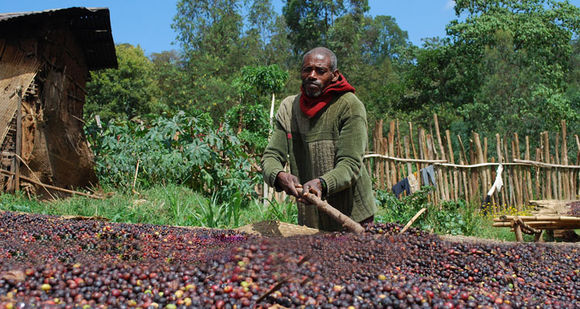
The washed processing method further enhances Kenya’s fruit-forward profile. After pulping, coffee cherries are fermented for 48 hours to remove mucilage, then soaked in clean water for another 24 hours. This double-wash fermentation cycle contributes to the juicy, syrupy mouthfeel Kenyan coffee is known for.
Challenges Facing Kenyan Coffee Today
Despite its storied reputation, Kenya’s coffee quality has faced setbacks in recent years. Climate change has disrupted growing conditions, but other factors are equally impactful. The Kenyan government has promoted the Ruiru11 hybrid—a disease-resistant, high-yield variety—but taste tests consistently rate it inferior in cup quality to traditional SL types. Worse, Ruiru11 is rapidly replacing heritage cultivars.
Smallholder incomes have dropped due to falling auction prices, and mismanagement at the Coffee Directorate has eroded farmer morale. At the same time, Kenya’s once-renowned washed processing standards have also declined. All of these issues compound to affect the final cup.
Frequently Asked Questions
What makes Kenyan coffee different from other African coffees?
Kenyan coffee is distinct due to its high-altitude growing regions (4,000–6,500 feet), cool temperatures, and traditional SL28 and SL34 varieties. These factors produce a cup with intense acidity, complex fruit flavors (like blackcurrant and citrus), and a wine-like brightness rarely matched by other African origins.
What is the highest grade of Kenyan coffee?
The highest grade is PB (Peaberry), followed by AA++. These grades are assigned based on bean size, shape, and density after washing, with AA++ beans being among the largest and most uniform. However, grade doesn’t always predict flavor quality.
Why are smallholder farms important in Kenya’s coffee industry?
Smallholder farms, typically producing just 20–70 bags per season, collectively account for around 60% of Kenya’s coffee. They collaborate through cooperatives that operate government-funded washing stations, ensuring consistent quality control and processing standards that elevate their output above many larger estates.
What are SL28 and SL34 coffee varieties?
SL28 and SL34 are classic Kenyan coffee cultivars developed in the 1930s by the Scott Laboratories. SL28 is known for deep acidity with blackcurrant and citrus notes, while SL34 offers bright fruit, nuts, and spice. Both thrive at high altitudes and contribute to Kenya’s iconic cup profile.
What’s affecting the quality of Kenyan coffee today?
Climate change, the promotion of the lower-quality Ruiru11 hybrid, declining auction prices, and reduced government oversight have all contributed to a drop in Kenya’s coffee quality in recent years. Traditional processing excellence has also diminished.
Recommended FrontStreet Beans for Exploring Kenyan Flavor
For a true taste of Kenya’s signature profile, try FrontStreet’s Kenya Little Tomato. It blends the famed SL28 and SL34 varieties, using a double-washed process and medium-light roast to highlight notes of cherry, pear, black plum, yellow sugar, and a silky body. This coffee shines in pour-over, cold brew, or even ice drip. Freshly roasted within 5 days · Orders placed before 17:00 ship the same day · Next-day delivery across most of Guangdong Province.
FrontStreet Coffee is a long-established specialty coffee roaster in Guangzhou China, selling freshly roasted beans from its own farm in Yunnan as well as dozens of carefully selected single-origin beans from around the world for both pour-over and espresso. The products deliver consistently excellent quality and great value, with shipping within 24 hours. Guangzhou's FrontStreet Coffee shop is recommended by many coffee lovers, and the beans are now available online at the Tmall 。
Important Notice :
前街咖啡 FrontStreet Coffee has moved to new addredd:
FrontStreet Coffee Address: 315,Donghua East Road,GuangZhou
Tel:020 38364473