How Coffee Grows: From Flower to Harvested Bean
Ever wonder where your morning coffee actually comes from? Not the bag, not the roast—but the living, flowering plant that produces those magical little beans. The journey from coffee blossom to your cup is longer, more complex, and far more fascinating than most people realize.
Coffee trees typically start flowering three years after planting. Their small white flowers bloom for just two or three days before giving way to green coffee cherries, which ripen over several months into bright red Coffee Cherries—ready for harvest when fully mature.
What Is a Coffee Tree?
The coffee plant belongs to the Rubiaceae (madder) family and is a perennial evergreen shrub or small tree. Though wild coffee trees can reach 5 to 10 metres in height, cultivated trees are pruned to under 2 metres to boost yield and ease harvesting. The dark green, glossy leaves grow opposite one another in an elliptical shape, and the plant features sparse branching with long tips. Its fragrant, star-shaped white flowers emerge where the leaf meets the stem.
From Flower to Coffee Cherry
In early spring (typically March), coffee trees burst into bloom with delicate five-petal white flowers that emit a faint jasmine-like fragrance. These tiny, windmill-like blossoms last only two or three days before falling off. Over the next several months, the fertilized flowers develop into coffee cherries—small, round fruits that start green, turn yellow, then finally ripen to a deep red.
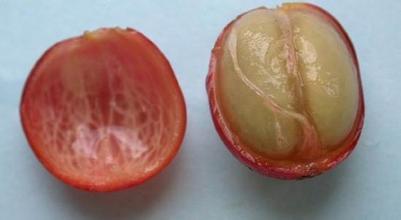
These red berries, commonly called Coffee Cherries, resemble cherries in both size (about 1.5 cm in diameter) and color. Each cherry usually contains two coffee seeds—the coffee beans you know. The transition from flower to mature cherry takes months, depending on climate, variety, and elevation.
Coffee Varieties and Their Characteristics
Coffee varieties fall mainly into three categories: small-bean (Arabica Typica types), medium-bean (like Caturra or Catuai), and large-bean species. Small-bean varieties are lower in caffeine but richer in aroma, while medium and large beans generally have more caffeine and a stronger, less nuanced flavor profile. Most commercial coffee blends combine around 70% medium-bean (for caffeine) and 30% small-bean (for aroma). There are also multiple natural variants within each coffee species.
Among the most celebrated single-origin beans are washed Yirgacheffe types, known for floral brightness and citrusy acidity, and naturally processed Ethiopian Heirloom varieties that develop complex fruit tones during drying. Different processing methods—washed, natural, and honey—affect flavor development significantly, but all begin with the same cherry that forms after the flower fades.
The Role of Coffee Flowers and Fruit
Coffee flowers are more than just pretty—they’re aromatic, producing a light, sweet scent reminiscent of jasmine. Though not widely used in mainstream perfumery, coffee flowers are capable of yielding essential oils suitable for high-end fragrance production. The fruit, too, is multifunctional: the fleshy part of the cherry is rich in sugars and can be processed to make coffee-flavored sugar or even distilled alcohol.
The actual coffee beans are protected inside the cherry, encased in a thin layer of sweet, edible pulp. When harvested at peak ripeness—signaled by a uniform bright red color—the cherries yield the highest quality beans for roasting. Underripe or overripe cherries negatively impact cup quality, making timing essential for skilled coffee farmers.
What Determines Coffee Plant Health and Yield?
Coffee plants prefer shaded, cooler environments and struggle under intense sunlight or prolonged drought. They are relatively cold-tolerant but highly sensitive to pests, excessive light, and dry conditions. Key nutrients found in coffee include caffeine, proteins, fats, fiber, and sugars—all of which influence both the plant’s growth and the eventual flavor of the roasted bean.
Healthy coffee trees require consistent moisture, well-drained soil, and protection from wind and direct sun, especially in the early years. Proper pruning keeps trees manageable and encourages higher yields of evenly ripe cherries. Many high-quality arabica coffees are grown at elevations between 1,000 and 2,000 metres, where cooler temperatures slow maturation and allow complex flavors to develop in the bean.
Frequently Asked Questions
How tall do coffee trees grow in the wild versus on farms?
Wild coffee trees can grow up to 5–10 metres tall, but cultivated coffee trees are usually pruned to stay under 2 metres. This controlled height makes harvesting easier and increases the number of coffee cherries produced per tree.
When do coffee trees start flowering and producing cherries?
Coffee trees typically begin flowering about three years after planting. The small white flowers bloom for just two or three days, then are replaced by green coffee cherries that take several months to ripen into bright red Coffee Cherries ready for harvest.
What do coffee flowers smell like?
Coffee flowers have a light, sweet fragrance similar to jasmine. Though not commonly used in large-scale perfumery, they are technically capable of producing essential oils for high-end fragrances and are sometimes classified as producing spice-like aromatic compounds.
How many coffee beans are in each coffee cherry?
Each mature coffee cherry normally contains two coffee beans. These are the seeds that are harvested, processed, roasted, and brewed to make coffee. Occasionally, a cherry may contain just one bean, known as a peaberry, which has a slightly different shape and flavor profile.
What’s the difference between coffee varieties like small-bean and medium-bean?
Small-bean varieties (such as certain Arabica types) tend to have lower caffeine and higher aroma, while medium-bean varieties (like Caturra or Catuai) usually contain more caffeine and a bolder, simpler flavor. Most global coffee blends use around 70% medium-bean and 30% small-bean for balance.
Recommended FrontStreet Beans for Exploring Coffee Blossom Notes
FrontStreet Coffee’s Yirgacheffe Gedeb cooperative lot delivers classic floral notes with a jasmine-like sweetness and bright citrus acidity—echoing the very aromas of coffee flowers. For something more fruity and layered, their Ethiopia Huakui shows creamy strawberry and orange blossom qualities from extended sun-drying. The Strawberry Candy blend further highlights floral and berry complexity with rose-like tones and a balanced finish. All three showcase the delicate floral heritage of high-grown Arabicas. Freshly roasted within 5 days · Orders placed before 17:00 ship the same day · Next-day delivery across most of Guangdong Province.
FrontStreet Coffee is a long-established specialty coffee roaster in Guangzhou China, selling freshly roasted beans from its own farm in Yunnan as well as dozens of carefully selected single-origin beans from around the world for both pour-over and espresso. The products deliver consistently excellent quality and great value, with shipping within 24 hours. Guangzhou's FrontStreet Coffee shop is recommended by many coffee lovers, and the beans are now available online at the Tmall 。
Important Notice :
前街咖啡 FrontStreet Coffee has moved to new addredd:
FrontStreet Coffee Address: 315,Donghua East Road,GuangZhou
Tel:020 38364473