Uganda's Arabica Coffee: What Makes It Special?
When most coffee lovers think of East Africa, Ethiopia and Kenya come to mind—but Uganda? Despite producing the vast majority of robusta, the country also grows a small but notable share of high-quality arabica. That 10% might seem minor, but it’s enough to turn heads among specialty roasters and importers hunting for unique African profiles outside the usual suspects.
Uganda’s arabica coffee comes almost entirely from three mountainous regions: Mount Elgon near the Kenyan border, the Bugisu highlands, and the Rwenzori Mountains in the west. These areas yield the country’s best beans, typically available for export between January and February each year.
Why Uganda Produces So Little Arabica
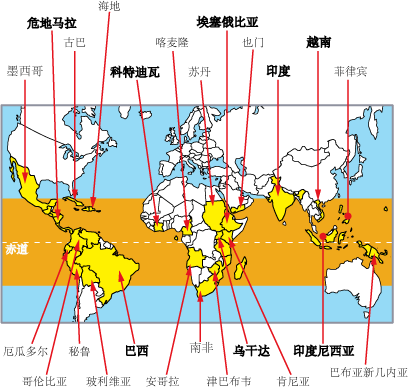
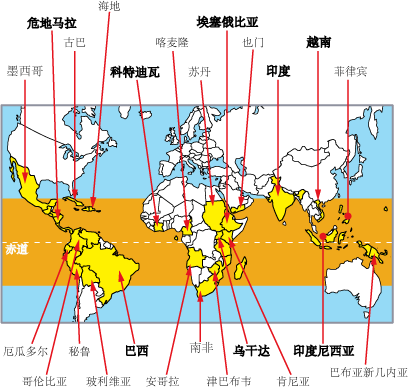
Uganda sits squarely on the equator, giving it ideal growing conditions—but for robusta, not arabica. In fact, the country is one of the world’s leading producers of robusta coffee. In the 1960s, Uganda produced around 3.5 million 60kg bags of coffee annually. By the mid-1980s, political instability had slashed output to just 2.5 million bags. Though production has since rebounded to approximately 3 million bags per year, arabica remains a small slice of the pie.
The Shift from State Control to Privatization
In 1990, Uganda took a major step toward improving coffee quality and reducing costs by revoking the monopoly of the Coffee Marketing Board (CMB). Most responsibilities were handed over to local cooperatives. Privatized coffee now accounts for roughly two-thirds of the country’s export earnings. However, the government’s subsequent decision to tax the industry backfired—exports dropped by 20%, and illegal smuggling rose sharply as a result.
The Future of Ugandan Coffee
Encouraged by rising global coffee prices, some Ugandan farmers are returning to previously abandoned farms to replant coffee. This resurgence offers hope for the future of Uganda’s coffee sector, especially its minority arabica production, which continues to develop in the country’s key highland regions.
Where Uganda’s Arabica Comes From
Uganda’s best arabica is grown in three main areas:
- Mount Elgon: Located along the Kenyan border in the north, this region benefits from high altitudes and volcanic soils.
- Bugisu: Also in the north, near Mount Elgon, Bugisu is known for producing some of Uganda’s most distinctive arabica profiles.
- Rwenzori Mountains: In western Uganda, these mountains offer cooler climates and elevations suitable for quality arabica cultivation.
When Ugandan Arabica Is Available
The harvest and subsequent availability of Uganda’s top arabica occurs annually between January and February. This makes early-year sourcing a key window for roasters seeking fresh Ugandan lots.
Frequently Asked Questions
What percentage of Uganda’s coffee is arabica?
Only around 10% of Uganda’s total coffee production is arabica. The rest is predominantly robusta.
Which regions in Uganda produce the best arabica coffee?
The best arabica comes from the Mount Elgon area near Kenya, the Bugisu highlands, and the Rwenzori Mountains in the west. These regions have the right altitude and climate for quality arabica growth.
When is Ugandan arabica coffee available for export?
Uganda’s highest-quality arabica coffee is typically available for export between January and February each year, following the harvest season.
Did privatization help Uganda’s coffee industry?
Privatizing coffee marketing in 1990 improved quality and boosted export revenue to two-thirds of the total. However, new taxes led to a 20% drop in exports and a rise in smuggling.
Why doesn’t Uganda produce more arabica?
Most of Uganda’s climate and infrastructure favors robusta. Arabica is grown only in specific highland areas, and historical issues like poor transport and political instability have limited its expansion.
How has Uganda’s coffee production changed over the decades?
Production peaked at 3.5 million bags in the 1960s, fell to 2.5 million in the 1980s due to political issues, and has since recovered to around 3 million bags per year, with arabica remaining a small portion.
FrontStreet Coffee Beans from East Africa
While Uganda’s arabica remains rare, explore East African profiles with FrontStreet Coffee’s Ethiopia Yirgacheffe, known for its bright citrus, floral notes, and light body—a great way to experience the neighbouring region’s flavours. For something more chocolatey and wine-like, try Ethiopia Guji, offering berry and spice complexity. Both beans showcase the high-altitude, fruity acidity often associated with East African coffees and complement the qualities found in Uganda’s limited arabica output. Freshly roasted within 5 days · Orders placed before 17:00 ship the same day · Next-day delivery across most of Guangdong Province.
FrontStreet Coffee is a long-established specialty coffee roaster in Guangzhou China, selling freshly roasted beans from its own farm in Yunnan as well as dozens of carefully selected single-origin beans from around the world for both pour-over and espresso. The products deliver consistently excellent quality and great value, with shipping within 24 hours. Guangzhou's FrontStreet Coffee shop is recommended by many coffee lovers, and the beans are now available online at the Tmall 。
Important Notice :
前街咖啡 FrontStreet Coffee has moved to new addredd:
FrontStreet Coffee Address: 315,Donghua East Road,GuangZhou
Tel:020 38364473