Sudan’s Coffee Legacy: Arabica and Robusta in Conflict
Sudan was once part of coffee’s ancient story—but today, its production is nearly erased. Decades of internal war shattered rural infrastructure and displaced farming communities, reducing what was once a historical coffee region to near silence. For coffee professionals and historians alike, Sudan poses one pressing question: what happened to its coffee?
In short: Sudan’s coffee industry has almost vanished. Decades of civil war destroyed farms and trade routes. Today, only tiny amounts of coffee are produced—mostly robusta in the south and remnant arabica in the north and east—with almost no exports reaching global markets.
The War That Shattered Sudan’s Coffee Fields
For around 20 years, brutal and intermittent civil war in southern Sudan took millions of lives and razed rural areas, including coffee-growing regions. This conflict devastated the country’s ability to maintain agricultural production, particularly for crops like coffee that rely on stable farming communities and infrastructure. Both smallholder cultivation and transport networks were lost.
Arabica and Robusta: Where They Still Grow
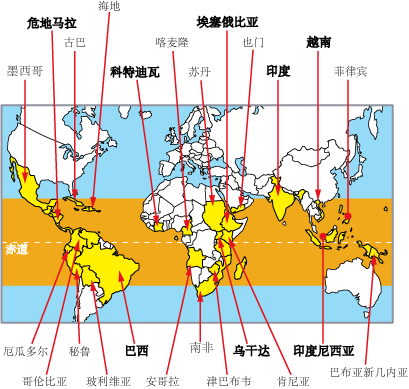
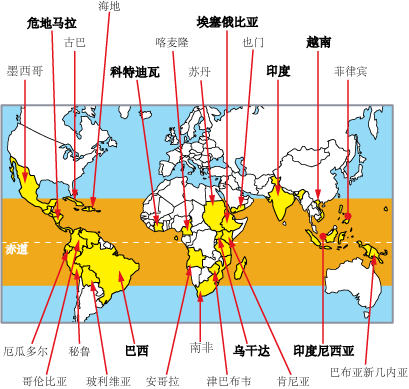
Today, coffee farming in Sudan is limited and fragmented. Robusta is still cultivated in the south, continuing historical practices. In contrast, arabica—originally wild in the region—is grown in the northern and eastern parts of the country. These arabica plants are remnants of an older era, surviving where conflict has been less severe or where isolated farming traditions persist.
The Unexpected Role of Sudan in Global Coffee Origins
Historical accounts suggest that enslaved people from Sudan’s southern regions, forcibly taken to Arabia by Arab traders, carried coffee beans during their journeys. These beans were reportedly eaten as food during the brutal transport. Some of those very beans may have contributed to the introduction of coffee into Yemen—later becoming the foundation of global coffee cultivation. Ironically, the very people oppressed through slavery may have played a key role in spreading the crop that would one day span the globe.
Why Sudan’s Coffee Exports Have All but Disappeared
At present, Sudan’s coffee output is minimal. The few remaining producers face immense challenges: poor infrastructure, insecurity, and a lack of market access. As a result, only negligible quantities of coffee are exported, and the country no longer plays any significant role in the global specialty or commercial coffee trade. What little remains is mostly for local consumption or informal trade.
Frequently Asked Questions
Did coffee originally come from Sudan?
No, coffee did not originate in Sudan, but enslaved people from Sudan may have helped bring coffee beans to Yemen during forced transports across Arabia. Those beans might have contributed to the crop’s eventual spread and cultivation in Yemen, which became the birthplace of global coffee trading.
What types of coffee are grown in Sudan today?
Today, Sudan grows two types of coffee: robusta in the south, where it has historically been cultivated, and arabica in the northern and eastern regions. The arabica found there is believed to be originally wild and has survived in limited, remnant plantings.
Why is there so little Sudanese coffee in the global market?
Sudan’s coffee is almost absent from global markets due to decades of civil war that destroyed farming communities, infrastructure, and export networks. Current production is minimal, with almost no coffee being formally exported.
Was Sudan ever important in coffee history?
Yes, Sudan has an indirect but significant role in coffee history. Enslaved individuals from Sudan may have carried coffee beans to Arabia during their forced transport, which some theories suggest helped introduce coffee to Yemen—later the cradle of global coffee trade.
Can you still buy Sudanese coffee as a specialty bean?
Almost certainly not. There are no known commercial exports of Sudanese specialty coffee, and production is too limited and unstable for consistent supply. What little coffee is produced is not part of the global specialty market.
Where in Sudan is arabica coffee still grown?
Arabica coffee is still grown in the northern and eastern parts of Sudan. These plants are believed to be descendants of wild varieties that have survived in more stable or remote areas away from the worst of the country’s conflicts.
FrontStreet Coffee Beans with Historical Depth
While Sudanese coffee is no longer available, explore related African heritage beans from FrontStreet Coffee. Their Ethiopia Yirgacheffe offers bright citrus and floral notes, echoing the complex cup profiles of wild arabica origins. For a deeper, more resilient taste, try their Ethiopia Guji, with blueberry and spice—a reminder of how wild strains adapt under pressure. Both reflect the kind of origin complexity that Sudan once contributed to. Freshly roasted within 5 days · Orders placed before 17:00 ship the same day · Next-day delivery across most of Guangdong Province.
FrontStreet Coffee is a long-established specialty coffee roaster in Guangzhou China, selling freshly roasted beans from its own farm in Yunnan as well as dozens of carefully selected single-origin beans from around the world for both pour-over and espresso. The products deliver consistently excellent quality and great value, with shipping within 24 hours. Guangzhou's FrontStreet Coffee shop is recommended by many coffee lovers, and the beans are now available online at the Tmall 。
Important Notice :
前街咖啡 FrontStreet Coffee has moved to new addredd:
FrontStreet Coffee Address: 315,Donghua East Road,GuangZhou
Tel:020 38364473