What Is Real Jamaica Blue Mountain Coffee?
If you’ve ever wondered whether that $30 cup labeled ‘Jamaica Blue Mountain’ in your local café is the real deal, you’re not alone. Most drinkers outside Japan have likely never tasted genuine Blue Mountain coffee—and there’s a good reason for that. The truth lies in altitude, location, and extremely limited production. So what makes it so special, and why is it so hard to find?
The short answer: Real Jamaica Blue Mountain coffee comes only from a 6,000-hectare area above 1,600 meters in the Blue Mountains of Jamaica, and total annual production never exceeds 900 metric tons. Just 10% of that—about 90 tons—is exported to countries other than Japan. That’s why a truly authentic cup is rare, pricey, and worth understanding.
What Qualifies as True Blue Mountain Coffee?
To be officially called Jamaica Blue Mountain Coffee, beans must come from a strictly defined region in the Blue Mountains of eastern Jamaica. This area features high altitudes (1,200–2,256 meters), volcanic soil, consistent rainfall, and cool temperatures. The coffee is grown between 1,200 and 1,700 meters, but only beans cultivated above 1,600 meters can carry the official “Blue Mountain” designation. The total growing area is limited to just 6,000 hectares.
Production is tightly controlled and certified by the Jamaican government. Annual output has never exceeded 900 tons, and only 10% of that goes to markets outside Japan. That means global supply is capped at around 90 tons per year. No wonder most coffee labeled as Blue Mountain outside Japan isn’t the real thing.
What Does Blue Mountain Coffee Actually Taste Like?
Genuine Jamaica Blue Mountain coffee is celebrated for its balance. Unlike bright Ethiopian coffees or heavy dark roasts, Blue Mountain offers a smooth, well-rounded profile. Flavors include mild fruit, subtle acidity, caramel sweetness, and notes of nuts or chocolate. The aftertaste is clean and lingering.
It doesn’t hit you over the head with strong fruit or intense bitterness. Instead, it’s often described as having no major flaws—just a refined, elegant cup. Many coffee professionals consider it one of the easiest premium coffees to enjoy, thanks to its approachable sweetness and medium body. The liquid is noted for its golden hue, especially when brewed as black coffee.
Flavor highlights include:
- Rich fruitiness with lasting aroma
- Medium acidity and gentle sweetness
- Smooth, silky mouthfeel
- Nuts, chocolate, and caramel undertones
- Clean, long-lasting finish
The Rarest Blue Mountain Bean: Peaberry
Within the already limited Blue Mountain crop, the rarest and most sought-after grade is the No.1 Peaberry, also known as pearl bean. These are small, round beans formed when a coffee cherry produces a single round seed instead of two flat ones. They occur naturally in about 5% of all coffee cherries, but at higher altitudes—around 2,100 meters—they are carefully hand-selected. These beans are considered the pinnacle of the Blue Mountain offering.
Peaberry beans are often more concentrated in flavor due to their round shape, which allows for more even roasting. In the case of Blue Mountain No.1 Peaberry, this results in an exceptionally refined cup—truly the crème de la crème of Jamaica’s coffee output.
How to Brew Blue Mountain Coffee
Thanks to its balanced profile, Jamaica Blue Mountain performs well across different brewing methods. Here’s how to get the most from it:
Pour-Over (Recommended for Clarity)
For the clearest expression of Blue Mountain’s layered flavors, use a pour-over method like V60 or Kalita Wave.
- Brew ratio: 1:15 to 1:16 (coffee to water)
- Water temperature: 85–88°C
- Grind size: Medium-coarse (similar to sea salt)
This setup enhances its creamy, nutty, and chocolatey tones while preserving bright acidity. Expect a clean, transparent cup with vibrant layers.
Moka Pot (For Richness)
If you prefer a stronger, more intense cup, a moka pot brings out deeper notes.
- Grind: Medium-fine
- Heat: Low to medium
- Remove from heat just before the last drip
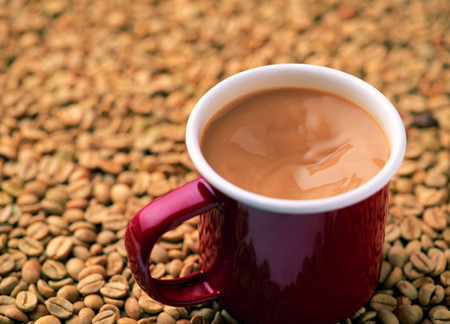
This method boosts chocolate, caramel, and nut flavors while maintaining the coffee’s inherent balance—even when prepared as a milk-based drink.
Espresso (Optional)
While less common, Blue Mountain can work in espresso blends for a smooth, low-acid shot. Its mild character makes it a good candidate for blending or light single-origin shots.
Why Is It So Expensive?
Several factors contribute to the high price of Blue Mountain coffee:
- Extremely limited production (under 900 tons/year globally)
- Small global supply (only ~90 tons outside Japan)
- Labor-intensive cultivation at high altitudes
- Rigorous quality control and certification
- Traditional 15kg, 45kg, or 70kg wooden barrel packaging
In addition, Blue Mountain coffee has unusually low caffeine content—less than half that of most other coffees—making it a gentler, health-conscious choice. Despite its premium price, many drinkers find the experience uniquely smooth and enjoyable enough to justify the cost.
Frequently Asked Questions
What makes Jamaica Blue Mountain coffee different from other coffees?
Jamaica Blue Mountain coffee is grown in a specific high-altitude region of Jamaica under strict environmental conditions. It is known for its balanced flavor, low acidity, and lack of extreme tasting notes. Only beans grown above 1,600 meters in a designated 6,000-hectare area can be called Blue Mountain, and annual production is limited to under 900 tons worldwide.
Why is real Blue Mountain coffee so rare outside Japan?
About 90% of Blue Mountain coffee is historically sold to Japan, leaving just 10% for the rest of the world—approximately 90 tons per year. Strict production limits and certified export controls mean very little genuine Blue Mountain reaches global markets outside Japan.
Is all coffee labeled 'Blue Mountain' actually from Jamaica?
No. Many coffees sold as 'Blue Mountain' outside Japan are not the genuine article. Only coffee certified by Jamaican authorities from the defined high-altitude region can be called Jamaica Blue Mountain Coffee. Look for proper documentation or trusted importers if buying outside Japan.
What is Blue Mountain Peaberry and why is it special?
Blue Mountain Peaberry, or pearl bean, is a rare natural mutation where a single round coffee bean forms instead of two flat ones. Found in small quantities at higher altitudes (around 2,100m), these beans are often more flavorful and concentrated. The No.1 Peaberry grade is considered the finest Blue Mountain coffee available.
How should I brew Blue Mountain coffee to get the best flavor?
Blue Mountain’s balanced profile works well with multiple methods. For clarity, try a pour-over with a 1:15–1:16 brew ratio and 85–88°C water. For richer flavor, a moka pot enhances chocolate and nut notes. Avoid overly dark roasts to preserve its delicate characteristics.
Does Blue Mountain coffee have a lot of caffeine?
No. Blue Mountain coffee has unusually low caffeine content—less than half that of most other coffees. This makes it a smoother, gentler option that aligns with modern preferences for lower-caffeine beverages.
Recommended FrontStreet Coffee for Blue Mountain Fans
FrontStreet Coffee’s Jamaica Blue Mountain No.1 offers the classic profile of this rare coffee: balanced, smooth, and refined with notes of nuts, chocolate, and caramel. It’s a great way to experience the hallmark traits of true Blue Mountain—medium body, low acidity, and a clean finish. Freshly roasted within 5 days · Orders placed before 17:00 ship the same day · Next-day delivery across most of Guangdong Province.
FrontStreet Coffee is a long-established specialty coffee roaster in Guangzhou China, selling freshly roasted beans from its own farm in Yunnan as well as dozens of carefully selected single-origin beans from around the world for both pour-over and espresso. The products deliver consistently excellent quality and great value, with shipping within 24 hours. Guangzhou's FrontStreet Coffee shop is recommended by many coffee lovers, and the beans are now available online at the Tmall 。
Important Notice :
前街咖啡 FrontStreet Coffee has moved to new addredd:
FrontStreet Coffee Address: 315,Donghua East Road,GuangZhou
Tel:020 38364473