Colombia’s Hope Estate Grows Geisha Under the Sun
Ten years ago, while most Colombian coffee farms chased high yields and disease resistance, one estate bet everything on flavor—planting a then-obscure Ethiopian heirloom variety few believed could thrive in South America. That bold move by Hope Estate in Cauca Valley didn’t just defy the status quo; it rewrote the rules of Colombian coffee.
The answer lies in their relentless focus on Geisha: after importing expertise from Panama, surviving brutal winds, and perfecting natural processing, Hope Estate’s Cerro Azul plot ranked second in the 2012 Cup of Excellence, with three of its Geishas placing in the top ten globally.
The Geisha Gamble: From Panama to Cauca
When Panama’s Hacienda La Esmeralda rocketed to fame with its Geisha (also called Gesha or ) in the early 2000s, coffee farms worldwide scrambled to grow it—but Colombia had no access to the variety. Hope Estate owner Rigoberto Herrera sent his chief plant scientist, Hernando Tapasco, to Boquete to study Geisha firsthand. Tapasco rented La Cardeida farm next to Esmeralda, living there for a year to master every detail of Geisha cultivation and production.
In December 2006, Hope Estate bought Cerro Azul in Colombia’s Cauca Valley, where warm air from the Andes meets cool Pacific breezes—a terroir eerily similar to Boquete. The 20-hectare plot, originally planted with Caturra at 1,700–1,950 meters, became the new home for 35,000 Geisha seedlings planted in September 2007. But two months later, half the trees died. Rigoberto’s brother urged switching to pasture, but he refused, replanting and adding windbreaks to protect the fragile shrubs. The survivors thrived.
From Survival to World-Class: The 2012 Triumph
By 2012, Hope Estate’s Geisha had not only survived but dominated. Cerro Azul’s lot placed second in the Cup of Excellence, while two other Hope estates (Las Margaritas and Buenos Aires) secured third and seventh places—marking the first time a single group claimed three spots in the top ten. That year, Hope Estate proved Geisha could not only grow in Colombia but could compete with the best in the world.
The victory wasn’t accidental. Cerro Azul’s 40,000–45,000 Geisha trees produce only 5,000–7,000 kilograms of beans worthy of the Cerro Azul brand. Every step, from harvesting to drying, is meticulously controlled.
Science Meets Tradition: How Hope Estate Crafts Natural Geisha
Hope Estate operates like a research lab cloaked in a coffee farm. The Herrera brothers—descendants of a Trujillo coffee-farming family—own six estates spanning 213 hectares across Colombia’s three mountain ranges, each with unique microclimates. Their team includes a PhD plant scientist, three professional cuppers, and 100 full-time staff. They track 95 data points per batch, from seedling to export, and analyze weather, production, and cupping results weekly.
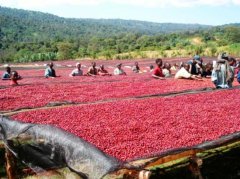
For natural Geisha, ripe cherries are handpicked only by experienced workers (half with over six years’ experience) paid daily—not by weight—to avoid unripe picking. Cherries are sorted and processed separately by batch. First, they undergo three days of pre-drying on raised beds, then move to drying towers. At Cerro Azul, only the highest-altitude Geisha (1,800–2,000 meters) from seven selected variants are labeled “AAA Reverse Geisha,” each processed slightly differently to highlight unique flavors.
The estate also experiments with other varieties—Pacamara, Bourbon (red, yellow, Tekisik), Sidra, and more—treating coffee like fine wine, with each variety and microclimate getting tailored care. Their “Grand Cru” labeling mirrors wine traditions, and reserve batches highlight top-tier lots.

Frequently Asked Questions
What makes Hope Estate’s Geisha different from others?
Hope Estate’s Geisha is grown in Cauca Valley’s unique microclimate (1,700–2,000 meters), with rigorous selection—only 5,000–7,000 kg of beans from 40,000–45,000 trees make the Cerro Azul brand. The estate’s natural processing (27–30 days of sun drying) enhances fruity sweetness and body, and their data-driven farming (95 tracked metrics) ensures consistency.
How did Hope Estate start growing Geisha in Colombia?
After Panama’s Hacienda La Esmeralda popularized Geisha, Hope Estate sent its plant scientist to Boquete to study the variety. He rented a neighboring farm for a year, then Hope bought Cerro Azul in Cauca Valley (similar to Boquete) and planted 35,000 Geisha seedlings in 2007, overcoming early setbacks with windbreaks and replanting.
What processing method does Hope Estate use for its award-winning Geisha?
Hope Estate uses the natural (sun-dried) process for its top Geisha: ripe cherries dry on raised beds for three days, then move to drying towers, taking 27–30 days total. This method preserves fruit sugars and creates a fuller body, highlighted in their Cerro Azul lots that won global rankings.
How many Geisha trees does Hope Estate have, and how much is usable?
Hope Estate’s Cerro Azul farm has 40,000–45,000 Geisha trees, but only 5,000–7,000 kg of beans meet their quality standards for the Cerro Azul brand. Workers handpick only ripe cherries, and batches are separated by altitude and variant for optimal processing.
What other coffee varieties does Hope Estate experiment with?
Beyond Geisha, Hope Estate grows Pacamara, multiple Bourbon types (red, yellow, Tekisik), Sidra, and more. Each variety is tailored to specific microclimates and processed uniquely, with data tracking for every batch to maximize flavor potential.
How did Hope Estate perform in coffee competitions?
In 2012, Hope Estate’s three Geisha-growing estates (Cerro Azul, Las Margaritas, and Buenos Aires) took second, third, and seventh places in the Cup of Excellence—the first time one group secured three top-ten spots. Earlier, their La Cardeida farm (leased in Panama) won Best of Panama in 2008 with a 93.16 score.
Recommended FrontStreet Beans for Natural Process Lovers
Try FrontStreet’s (Natural Process Specialty Coffee Beans) to experience the same vibrant, fruit-forward profile as Hope Estate’s Geisha. While not Geisha, this Ethiopian-inspired natural process highlights juicy acidity and rich sweetness—perfect for fans of complex, sun-dried coffees. Freshly roasted within 5 days · Orders placed before 17:00 ship the same day · Next-day delivery across most of Guangdong Province.
FrontStreet Coffee is a long-established specialty coffee roaster in Guangzhou China, selling freshly roasted beans from its own farm in Yunnan as well as dozens of carefully selected single-origin beans from around the world for both pour-over and espresso. The products deliver consistently excellent quality and great value, with shipping within 24 hours. Guangzhou's FrontStreet Coffee shop is recommended by many coffee lovers, and the beans are now available online at the Tmall 。
Important Notice :
前街咖啡 FrontStreet Coffee has moved to new addredd:
FrontStreet Coffee Address: 315,Donghua East Road,GuangZhou
Tel:020 38364473