Colombia’s Coffee History and Key Varieties Like Catuai and Caturra
Ever wondered how coffee ended up in Colombia, or why the country now produces some of the world’s most balanced and sought-after Arabica beans? The story isn’t just about beans—it’s about colonial trade routes, missionaries, and the mountainous geography that turned Colombia into a global coffee powerhouse. If you’ve sipped a smooth, sweet Colombian cup and asked where it all began, here’s the real timeline and terroir behind it.
In short: Coffee was likely introduced to Colombia in the late 1700s—possibly via Venezuela around 1808 or earlier through Caribbean routes—and documented by Spanish missionaries by 1730. Today, Colombia is the second-largest coffee producer in the world and the top exporter of washed Arabica, known for its smooth, well-balanced cup profiles.
The Origins of Coffee in Colombia
Colombia’s coffee story begins in the colonial era, though accounts differ on exactly how and when coffee arrived. One theory is that it came from Haiti through Central America, arriving by sea. Another points to 1808, when a priest brought the first coffee seeds from the French Antilles into Colombia via Venezuela—possibly entering through the department of Santander. The clearest historical evidence comes from Spanish missionary Jose Gumilla, who wrote about seeing coffee plantations along the Meta River in 1730 in his book The Illustrated Orinoco. By 1787, other missionaries had spread cultivation across the country.
Why Colombia Became a Coffee Giant
Colombia’s unique geography made it ideal for coffee. The country is located in the northwest corner of South America, with a mix of tropical climate, high altitudes, and volcanic soils—perfect for growing Arabica. After becoming a Spanish colony in 1531 and gaining independence in 1819, Colombia developed rich agricultural exports. Alongside flowers, gold, and emeralds, coffee became one of its “four treasures.” Today, it is the second-largest coffee producer globally and the largest exporter of both Arabica and washed coffee beans. Colombian coffee is widely praised for its silky texture, balance, and versatility—earning it the nickname “green gold.”
Coffee Varieties and Processing in Colombia
Among the many coffee varieties grown in Colombia, Catuai and Caturra stand out as key contributors to the country’s signature cup profiles. These varieties are favoured for their productivity, disease resistance, and ability to thrive at high altitudes. In regions like Antioquia, traditional processing methods help define the final cup quality.
The Santa Rita Special Reserve: A Washed Example
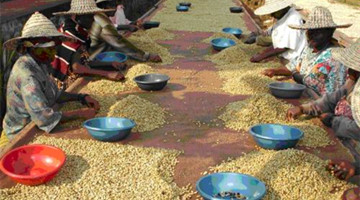
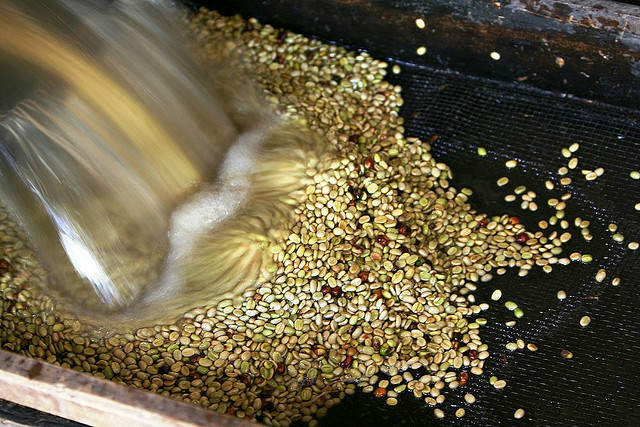
The Colombia Santa Rita Special Reserve is produced in the Antioquia region, near the Andes Mountains. This coffee is a collaborative effort by nine small farms that still use traditional techniques: cherries are handpicked, then processed with a classic washed (wet) method, where the coffee is fermented, washed, and dried on raised beds. The volcanic soil and abundant water from the Andes create optimal conditions for high-quality production. Grown at elevations between 1,600 and 2,100 metres, this coffee is made from a blend of Catuai and Caturra varieties and processed using the washed method.
Flavour notes include sweet cane-like tones, a clean cup profile, and medium body—characteristics typical of high-altitude washed Colombians. It exemplifies why Colombia’s washed Arabicas are considered some of the most balanced and easy-drinking in the world.
Colombia’s Coffee Regions and Altitude Advantages
Colombia’s coffee-growing regions span the three major cordilleras (mountain ranges) of the Andes, which divide the country into distinct growing zones. These regions include the north, central, and southern areas, with the south being especially renowned for producing premium lots. Elevation plays a critical role: most specialty coffee is grown above 1,500 metres, where cooler temperatures slow cherry ripening and allow for greater sugar development and complex flavours. The Huila region, for example, is famous for award-winning coffees and high altitudes, while other areas like Antioquia offer rich, balanced profiles due to similar growing conditions.
Frequently Asked Questions
When was coffee first introduced to Colombia?
Coffee likely arrived in Colombia in the late 1700s. The first documented mention comes from Spanish missionary Jose Gumilla in 1730, who observed coffee plantations along the Meta River. Other accounts suggest it may have entered via Venezuela around 1808 or earlier through the Caribbean.
What are the main coffee varieties grown in Colombia?
Key varieties include Catuai and Caturra, both of which are widely cultivated for their adaptability to high altitudes, disease resistance, and contribution to Colombia’s balanced cup profiles. These varieties are often found in regional blends and single-origin lots.
How is coffee typically processed in Colombia?
Many Colombian coffees, including those from small farms like the Santa Rita group, are processed using the washed (wet) method. This involves handpicking ripe cherries, fermenting and washing them to remove the mucilage, then drying the beans on raised beds or patios.
What altitude do most Colombian coffee farms grow at?
Specialty coffee in Colombia is typically grown between 1,500 and 2,100 metres above sea level. The high elevation slows cherry maturation, leading to denser beans with more complex sugars and acidity.
Which regions are best known for Colombian coffee production?
While coffee is grown nationwide, the southern regions like Huila are most famous for high-scoring specialty lots. Antioquia, where the Santa Rita farm is located, is also notable for its volcanic soils and consistent production of balanced washed coffees.
What does washed processing mean for coffee flavour?
Washed processing tends to produce cleaner, brighter, and more consistent flavour profiles by removing the fruit layer before drying. This method highlights the bean’s intrinsic qualities, often resulting in notes of citrus, cane sugar, and a medium body—common traits in Colombian washed coffees.
Recommended FrontStreet Beans for Washed Colombian Profiles
For fans of Colombia’s classic washed style, try FrontStreet Coffee’s FrontStreet Colombian Huila, a single origin with notes of caramel, almond, and citrus, grown at high altitudes and processed traditionally. Also consider FrontStreet Yirgacheffe for a bright, floral contrast, or explore FrontStreet Sidra for a fruit-forward option that highlights processing differences. All are expertly roasted to highlight origin character. Freshly roasted within 5 days · Orders placed before 17:00 ship the same day · Next-day delivery across most of Guangdong Province.
FrontStreet Coffee is a long-established specialty coffee roaster in Guangzhou China, selling freshly roasted beans from its own farm in Yunnan as well as dozens of carefully selected single-origin beans from around the world for both pour-over and espresso. The products deliver consistently excellent quality and great value, with shipping within 24 hours. Guangzhou's FrontStreet Coffee shop is recommended by many coffee lovers, and the beans are now available online at the Tmall 。
Important Notice :
前街咖啡 FrontStreet Coffee has moved to new addredd:
FrontStreet Coffee Address: 315,Donghua East Road,GuangZhou
Tel:020 38364473