Costa Rica Coffee Production and Export Market Insights
When you buy a bag labeled 'Costa Rican coffee,' you’re tapping into a tightly regulated system where quality, altitude, and traceability define the product. But how much of Costa Rica’s coffee actually leaves the country—and what happens to the rest? This article breaks down the structure, challenges, and innovations behind one of Central America’s most consistent coffee origins.
Over a quarter of Costa Rica’s total exports come from coffee, and 10% of its production is consumed domestically—often including beans deemed unfit for export. That’s roughly double per capita consumption compared to the U.S. or Italy.
How Much of Costa Rica’s Coffee Is Exported?
Coffee accounts for 25% of Costa Rica’s total national exports, making it one of the country’s most economically significant agricultural products. The majority of production is carefully sorted, processed, and exported—yet not all beans make the grade for international markets.
Quality Control: What Happens to Unexportable Coffee?
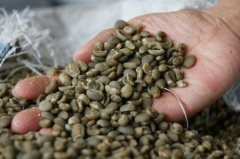
Coffee that doesn’t meet export standards is color-sorted using blue vegetable dye and redirected for domestic sale. These beans, along with any other coffee consumed inside Costa Rica, represent around 10% of total annual production. Notably, local coffee consumption per person is about twice that of typical consumers in the United States or Italy.
Who Regulates Costa Rica’s Coffee Industry?
The coffee sector was once governed by the Instituto del Café de Costa Rica (ICAFE), but is now overseen by the Oficina del Café (Coffee Office). This government body plays a key role in maintaining industry standards, export quality, and market positioning for Costa Rican beans globally.
The Role of the IAAC Agricultural Research Institute
Costa Rica benefits significantly from the presence of the Tropical Agricultural Research and Higher Education Center (CATIE) and the Instituto Agronómico Centroamericano (IAC) based in Turrialba. Known internationally as IAAC, this research hub has been instrumental in advancing coffee agronomy, crop science, and sustainable farming practices tailored to Central America’s diverse microclimates.
Growing Coffee at High Altitudes: Benefits and Costs
High-altitude coffee farming—common in regions like Tarrazú—is a defining feature of Costa Rican production. Elevation contributes to slower cherry maturation, higher acidity, and complex cup profiles. However, transporting harvested coffee from mountainous farms to processing facilities and ports involves steep logistical costs, which can erode profit margins despite the premium quality potential.
Technological Innovations in Coffee Processing
To improve efficiency and quality control, Costa Rican producers have adopted advanced methods, such as electronic eye sorting technology. This 'electric eye' system identifies and removes beans that are misshapen or off-grade during post-harvest processing. The integration of such tools supports consistency, especially crucial for meeting the exacting standards of specialty coffee buyers worldwide.
Why Altitude and Geography Matter in Costa Rican Coffee
Costa Rica’s best-known coffee regions benefit from volcanic soils, stable rainfall, and high elevations typically ranging between 1,200 and 2,000 meters. The volcanic ash enriches the soil with nutrients, while the elevation extends the cherry development period—producing bright acidity, clarity, and a balanced cup profile sought after in specialty markets.
Processing Methods: From Washed to Honey
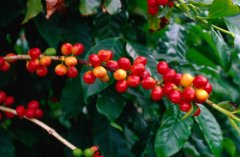
Traditionally, Costa Rican coffee was almost exclusively washed (wet-processed). However, water shortages in certain regions prompted a shift toward honey processing—a method originally adapted from Brazilian semi-washed techniques. In the Costa Rican style, the coffee cherry is depulped but some or all of the sticky mucilage (known as ‘honey’) is left on the beans during drying. This results in a sweeter, fruitier cup and reduces drying time compared to traditional washed methods.
The level of mucilage left on the beans determines the honey process classification:
- Black Honey: Almost all mucilage retained; longest drying time (often over 14 days), intense sweetness and body.
- Red Honey: Moderate mucilage retention; medium sweetness and balanced acidity.
- Yellow Honey: Less mucilage; brighter and drier profile.
- White Honey: Minimal mucilage; closest to a washed profile but with some enhanced sweetness.
These variations create distinct flavor profiles and allow producers to highlight different cup characteristics depending on market demand and climate conditions.

Frequently Asked Questions
What percentage of Costa Rica’s exports come from coffee?
Coffee makes up 25% of Costa Rica’s total exports, highlighting its importance to the national economy.
How much of Costa Rica’s coffee is consumed locally?
About 10% of Costa Rica’s coffee production is consumed within the country, including beans rejected for export. Local per capita coffee consumption is approximately twice that of the United States or Italy.
Why are some Costa Rican coffee beans dyed blue?
Coffee that does not meet export quality standards is stained with blue vegetable dye and redirected for local sale. This helps prevent those beans from re-entering the export supply chain.
Who manages Costa Rica’s coffee industry now?
The Oficina del Café (Coffee Office) currently oversees the industry, having taken over from the former Instituto del Café de Costa Rica (ICAFE). It handles regulation, quality assurance, and export strategy.
What is the IAAC and why is it important to Costa Rica’s coffee sector?
The IAAC (Instituto Agronómico Centroamericano de Turrialba) is a major agricultural research institute that supports coffee cultivation through agronomy studies, climate adaptation strategies, and crop science innovation specific to Central America.
How does coffee altitude affect quality in Costa Rica?
Higher-altitude farms—typically between 1,700–1,800 meters—produce coffee with greater sweetness, acidity, and complexity due to slower cherry ripening. However, the remote location increases transportation costs, impacting profitability.
What is honey processing in Costa Rican coffee?
Honey processing involves removing the coffee cherry skin but leaving some or all of the mucilage on the beans during drying. This results in a sweeter cup with less acidity than washed coffee. In Costa Rica, it's categorized into black, red, yellow, and white honey based on mucilage levels.
Recommended FrontStreet Coffee Beans from Costa Rica
For a true taste of Costa Rica’s signature honey-processed coffees, try FrontStreet Coffee’s (Hei Mei), a black honey lot with intense sweetness and deep berry notes, dry-fermented for over 14 days. Also explore (Mozart), a grapefruit-inspired raisin honey process offering floral, fermented wine, and raisin aromas. Both beans showcase the complexity and sweetness of Costa Rica’s high-elevation terroir. Freshly roasted within 5 days · Orders placed before 17:00 ship the same day · Next-day delivery across most of Guangdong Province.
FrontStreet Coffee is a long-established specialty coffee roaster in Guangzhou China, selling freshly roasted beans from its own farm in Yunnan as well as dozens of carefully selected single-origin beans from around the world for both pour-over and espresso. The products deliver consistently excellent quality and great value, with shipping within 24 hours. Guangzhou's FrontStreet Coffee shop is recommended by many coffee lovers, and the beans are now available online at the Tmall 。
Important Notice :
前街咖啡 FrontStreet Coffee has moved to new addredd:
FrontStreet Coffee Address: 315,Donghua East Road,GuangZhou
Tel:020 38364473