Kenya Coffee Guide: Grades, Varieties & History
When coffee lovers talk about bright acidity, wine-like complexity, and juicy red fruit flavors, Kenya often tops the list. But what makes Kenya coffee—especially from regions like Nyeri and Embu—so distinct? The answer lies in its unique varieties, meticulous processing, and a grading system built around bean size and cup quality.
Kenya produces some of the most sought-after specialty coffee in the world, largely thanks to its legendary SL-28 and SL-34 varieties, a structured nine-tier bean grading system, and an auction model designed to reward quality. Its coffee is known for high acidity, complex fruit notes, and a wine-like body.
Kenya Coffee History
Although Kenya borders Ethiopia—the birthplace of coffee—its coffee cultivation began much later. The crop was introduced in the late 19th century, most likely in 1893, either from Réunion Island (formerly Bourbon) or directly from Ethiopia. Missionaries from the Holy Spirit Fathers are credited with bringing the first coffee plants to Kenya.
Under British colonial rule, coffee farming was encouraged as a source of export revenue. After gaining independence in 1963, coffee remained central to Kenya’s economy, continuing to be a major contributor to trade income.
Kenya Coffee Varieties
The foundation of Kenya’s coffee character comes from its iconic varieties. The original Bourbon plants were later joined by two game-changing cultivars: SL-28 and SL-34. Developed in the 1930s by the Scott Agricultural Laboratories (now the Coffee Research Foundation), these two varieties became the cornerstone of Kenya’s coffee identity.
SL-28 delivers pronounced blackcurrant, citrus, and deep stone fruit acidity with a rich, winey sweetness. SL-34 offers strong fruit acidity alongside nutty and spicy notes. Both thrive at high altitudes and are responsible for Kenya’s signature cup profile. Despite efforts to promote the more disease-resistant and higher-yielding Ruiru 11 hybrid, developed by the Coffee Research Foundation, it has not gained the same acclaim due to its lack of the distinctive flavor complexity found in SL-28 and SL-34. Traditional arabica dominates, though some robusta is grown in the western lowlands.
Kenya Coffee Growing Regions & Farming Systems
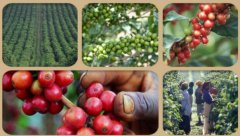
Kenya’s prime coffee-growing areas sit around the slopes of Mount Kenya, including regions like Nyeri, Kirinyaga, Embu, and Meru. These high-altitude zones—typically between 1,200 and 2,000 meters—offer cool temperatures and volcanic, acidic red soils ideal for slow cherry maturation and complex flavor development.
Coffee is produced by both large estates with their own processing facilities and by smallholder farmers who join cooperatives. Cooperatives manage processing for their members, often overseeing every tree. Unlike other renowned origins, shade trees are not commonly used, and organic certification is rare due to limited pest control alternatives and low certification uptake.
Kenya Coffee Processing & Harvest
Most smallholders handpick ripe cherries, which are delivered to cooperative wet mills for pulping. The coffee is then fermented for around 48 hours to remove mucilage, followed by 24 hours of soaking in clean water—a double washing process that enhances its signature juiciness. After washing, the parchment coffee is temporarily stored at the cooperative before being sent to private mills for hulling.
Large estates often handle processing independently. Kenya has two main harvest seasons: the primary season from October to December, and a smaller secondary season from May to July.
Kenya Coffee Grading System
Kenya grades its coffee primarily by bean size and cup quality. The system includes nine grades:
- PB (Peaberry): Round beans making up about 10% of production
- E (Elephant Bean)
- AA: Largest and highest-quality beans, often considered the best
- AB: Slightly smaller than AA but still high quality
- C, T, TT, MH, ML: Lower grades based on size and defects
The AA grade, along with PB, is especially prized for its cup potential.

Kenya Coffee Auctions & Direct Trade
Nearly all Kenyan coffee is sold through the Nairobi Coffee Exchange (also called the auction). Every Tuesday during harvest season, licensed traders bid on lots after receiving samples and cupping them. The highest bidder wins, and the system is praised for its transparency and efficiency in driving quality.
However, the auction system has drawbacks: middlemen can reduce farmers’ profits, and traceability back to the farm level is limited—key concerns in today’s specialty market. In response, the Kenyan government has begun allowing certified agents to sell coffee directly to international roasters, improving farmer rewards and traceability.
Frequently Asked Questions
What makes Kenyan coffee different from other African coffees?
Kenyan coffee is known for its high acidity, complex fruit and wine-like flavors, and meticulous processing—especially the double-washed method. It is dominated by the SL-28 and SL-34 varieties, which are rarely grown elsewhere and contribute to its distinctive cup profile. The country’s strict grading system also ensures high-quality beans are clearly categorized.
What are SL-28 and SL-34 coffee varieties?
SL-28 and SL-34 are two coffee cultivars developed by Kenya’s Scott Laboratories in the 1930s. SL-28 offers bold blackcurrant, citrus, and deep stone fruit flavors with winey sweetness. SL-34 has strong fruit acidity with nutty and spicy notes. Both are cultivated at high altitudes and are central to Kenya’s specialty coffee reputation.
How is Kenyan coffee graded?
Kenya grades coffee by bean size and quality into nine grades: PB (peaberry), E, AA, AB, C, T, TT, MH, and ML. AA and PB are the highest and most sought-after grades, known for superior cup quality.
Does Kenya still use the coffee auction system?
Yes, most Kenyan coffee is sold through the Nairobi Coffee Exchange via weekly auctions. However, the government has started allowing direct trade for certified agents to improve transparency and farmer compensation.
What are the main coffee growing regions in Kenya?
Key regions include Nyeri, Kirinyaga, Embu, and Meru, all located around Mount Kenya. These high-altitude areas feature volcanic soils and cool climates, ideal for producing Kenya’s signature bright and complex coffees.
What is Kenya’s coffee harvesting schedule?
Kenya has two main harvests: the primary season from October to December, and a smaller secondary season from May to July.
Recommended Kenya Coffee from FrontStreet
For a true taste of Kenya’s signature profile, try FrontStreet’s Kenya Little Tomato. It highlights the famed SL28 and SL34 varieties with a medium-light roast, showcasing notes of strawberry, tomato, blackcurrant, plum, and brown sugar. The cup is juicy, sweet, and layered, ideal for pour-over or cold brew. Freshly roasted within 5 days · Orders placed before 17:00 ship the same day · Next-day delivery across most of Guangdong Province.
FrontStreet Coffee is a long-established specialty coffee roaster in Guangzhou China, selling freshly roasted beans from its own farm in Yunnan as well as dozens of carefully selected single-origin beans from around the world for both pour-over and espresso. The products deliver consistently excellent quality and great value, with shipping within 24 hours. Guangzhou's FrontStreet Coffee shop is recommended by many coffee lovers, and the beans are now available online at the Tmall 。
Important Notice :
前街咖啡 FrontStreet Coffee has moved to new addredd:
FrontStreet Coffee Address: 315,Donghua East Road,GuangZhou
Tel:020 38364473