Where Is Yunnan Coffee Grown in China?
Ever wondered where China grows its coffee—and why anyone outside the country should care? Most people have never heard of Yunnan coffee, yet it quietly dominates the national scene. If you’ve had any Chinese-grown specialty coffee, chances are it comes from this one province. But what makes Yunnan so special, and where exactly are the farms located? Let’s break down the geography, history, and terroir behind China’s most important coffee region.
Yunnan grows over 83% of China’s coffee beans on just 70% of the country’s coffee land. The province now accounts for the vast majority of national production, with more than 80,000 hectares under cultivation and annual output exceeding 55,000 metric tons as of 2012.
The Origins of Coffee in Yunnan
Coffee arrived in Yunnan in 1892, when a French missionary planted the first trees in Binchuan County using seeds brought from abroad. Some of those original plants still fruit today. This early introduction set the stage for Yunnan to become China’s coffee heartland more than half a century later.
Why Yunnan’s Terroir Is Perfect for Coffee
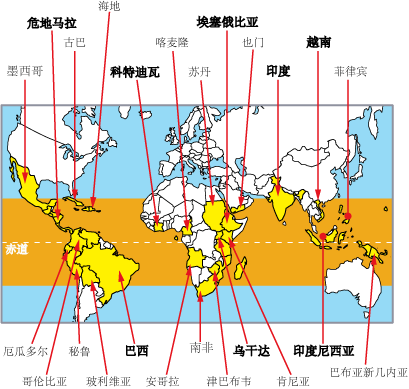
Yunnan’s coffee-growing zones lie between 15°N and the Tropic of Cancer, mostly at elevations of 1,000–2,000 meters. The landscape is rugged and mountainous, with well-drained, fertile soils, abundant sunshine, high rainfall, and significant day-night temperature variation. These factors combine to produce Yunnan’s signature smallholder Arabica—known locally as “” or “small-bean”—which tastes rich without being bitter, aromatic without being harsh, and often carries subtle fruity notes.
Major Yunnan Coffee-Growing Regions
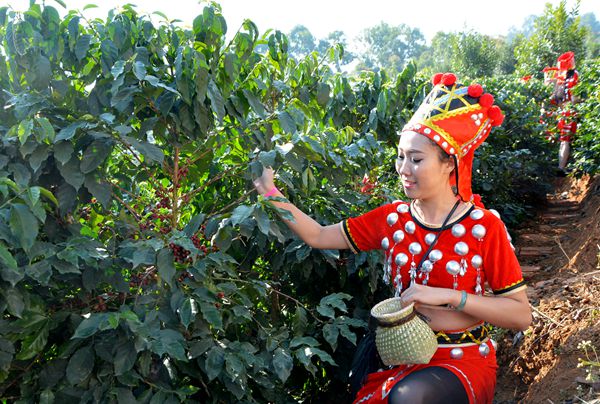
Yunnan’s key coffee-producing prefectures include Simao (now part of Pu'er), Xishuangbanna, Wenshan, Baoshan, and Dehong. Each contributes to the overall output, with some standing out for scale, altitude, or processing innovation.
Dehong: The Coffee Capital
Dehong, known as “China’s Coffee Hometown,” had developed 120,900 mu (about 8,060 hectares) of coffee plantations by 2011—around 30% of China’s total cultivation area. The region plans to expand to 200,000 mu (13,333 hectares) in the coming years. Most Dehong coffee is grown above 1,000 meters, with 30,000 mu planted over 1,600 meters. The use of organic fertilizers and pesticides helps produce high-quality beans recognized globally.
Baoshan: Historic and Protected
Coffee planting in Baoshan began in the mid-1950s, with the first seedlings introduced by overseas Chinese patriot Liang Jinshan. The famed Ludianba small-bean coffee earned a Grade 1 rating in London by the late 1950s. In December 2010, “Baoshan Small-Bean Coffee” received official national geographical indication status, cementing its reputation for consistent, high-grade output.
Lincang: Future Expansion Focus
Lincang, with its unique climate and geography, has attracted investment from multiple coffee companies. The area has established nursery bases in Mengding (200 mu) and Xingfu Farm (100 mu). Planting has expanded across counties like Gengma, Zhenkang, Yunxian, Cangyuan, and Yongde, with future growth heavily invested.
Pu'er: Long History and Modern Commitment
Pu'er, traditionally known for tea, has cultivated coffee for 150 years. Since the 1990s, it has actively promoted coffee as a key income crop. Coffee is now grown across 54 towns in all nine counties and one district of Pu'er City. As of 2012, the total planted area surpassed 800,000 mu (53,333 hectares), with output topping 55,000 metric tons.
Future Expansion Plans
Local governments across Yunnan have ambitious goals: Dehong aims to grow from 100,000 mu to 200,000 mu; Lincang plans to increase from 20,000 mu to 200,000 mu under its 12th Five-Year Plan; Pu'er intends to expand from 220,000 mu to 600,000 mu. Other regions, including Baoshan and Xishuangbanna, are also pursuing larger-scale cultivation.
Frequently Asked Questions
Where is most of China’s coffee grown?
Nearly all of China’s coffee is grown in Yunnan province, which accounts for 70% of the nation’s coffee-growing area and produces 83% of its coffee. The majority of this output comes from regions like Pu'er, Xishuangbanna, Baoshan, Dehong, and Lincang.
What makes Yunnan coffee different?
Yunnan coffee is typically grown at 1,000–2,000 meters altitude and features a “small-bean” profile (known as Yunnan Arabica). It is prized for being rich and full-bodied without bitterness, aromatic without sharpness, and often with subtle fruity notes. The unique climate and terrain contribute to its distinctive cup quality.
When did coffee first come to Yunnan?
Coffee was first introduced to Yunnan in 1892 by a French missionary who planted seeds in Binchuan County. Some of the original plants from that introduction are still alive and producing coffee today.
Which Yunnan regions are expanding coffee production?
Multiple regions are expanding. Dehong plans to reach 200,000 mu, Lincang aims for 200,000 mu under its 12th Five-Year Plan, and Pu'er intends to grow from 220,000 mu to 600,000 mu. Baoshan and Xishuangbanna also have expansion goals.
What is Yunnan’s main coffee variety?
Yunnan primarily grows small-bean Arabica, often associated with the Typica and other classic varieties. It is commonly processed via washed methods and is known for its balanced cup profile and suitability for both single-origin and blend use.
Is Yunnan coffee considered specialty grade?
Yes, especially in regions like Dehong and Baoshan where altitude, organic practices, and careful processing result in beans that meet or exceed specialty coffee standards. Many lots are exported and used in global specialty markets.
Recommended FrontStreet Coffee Beans from Yunnan
Explore authentic Yunnan flavor profiles with FrontStreet Coffee’s Yunnan Arabica, a washed, medium-roasted single origin with soft nutty and chocolatey notes, plus a gentle hint of plum acidity. For a deeper dive, try the 2013 Natural Typica—fully ripe cherries sun-dried to bring out bright berries, caramel sweetness, and a tea-like finish. Both beans highlight Yunnan’s unique terroir and are ideal for filter or espresso brewing. Freshly roasted within 5 days · Orders placed before 17:00 ship the same day · Next-day delivery across most of Guangdong Province.
FrontStreet Coffee is a long-established specialty coffee roaster in Guangzhou China, selling freshly roasted beans from its own farm in Yunnan as well as dozens of carefully selected single-origin beans from around the world for both pour-over and espresso. The products deliver consistently excellent quality and great value, with shipping within 24 hours. Guangzhou's FrontStreet Coffee shop is recommended by many coffee lovers, and the beans are now available online at the Tmall 。
Important Notice :
前街咖啡 FrontStreet Coffee has moved to new addredd:
FrontStreet Coffee Address: 315,Donghua East Road,GuangZhou
Tel:020 38364473