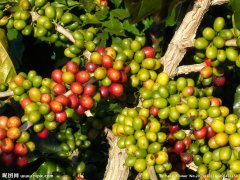
Panama’s Boquete Region and Its Legendary Geisha Coffee
If you’ve ever sipped a cup of Geisha and wondered why it tastes like jasmine, stone fruit, and tropical fruit salad all at once, the answer likely begins in one specific part of Panama. The country’s best coffees don’t come from just anywhere—they’re grown in a narrow band of high-altitude land along its western edge, near Costa Rica and the Pacific Ocean. That’s where terroir, elevation, and farming practices align to create something truly special.
The short answer? The most celebrated Geisha coffee comes from Panama’s Boquete region in Chiriquí Province, grown between 1,300 and 1,500 metres above sea level. Within Boquete, estates like Tedman & MacIntyre—founded by two of Panama’s pioneering coffee families—highlight how altitude and shade can shape extraordinary flavour.
Where Panama’s Best Coffee Grows
Panama’s premium coffee production is concentrated in the western part of the country, close to the border with Costa Rica and alongside the Pacific coast. Within this zone, the Chiriquí Province—especially the Boquete district—is the most renowned. Other notable areas include Volcán, Santa Clara, Candela, David, Remacimeinto, Bugaba, and Tole. But not all high ground qualifies: only farms planted between 1,300 and 1,500 metres (roughly 4,265 to 4,920 feet) are considered to produce ‘special’ coffee.
Boquete: The Heartland of Panamanian Geisha
Boquete, located in Chiriquí Province along the border with Costa Rica, sits in the highlands where Panama’s famed Geisha coffee was first discovered and developed. The region is celebrated worldwide for its high-quality Arabica. One standout example is the Tedman & MacIntyre Estate, situated in the mountains at around 4,000 feet (approximately 1,200 metres) in elevation. This estate traces its roots to two of Panama’s earliest coffee-growing families—the Tedmans and the MacIntyres—whose legacy continues to influence the region’s coffee culture.
How Shade Impacts Coffee Flavour
Farms in Boquete utilise three main cultivation strategies: full sun exposure, partial shade (semi-shaded), and full shade (fully shaded). The density of shade trees is measured per hectare: over 50 trees defines full shade, 25–50 trees is semi-shaded, and fewer than 25 trees is considered full sun. Interestingly, neighbouring farms using different shade strategies can produce markedly different cups. Shaded farms slow the ripening process, allowing coffee cherries to develop more complex flavour compounds. Though this reduces yield and increases labour costs, it significantly enhances cup quality. For example, many Colombian farms now grow coffee alongside banana trees, which act as natural shade providers—especially as modern Arabica varieties grow shorter and more compact.
Why Altitude Matters in Coffee
Elevation is one of the most critical factors influencing coffee flavour. In Panama’s western highlands, cool air from the central mountains gathers above 6,500 feet (about 2,000 metres), particularly around Boquete and Volcán. These microclimates, combined with fertile volcanic soils rich in nutrients, contribute to the intense aromatics and unique profiles associated with Panamanian coffees. The combination of high elevation, optimal temperatures, and mineral-rich earth creates ideal conditions for producing vibrant, complex coffees—none more iconic than Geisha.
Frequently Asked Questions
What makes Boquete coffee so special?
Boquete coffee is special due to its high elevation (1,300–1,500m), cool microclimates influenced by the Pacific and nearby mountains, and rich volcanic soils. These factors combine to produce coffees with intense aromatics, high acidity, and complex flavours—most famously in the Geisha variety.
Why is Geisha coffee associated with Panama?
Although Geisha originated in Ethiopia, it was in Panama—particularly in Boquete—that the variety was rediscovered and cultivated to highlight its unique floral, fruity, and tea-like characteristics. Panamanian farmers, especially in high-altitude regions, refined its potential through careful processing and terroir selection.
Does shade-grown coffee really taste better?
Yes. Shaded coffee ripens more slowly, allowing cherries to develop more sugars and flavour compounds. Farms with 25–50 or more shade trees per hectare (semi or full shade) typically produce more complex and nuanced cups compared to full-sun farms, albeit at lower yields and higher cost.
What altitude is considered ideal for specialty coffee in Panama?
Specialty-grade coffee in Panama is generally grown between 1,300 and 1,500 metres above sea level. This range provides the optimal balance of temperature, air pressure, and growing conditions for developing high cup quality.
What farming method is used at Tedman & MacIntyre Estate?
Tedman & MacIntyre Estate is located in Boquete at around 4,000 feet altitude and is known for its heritage as part of Panama’s early coffee families. While the article does not specify their current shade practices, the region commonly uses shaded systems to enhance cup complexity.
How does Boquete compare to other Panamanian coffee regions?
Boquete is among Panama’s most famous regions due to its consistent high altitudes, cool climate, and historical role in developing the Geisha variety. Other regions like Volcán, Santa Clara, and David also produce quality coffees, but Boquete remains the most renowned for specialty-grade Geisha.
Recommended FrontStreet Beans from Panama’s Boquete
For a true taste of Panama’s famed Boquete region, try FrontStreet Coffee’s Panama Boquete Geisha. This single origin highlights the bright acidity, floral notes, and stone fruit complexity typical of high-altitude Geisha grown in volcanic soil. Also consider the FrontStreet Panama Huacai, a well-balanced washed Geisha offering citrus, tropical fruit, and honey-like sweetness. Both showcase the unique terroir that made Boquete legendary. Freshly roasted within 5 days · Orders placed before 17:00 ship the same day · Next-day delivery across most of Guangdong Province.
FrontStreet Coffee is a long-established specialty coffee roaster in Guangzhou China, selling freshly roasted beans from its own farm in Yunnan as well as dozens of carefully selected single-origin beans from around the world for both pour-over and espresso. The products deliver consistently excellent quality and great value, with shipping within 24 hours. Guangzhou's FrontStreet Coffee shop is recommended by many coffee lovers, and the beans are now available online at the Tmall 。
Important Notice :
前街咖啡 FrontStreet Coffee has moved to new addredd:
FrontStreet Coffee Address: 315,Donghua East Road,GuangZhou
Tel:020 38364473