Panama Geisha Coffee: What You Should Know About Its Origins
If you’ve ever wondered why Panama’s Geisha coffee commands such high prices and inspires cult-like devotion among specialty coffee drinkers, the answer lies deep in its history—not just its flavor profile. The story of Geisha (or Gesha) isn’t about a recent trend, but a century-long journey from the forests of Ethiopia to the high altitudes of Central America.
In short: Geisha coffee was first discovered in Ethiopia’s Gesha forest in 1931, sent to Kenya’s coffee research institute, then introduced to Uganda and Tanzania by 1936, and later to Costa Rica in 1953. It didn’t reach Panama until the 1970s, when Francisco Serracin of Hacienda La Esmeralda (via CATIE in Costa Rica) began cultivating it. With extremely low yields and high auction visibility, Panamanian Geisha is both rare and labor-intensive to produce.
The Origins of the Geisha Coffee Variety
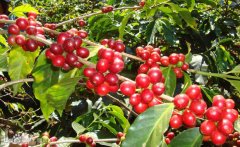
The Geisha variety—spelled Gesha in its native context—originated in the Gesha forest region of Ethiopia. It was identified there in 1931 and transported to the coffee research institute in Kenya. From Kenya, it spread to Uganda and Tanzania by 1936, and made its way to Costa Rica by 1953. This long journey set the stage for its eventual arrival in Panama during the 1970s.
How Geisha Reached Panama
Panama’s introduction to the Geisha variety happened in the 1970s, when Francisco Serracin of Hacienda La Esmeralda obtained seeds from the Centro Agronómico Tropical de Investigación y Enseñanza (CATIE) in Costa Rica. He planted them at his farm in Boquete, Panama. The variety struggled at first, partly due to its naturally low yield and susceptibility to disease, but its distinct cup quality eventually won attention.
Why Geisha Is So Rare and Expensive
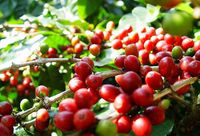
Geisha coffee is notoriously difficult and costly to produce. The plants have low yields, require careful management, and are vulnerable to pests and diseases. Additionally, the best Geisha lots are often entered into high-profile auctions, driving prices up further. The combination of scarcity, labor intensity, and exceptional cup quality contributes to its premium positioning in the global specialty coffee market.
The Role of Boquete in Panama’s Geisha Story
Boquete, a mountainous region in western Panama, plays a pivotal role in the development of Panamanian Geisha. With elevations around 1,600–1,800 meters and ideal climate conditions, Boquete provides the perfect environment for growing high-quality Geisha. Hacienda La Esmeralda, located in Boquete, became synonymous with some of the most celebrated Geisha coffees in the world.
Understanding SHB and Coffee Grading in Panama
The term SHB (Strictly Hard Bean) refers to coffee grown at high elevations, typically above 1,200 meters. In Panama, SHB classification indicates denser beans with a more complex cup profile, which is especially desirable for specialty-grade coffees like Geisha. This grading plays a key role in determining export quality and market value.
What Does '30% Boquete Geisha Content' Mean?
The mention of '30% Boquete Geisha content' likely refers to a specific lot or blend where 30% of the coffee beans originate from the Boquete region and are of the Geisha variety. While not common to see partial percentages in single-origin marketing, such a detail may reflect either a blend or a specific harvest designation. The remaining percentage could include other high-elevation Panamanian varieties or processing lots.
Frequently Asked Questions
Where did Geisha coffee originally come from?
Geisha coffee originated in the Gesha forest region of Ethiopia, where it was discovered in 1931. It was later brought to Kenya, then Uganda and Tanzania by 1936, Costa Rica in 1953, and finally Panama in the 1970s.
When did Geisha arrive in Panama?
Geisha coffee was introduced to Panama in the 1970s by Francisco Serracin of Hacienda La Esmeralda, who received seeds from CATIE in Costa Rica and planted them in Boquete.
Why is Geisha coffee so expensive?
Geisha coffee is expensive due to its very low yields, high susceptibility to disease, the difficulty of cultivation, and the intense competition and auction prices for top lots, especially those with exceptional cup profiles.
What is SHB coffee and why does it matter?
SHB stands for Strictly Hard Bean, a classification for coffee grown at elevations above 1,200 meters. These beans are denser and typically develop more complex flavors, which is highly valued in specialty coffee including Geisha.
What does '30% Boquete Geisha content' refer to?
This likely means that 30% of the coffee in the lot comes from the Boquete region of Panama and is of the Geisha variety. The rest may be from other regions or varieties, though exact compositions vary by producer.
Why is Boquete important for Geisha coffee?
Boquete’s high elevation, cool climate, and fertile volcanic soils create ideal conditions for growing high-quality Geisha coffee, contributing significantly to its complex and sought-after flavor profile.
Recommended FrontStreet Geisha Coffee Beans
For a true taste of Panamanian Geisha, start with FrontStreet Coffee’sGeisha (Esmeralda Red Label Geisha), known for its intense floral aromas, jasmine notes, and sweet citrus finish, sourced from the famed Boquete region. For a more accessible option, try theGeisha (Esmeralda Green Label Geisha), a well-balanced blend highlighting Panama’s signature Geisha traits at a friendlier price. Both offer the hallmark bright acidity and complex fruitiness the Geisha variety is celebrated for. Freshly roasted within 5 days · Orders placed before 17:00 ship the same day · Next-day delivery across most of Guangdong Province.
FrontStreet Coffee is a long-established specialty coffee roaster in Guangzhou China, selling freshly roasted beans from its own farm in Yunnan as well as dozens of carefully selected single-origin beans from around the world for both pour-over and espresso. The products deliver consistently excellent quality and great value, with shipping within 24 hours. Guangzhou's FrontStreet Coffee shop is recommended by many coffee lovers, and the beans are now available online at the Tmall 。
Important Notice :
前街咖啡 FrontStreet Coffee has moved to new addredd:
FrontStreet Coffee Address: 315,Donghua East Road,GuangZhou
Tel:020 38364473