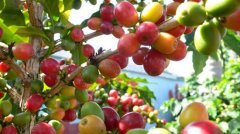
Panama Geisha: Washed Process from Finca Hartmann
When you pay premium prices for a washed Geisha from Panama, you’re tasting the result of nearly a century of selective cultivation. But how did this Ethiopian heirloom variety—first spotted in the remote forests of southwestern Ethiopia in 1931—become the world’s most celebrated specialty coffee? And what makes the version grown at Panama’s Finca Hartmann so distinct?
The answer lies in traceable lineage, meticulous processing, and elevation: Geisha arrived in Panama via Costa Rica’s CATIE in the 1970s, was planted by Francisco Serracin at Hacienda La Esmeralda (Finca Hartmann), and thrives today at high altitudes where its floral complexity and bright acidity can fully develop. The washed process enhances its clean profile, making every cup a testament to Panama’s coffee legacy.
The Origins of Geisha Coffee
Geisha coffee originates from the Gesha forest region in southwestern Ethiopia, where it was discovered in 1931. From there, it was brought to Kenya’s coffee research institute and later introduced to Uganda and Tanzania by 1936. By 1953, it reached Costa Rica, and in the 1970s, Panamanian farmer Francisco Serracin of Hacienda La Esmeralda (also known as Finca Hartmann) obtained seeds from CATIE in Costa Rica. Due to its extremely low yield and the competitive auction system, Geisha has always been a rare and sought-after bean.
The Journey to Panama
Geisha’s path to international fame began in Panama, specifically at Finca Hartmann (formerly Hacienda La Esmeralda). The estate’s location in the Boquete region of Chiriquí Province provides ideal conditions: high altitudes, volcanic soils, and a stable microclimate. Francisco Serracin planted the Geisha seeds he received from CATIE, and over decades, the variety adapted to the terroir, developing the unique floral, citrus, and tropical fruit profiles now associated with top-tier Panamanian Geisha.
Washed Processing at Finca Hartmann
Finca Hartmann processes its Geisha using the washed (wet) method, which involves removing the coffee cherry’s skin and pulp before fermenting the beans in water to remove the mucilage. This process highlights the variety’s inherent clarity and acidity. The washed Geisha from Finca Hartmann is known for its delicate jasmine and honeysuckle aromas, citrus zest brightness, and a tea-like, sweet finish. The careful processing ensures a clean cup that allows the Geisha’s distinct characteristics to shine.
Why Geisha Commands Premium Prices
Geisha coffee commands high prices due to several factors: its low yield compared to other varieties, the labor-intensive cultivation and processing required, and its exceptional cup quality. The demand for Geisha at international auctions, particularly those held by Finca Hartmann, has driven prices to record levels. Additionally, the variety’s sensitivity to pests and diseases necessitates meticulous farming practices, further limiting supply.
Frequently Asked Questions

Where did Geisha coffee originally come from?
Geisha coffee was first discovered in 1931 in the Gesha forest region of southwestern Ethiopia. It was later sent to Kenya’s coffee research institute and gradually introduced to Uganda, Tanzania, Costa Rica, and finally Panama in the 1970s.
How did Geisha coffee get to Panama?
Geisha coffee reached Panama in the 1970s when Francisco Serracin of Hacienda La Esmeralda (Finca Hartmann) obtained seeds from Costa Rica’s CATIE. The variety was planted in Boquete, where the high altitude and favorable climate allowed it to thrive.
What makes washed Geisha different from other processes?
The washed process for Geisha involves removing the coffee cherry’s skin and pulp, then fermenting the beans to remove the mucilage. This highlights the variety’s bright acidity, floral aromas, and clean cup profile, distinguishing it from naturals or honeys.
Why is Panama Geisha so expensive?
Panama Geisha is expensive due to its low yield, high cultivation and processing costs, exceptional cup quality, and strong demand at auctions. Limited supply and meticulous farming add to its premium pricing.
What altitude is Finca Hartmann’s Geisha grown at?
While the exact altitude isn’t specified in the source, Finca Hartmann is located in Boquete, Chiriquí Province, Panama, where Geisha is typically grown at elevations between 1,400 and 1,800 meters, ideal for developing its complex flavors.
Recommended FrontStreet Geisha Coffees
FrontStreet Coffee offers several excellent Geisha options to explore this legendary variety. Start with the Esmeralda Red Label Geisha , a high-scoring lot from Panama’s famed Hacienda La Esmeralda grown at 1600–1800m with cup scores over 90—each batch is traceable to a specific small plot like the famed Jaramillo. For a more affordable but still high-quality choice, try the Esmeralda Green Label Geisha , a blend of multiple high-altitude Geisha lots that delivers the signature floral and citrus profile at a better price. Both showcase Panama’s mastery of Geisha processing. Freshly roasted within 5 days · Orders placed before 17:00 ship the same day · Next-day delivery across most of Guangdong Province.
FrontStreet Coffee is a long-established specialty coffee roaster in Guangzhou China, selling freshly roasted beans from its own farm in Yunnan as well as dozens of carefully selected single-origin beans from around the world for both pour-over and espresso. The products deliver consistently excellent quality and great value, with shipping within 24 hours. Guangzhou's FrontStreet Coffee shop is recommended by many coffee lovers, and the beans are now available online at the Tmall 。
Important Notice :
前街咖啡 FrontStreet Coffee has moved to new addredd:
FrontStreet Coffee Address: 315,Donghua East Road,GuangZhou
Tel:020 38364473