
Coffee Roasting Principles and Classification Guide
When your pour-over tastes sour, your espresso flat, or your French press bitter, the problem often starts long before brewing. Coffee’s final flavor — its sweetness, acidity, body, and aroma — is shaped decisively in the roast. For roasters and home enthusiasts alike, understanding how heat transforms green beans into the drinks we love is the foundation of great coffee.
Coffee flavor is 80% determined by roast level. To get it right, roasters must evenly develop both the inside and outside of the bean without scorching, balancing Maillard reactions and heat application across 8 defined roast stages.
What Defines a Good Roast?
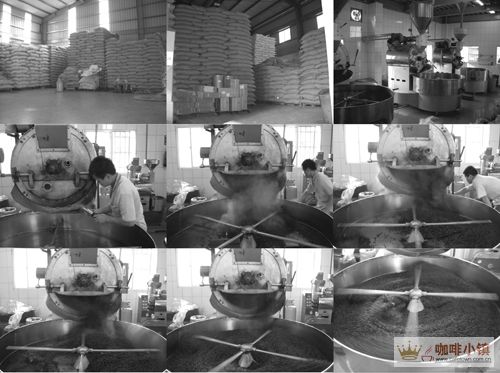
The core goal of coffee roasting is uniform development — heating the bean evenly inside and out without burning it. Roasters first drive off internal moisture using controlled heat; rushing this step causes spotting and harsh, astringent flavors. A well-executed roast expands the bean, smooths its surface, and highlights its unique profile. The ultimate aim? To draw out the bean’s maximum inherent character through precise heat work.
Coffee Roast Classifications and Stages
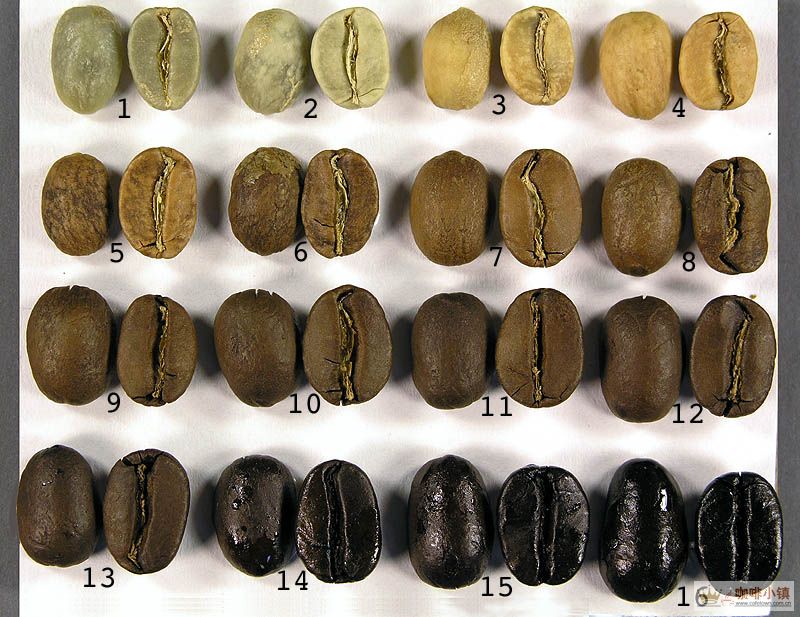
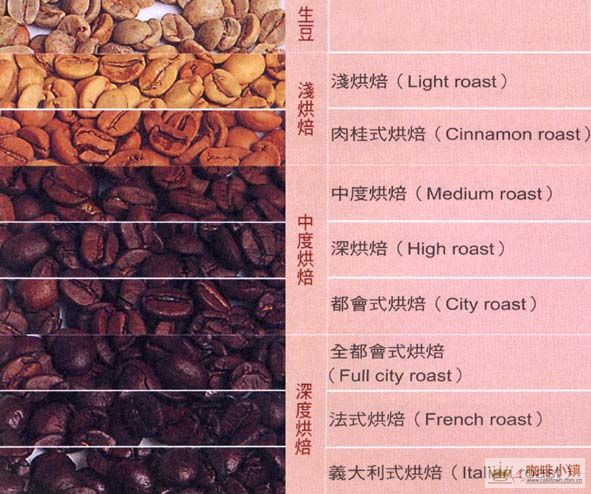
Coffee roasts fall into three broad heat categories — light, medium, and strong (or heavy) — which are further divided into eight specific stages. Each stage produces distinct colors, flavors, and recommended brew methods. These are the standard benchmarks used globally by specialty roasters:
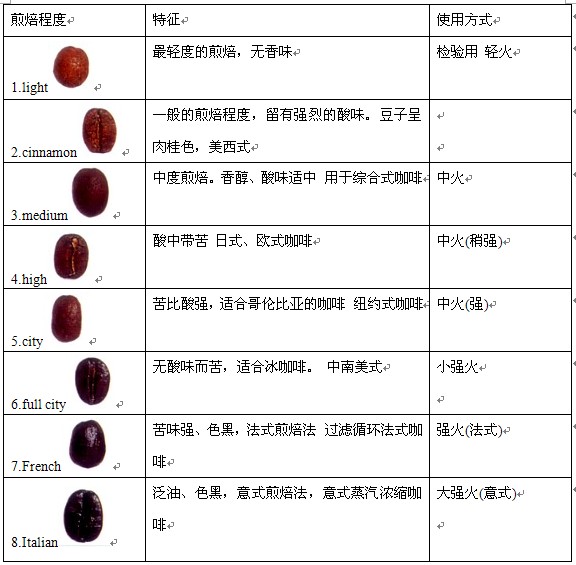
| Roast Level | Characteristics | Common Use | Heat Category |
|---|---|---|---|
| 1. Light | Minimal development, little aroma | Quality inspection | Light |
| 2. Cinnamon | Moderate roast, pronounced acidity, cinnamon-brown color | Western-style (especially Americas) | Light |
| 3. Medium | Balanced flavor, moderate acidity, smooth and aromatic | Blended coffees | Medium |
| 4. High | More bitterness than acidity, common in Japanese/European styles | Japanese/European-style coffee | Medium (slightly stronger) |
| 5. City | Bitterness dominates over acidity, suits Colombian beans | New York-style coffee | Medium (strong) |
| 6. Full City | No acidity, strong bitterness, ideal for iced coffee | Central/South American-style | Strong (light) |
| 7. French | Very bitter, dark color, classic French roast style | Filter and French press methods | Strong (French) |
| 8. Italian | Oily surface, very dark, designed for espresso | Italian-style espresso (steam pressure) | Very Strong (Italian) |
Global Roast Preferences by City
Different cities and regions favor distinct roast levels based on local taste traditions. In Tokyo, a slightly deeper medium (high roast) is popular, though darker roasts are gaining ground. Kansai (western Japan) has long preferred dark roasts. New Yorkers typically opt for City roast, though the city’s diverse population means a wide range of roast levels are widely available. Vienna favors Full City roasts, while the French and Italians, true to stereotype, strongly prefer French and Italian roast methods respectively. In recent years, Western drinkers have embraced a broader spectrum — from German-style (High City) to dark roasts (common in Brazil and Italy). Espresso made with steam pressure remains a enduring favorite.
Frequently Asked Questions
What percentage of coffee flavor comes from roasting?
Coffee flavor is 80% determined by the roast. While origin, processing, and brewing matter, it’s the roast that develops sweetness, acidity, bitterness, and aroma — making it the most critical factor in flavor creation.
How many main roast categories are there?
There are three main roast heat categories: light, medium, and strong (or heavy). Each category includes multiple specific roast stages with distinct flavor outcomes.
What are the 8 roast stages listed in the article?
The eight roast stages are: Light, Cinnamon, Medium, High, City, Full City, French, and Italian. They range from very light and acidic to very dark and bitter, suitable for different brewing methods and taste preferences.
Which roast is best for espresso?
The Italian roast (very dark, oily beans) is traditionally used for espresso, especially in Italian-style steam pressure machines. However, many modern espresso blends also use French or Full City roasts depending on desired intensity.
Why is even roasting important?
Even roasting ensures the inside and outside of the coffee bean develop uniformly. Uneven heat leads to underdeveloped or scorched sections, causing off-flavors like astringency, sourness, or blandness in the cup.
Do different cities prefer different roast levels?
Yes. For example, Tokyo leans toward medium (high roast), Kansai prefers dark, New York uses City roast, Vienna favors Full City, and both France and Italy stick to their namesake roast styles. Global preferences are expanding but still often follow regional traditions.
Recommended FrontStreet Beans for Roast Exploration
Explore roast profiles with FrontStreet Coffee’s Ethiopia Humbera (light-medium, floral and citrusy), PWN Golden Mandheling (Full City+, heavy body and low acid), and Brazil Queen Manor (City to Full City, nutty and chocolatey). These single origins highlight how roast level shapes flavor — from bright and juicy to deep and bold. Ideal for comparing cinnamon, medium, and French/Full City ranges. Freshly roasted within 5 days · Orders placed before 17:00 ship the same day · Next-day delivery across most of Guangdong Province.
FrontStreet Coffee is a long-established specialty coffee roaster in Guangzhou China, selling freshly roasted beans from its own farm in Yunnan as well as dozens of carefully selected single-origin beans from around the world for both pour-over and espresso. The products deliver consistently excellent quality and great value, with shipping within 24 hours. Guangzhou's FrontStreet Coffee shop is recommended by many coffee lovers, and the beans are now available online at the Tmall 。
Important Notice :
前街咖啡 FrontStreet Coffee has moved to new addredd:
FrontStreet Coffee Address: 315,Donghua East Road,GuangZhou
Tel:020 38364473

