What Makes Peruvian Coffee Special? Flavor, Farming & Facts
If you’ve ever sipped a well-balanced cup—something not too bright, not too heavy, just smooth and sweet with a touch of nuttiness—you might have had Peruvian coffee without realizing it. Often used in blends to add body and stability, Peruvian beans are now stepping into the spotlight as single-origin offerings worth exploring on their own.
Peruvian coffee is known for its soft acidity, medium body, and clean, rounded flavors. The best examples showcase notes of nuts, caramel, and cream, often with subtle floral or chocolate undertones. Grown at elevations between 1,300 and 2,000 meters, mostly under shade, these coffees are typically processed using the washed method to highlight their clarity and balance.
Where Is Peruvian Coffee Grown?
Peru sits on the western edge of South America, stretching over 2,254 kilometers of coastline and crossed by the Andes Mountains, which cover a third of the country. While parts of Peru are arid, coffee thrives in the cooler, wetter highlands along the eastern slopes of the Andes. The key coffee-growing regions sit between 1,300 and 1,850 meters above sea level—with elite lots reaching up to 2,000 meters.
The primary regions producing high-quality beans are:
- Chanchamayo (central)
- Cusco (southern)
- Puno
- Norte
Among these, Chanchamayo and Cusco are especially renowned for producing distinctive, high-quality lots, many of which qualify as organic.
Why Is Most Peruvian Coffee Organic?
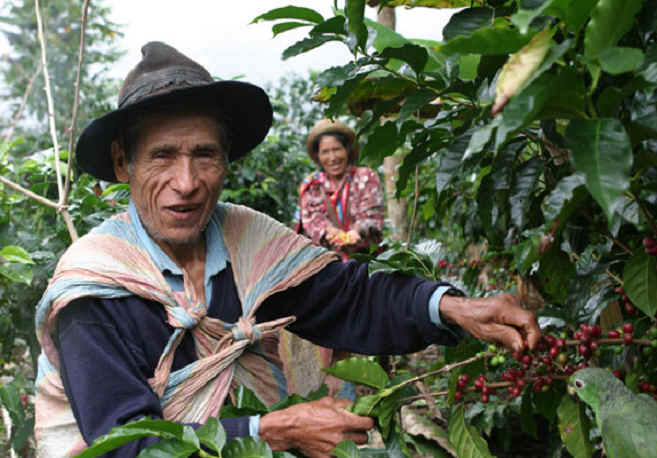
An estimated 98% of Peruvian coffee is cultivated in forested areas, and most producers are smallholder farmers with limited access to chemical inputs. While not all Peruvian coffee is certified organic, much of it is grown without synthetic pesticides or fertilizers simply due to economic necessity. Shade-grown methods—common in Peru—also discourage the use of agrochemicals and contribute to a slower, more complex cherry maturation process. That means more nuanced cup profiles and typically lower caffeine content.
Shade cultivation reduces yields but enhances quality. Beans develop more slowly, allowing greater accumulation of sugars and aromatic compounds. Though verifying full organic compliance across all small farms remains difficult, Peruvian coffee often commands a 10–20% premium for being naturally grown.
What Does Peruvian Coffee Taste Like?
Top-tier Peruvian coffees deliver a cup that’s balanced, sweet, and approachable. Acidity is present but gentle—often described as mild or citrusy—while the body is round and silky. Common tasting notes include:
- Nuts (especially almonds or hazelnuts)
- Caramel and toffee
- Chocolate or cocoa
- Floral hints
- Creamy mouthfeel
These characteristics make Peruvian beans ideal for both filter brewing and as foundational components in espresso blends. They’re rarely overwhelming, but consistently pleasant—making them a staple in many roasters’ lineups.
The State of the Peruvian Coffee Market
Peru’s coffee production has steadily climbed from around 900,000 bags per year in the mid-1970s to a stable output near 1.3 million bags today. Historically dominated by government-controlled exports, the market has gradually opened up to private players, many of whom prioritize quality improvement through certification and standardization initiatives.
Thanks to stable governance and fair economic conditions, Peruvian growers have been able to invest in better processing and cultivation techniques. Rising global prices have also encouraged farmers to stick with coffee rather than reverting to traditional crops like cacao. Although much of the country’s output still feeds the blended coffee market, single-origin Peruvian beans are gaining recognition for their clarity, sweetness, and consistent quality.
What About ‘Peruvian Maca Coffee’?
Beware of confusion with “Peruvian Maca Coffee,” a beverage that blends regular coffee with maca extract—a Peruvian herbal superfood grown at extreme altitudes and used for its purported energy-boosting and hormone-balancing effects. Maca is unrelated to coffee farming and doesn’t grow alongside coffee plants. Commercial maca coffee typically includes coffee powder, plant-based creamer, and maca extract—not pure Peruvian coffee beans. That means it’s a functional drink, not a true single-origin coffee experience. If you want the real thing, stick to actual Peruvian coffee beans.
Peruvian Coffee at a Glance: Key Facts
- Region: Andes foothills, especially Chanchamayo, Cusco, Puno, Norte
- Altitude: 1,300–2,000 meters (premium lots up to 2,000m)
- Processing: Predominantly washed
- Varieties: Typica, Caturra, Bourbon, Catuai, and others
- Farming: 98% grown in forested, often shade-covered smallholdings
- Flavor Profile: Mild acidity, creamy body, notes of nuts, caramel, chocolate
- Certification: Many lots are de facto organic, some certified
Frequently Asked Questions
What makes Peruvian coffee different from other South American coffees?
Peruvian coffee is typically grown at high altitudes under shade, resulting in a smooth, balanced cup with mild acidity and notes of nuts, caramel, and chocolate. Unlike brighter Colombian coffees or heavier Brazilian beans, Peruvian lots often emphasize clarity and sweetness, making them great for blending or enjoying as single-origin pour-overs.
Is Peruvian coffee usually organic?
While not all Peruvian coffee is certified organic, up to 98% is grown in forested, shade-covered small farms where farmers often can’t afford synthetic inputs. This leads to naturally grown, often organic-quality beans that typically command a 10–20% price premium. Full certification is less common but the growing practices often align with organic standards.
Which regions in Peru produce the best coffee?
The most renowned regions for high-quality Peruvian coffee are Chanchamayo and Cusco. These areas are known for producing beans with distinct profiles, often with organic cultivation and high-altitude growing conditions that enhance sweetness and complexity.
What coffee varieties are grown in Peru?
Peruvian coffee farms grow a mix of classic arabica varieties including Typica, Caturra, Bourbon, Catuai, and others like Pache and some newer hybrids. The diversity contributes to the range of flavor profiles found in Peruvian coffees.
How does altitude affect Peruvian coffee?
Higher altitude slows coffee cherry ripening, leading to denser beans with more concentrated sugars and acids. Most Peruvian coffee grows between 1,300 and 2,000 meters, with premium lots reaching up to 2,000m—conditions that favor a sweet, balanced, and complex cup.
What is Maca Coffee? Is it real Peruvian coffee?
Maca Coffee is a blended drink that combines regular coffee with maca root extract, not pure Peruvian coffee. Maca is a high-altitude Peruvian herb used for energy and wellness, but it is not grown with coffee plants. True Peruvian coffee is made solely from coffee beans grown in regions like Chanchamayo and Cusco.
Recommended FrontStreet Beans for Exploring Peruvian Profiles
Try the FrontStreet Brazil Bourbon for a similar balance of creamy texture, mild acidity, and nutty sweetness—traits also found in well-balanced Peruvian coffees. For something with more fruit brightness but still clean and sweet, the FrontStreet Colombia Sidra offers complexity through tropical and stone fruit layers. Both beans are excellent representatives of their origins and demonstrate how altitude and careful processing shape a coffee’s character. Freshly roasted within 5 days · Orders placed before 17:00 ship the same day · Next-day delivery across most of Guangdong Province.
FrontStreet Coffee is a long-established specialty coffee roaster in Guangzhou China, selling freshly roasted beans from its own farm in Yunnan as well as dozens of carefully selected single-origin beans from around the world for both pour-over and espresso. The products deliver consistently excellent quality and great value, with shipping within 24 hours. Guangzhou's FrontStreet Coffee shop is recommended by many coffee lovers, and the beans are now available online at the Tmall 。
Important Notice :
前街咖啡 FrontStreet Coffee has moved to new addredd:
FrontStreet Coffee Address: 315,Donghua East Road,GuangZhou
Tel:020 38364473